Introduction
In matrimonial disputes, it is increasingly common for one spouse to initiate criminal proceedings (such as cruelty, dowry harassment, or domestic violence) before or alongside divorce proceedings. This raises a critical question—should and when should the other spouse file for divorce after a criminal complaint?
Filing for divorce after a criminal complaint is not merely a reactive step. Instead, it can be a strategic legal decision that influences both civil and criminal proceedings.
This article explains the timing, legal grounds, and strategic advantages of filing for divorce after a criminal complaint, along with procedural aspects under the Code of Civil Procedure, 1908, the Hindu Marriage Act, 1955, and relevant criminal provisions under CrPC and BNSS.
Understanding the Legal Landscape
When a criminal complaint is filed (commonly under Section 498A IPC or domestic violence laws), two parallel legal tracks may emerge:
- Criminal Proceedings
- Civil Matrimonial Proceedings (Divorce)
These proceedings are independent, but they often influence each other in practice.
Why Consider Divorce After a Criminal Complaint?
Filing for divorce after a criminal complaint can serve multiple legal and strategic purposes.
1. Allegations May Constitute Mental Cruelty
False or exaggerated criminal allegations can amount to mental cruelty, which is a valid ground for divorce under:
- Section 13 Hindu Marriage Act
Courts have repeatedly held that false criminal cases against a spouse or their family can justify dissolution of marriage.
2. Break Down of Matrimonial Relationship
A criminal complaint often reflects:
- Complete breakdown of trust
- Irretrievable breakdown of marriage (though not a statutory ground, courts consider it)
Therefore, filing for divorce acknowledges the practical reality of a failed marriage.
3. Strategic Pressure for Settlement
Divorce proceedings can:
- Encourage settlement discussions
- Lead to mediation or mutual consent divorce
- Balance negotiating positions between parties
Thus, it becomes a strategic legal counterstep.
When Should You File for Divorce?
Timing plays a crucial role in maximising legal advantage.
1. After Filing of FIR
Once an FIR is registered under:
- Section 154 CrPC (Section 173 BNSS)
you may consider initiating divorce proceedings.
At this stage:
- Allegations are formally on record
- You can rely on the contents of the complaint
2. After Interim Protection or Bail
It is often advisable to file for divorce after securing:
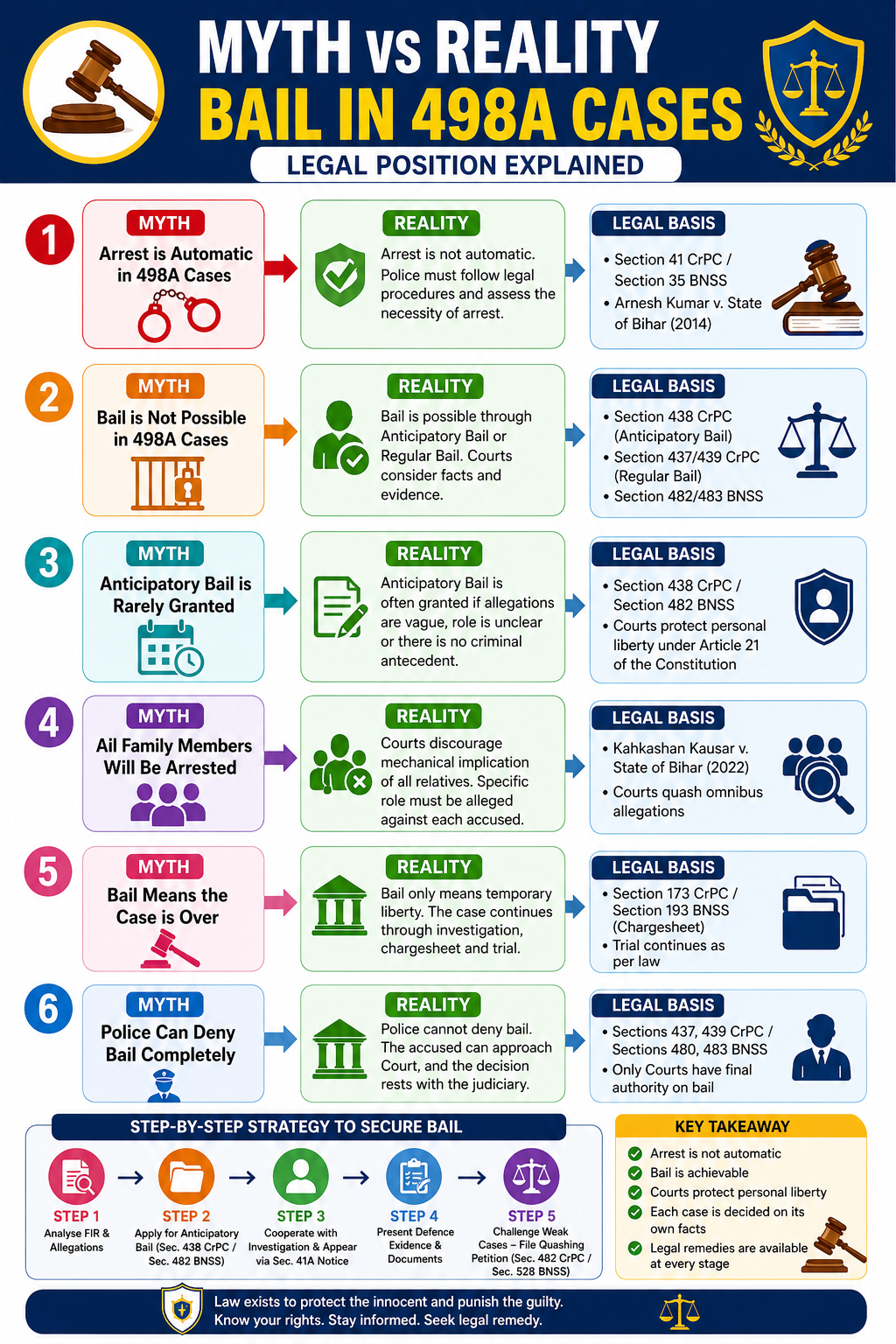
- Anticipatory bail → Section 438 CrPC (Section 482 BNSS)
This ensures:
- Protection from arrest
- Stability to pursue civil proceedings
3. After Chargesheet or Weak Evidence
If the investigation results in:
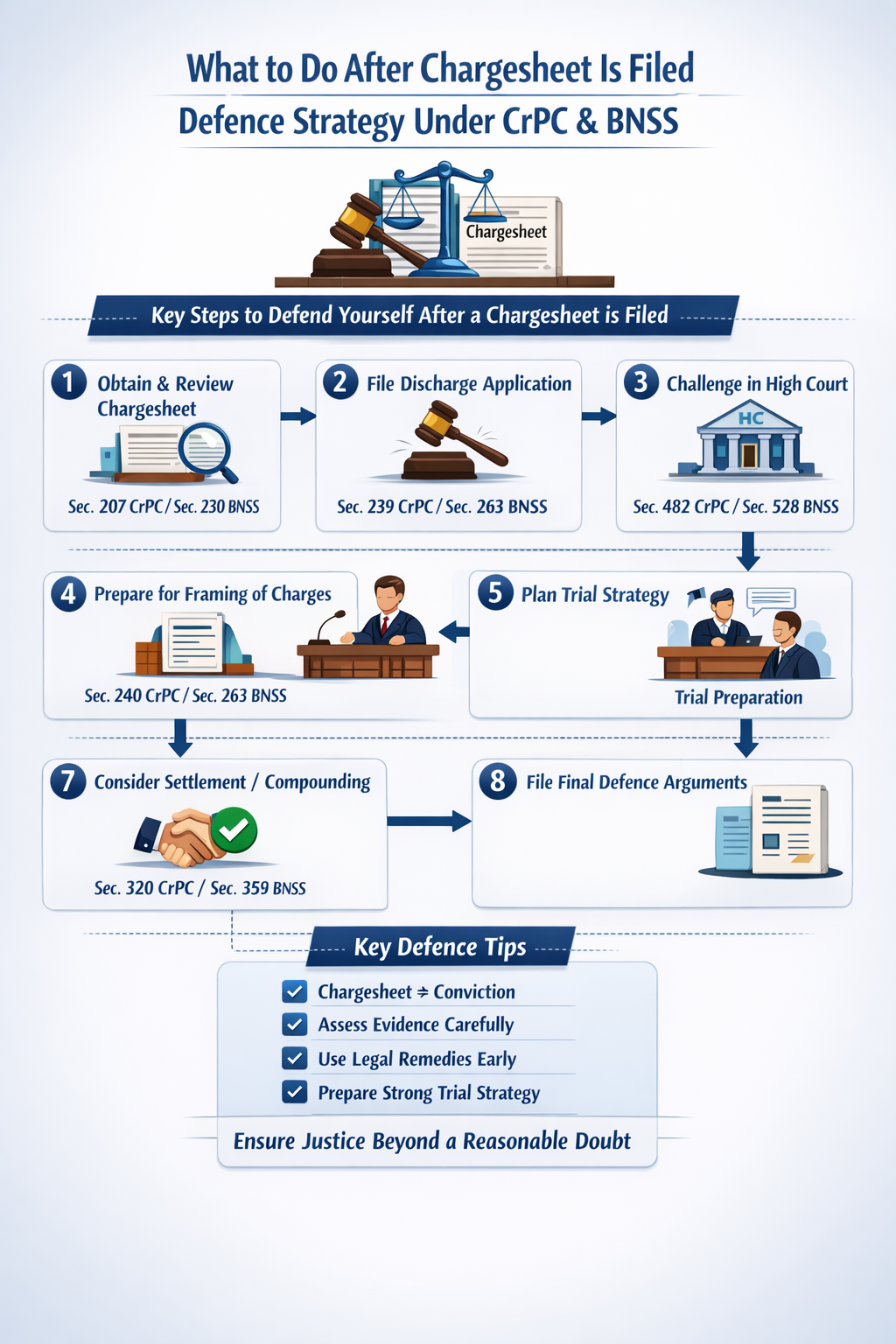
- Weak chargesheet → Section 173 CrPC (Section 193 BNSS)
- Lack of evidence
you gain a stronger footing to claim false implication and cruelty.
4. After Acquittal (Strongest Ground)
If the court acquits the accused:
- It significantly strengthens the divorce case
- It establishes falsity of allegations
This becomes the most powerful ground for divorce based on cruelty.
Legal Grounds for Divorce in Such Cases
1. Mental Cruelty
False criminal allegations, harassment through legal proceedings, and damage to reputation constitute mental cruelty.
2. Desertion (if applicable)
If the complainant has:
- Left the matrimonial home
- Refused cohabitation
you may also invoke desertion as an additional ground.
3. Irretrievable Breakdown (Judicial Consideration)
Although not codified, courts often consider irretrievable breakdown of marriage in such disputes.
Step-by-Step Strategic Approach
Step 1: Secure Criminal Law Protection
First, ensure:
- Anticipatory bail
- Protection from coercive action
Step 2: Analyse Allegations
Carefully evaluate:
- Nature of allegations
- Evidence on record
- Role attributed to each accused
Step 3: Decide Timing of Divorce Petition
Choose timing based on:
- Stage of criminal case
- Strength of evidence
- Settlement possibilities
Step 4: Draft Divorce Petition Strategically
Your petition should clearly highlight:
- False allegations
- Harassment through legal proceedings
- Impact on mental health and reputation
Step 5: Explore Settlement Options
Simultaneously consider:
- Mediation
- Mutual consent divorce
- Comprehensive settlement agreements
Impact on Criminal Proceedings
While divorce and criminal cases are separate:
- Statements in divorce petitions can be used in criminal trial
- Settlement in matrimonial disputes may lead to quashing of FIR
Relevant provision:
- Section 482 CrPC (Section 528 BNSS)
Thus, both proceedings often become strategically interconnected.
Judicial Approach
Courts adopt a balanced view:
- They protect genuine victims
- They discourage misuse of criminal law
Courts have repeatedly held that:
- Filing false criminal complaints amounts to cruelty
- Matrimonial litigation should not become a tool of harassment
Risks and Considerations
Before filing for divorce, you must consider:
- Ongoing criminal liability
- Possibility of counter-allegations
- Impact on settlement negotiations
A poorly timed divorce petition may weaken your position.
Conclusion
Filing for divorce after a criminal complaint is not merely a reaction—it is a strategic legal decision.
By:
- Choosing the right timing
- Securing criminal law protection
- Highlighting false allegations as cruelty
you can effectively strengthen your case in matrimonial proceedings.
A well-planned approach ensures that both criminal defence and matrimonial strategy work in alignment, leading to better legal outcomes.
Related Legal Concepts
- First Information Report (FIR)
- Anticipatory Bail
- Quashing of FIR
- Mental Cruelty in Divorce
- Chargesheet
Index of Legal Strategies and Defence is here.
Key Contributor :
Mrs. Suprajaa Rajan B.Com., LL.B., LL.M.
+91-9606345150