The doctrine of abuse of process of law plays a vital role in preventing misuse of judicial procedures. Courts invoke this principle when legal processes are used maliciously, vexatiously, or for ulterior purposes, rather than for genuine legal redress.
Under Indian criminal law, courts exercise inherent and supervisory powers to prevent such misuse under the Code of Criminal Procedure, 1973 and corresponding provisions under the Bharatiya Nagarik Suraksha Sanhita, 2023.
This doctrine ensures that the legal system functions to advance justice and not to harass individuals.
Meaning of Abuse of Process
Abuse of process occurs when a party uses legal proceedings:
- For an improper or ulterior motive
- To harass, intimidate, or pressurise another party
- To achieve objectives unrelated to justice
In such situations, courts intervene to prevent the continuation of proceedings that undermine the integrity of the judicial system.
Statutory Framework
The power to prevent abuse of process primarily flows from:
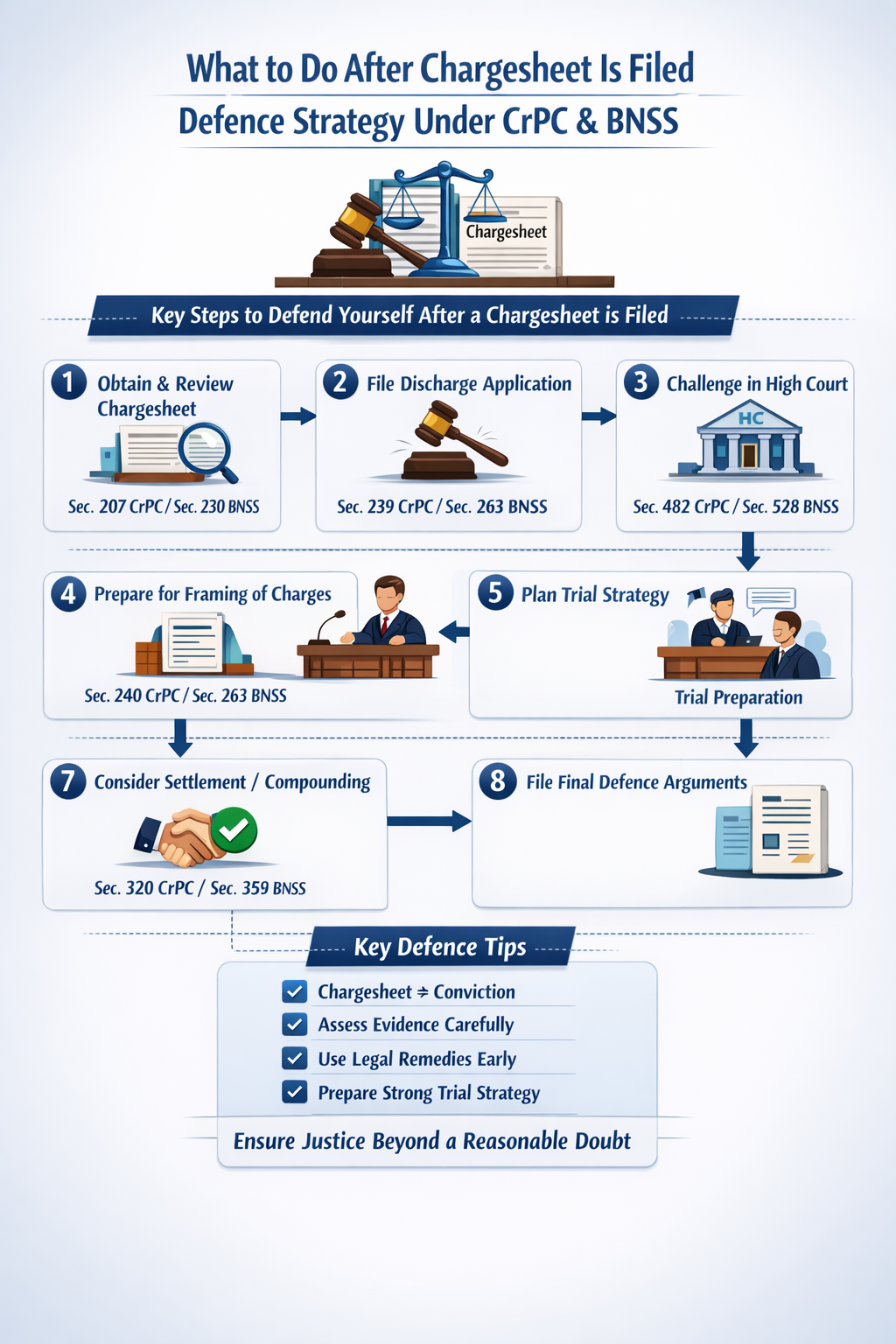
- Section 482 CrPC (Section 528 BNSS) – Inherent powers of High Court
This provision empowers the High Court to:
- Prevent abuse of process of any court
- Secure the ends of justice
- Quash criminal proceedings where necessary
These powers are extraordinary in nature and must be exercised cautiously.
Scope of Inherent Powers
Under Section 482 CrPC (Section 528 BNSS), the High Court may intervene in exceptional cases.
The court may:
- Quash FIR or criminal proceedings
- Prevent misuse of legal machinery
- Ensure fairness in judicial process
However, the court does not conduct a full trial at this stage. Instead, it examines whether the proceedings are legally sustainable.
Common Instances of Abuse of Process
Courts often identify abuse of process in the following situations:
- Filing of false or frivolous complaints
- Initiating criminal proceedings for civil disputes
- Multiple proceedings on the same cause of action
- Proceedings initiated with mala fide intent
- Use of criminal law to exert pressure in personal or commercial disputes
In such cases, continuation of proceedings would result in miscarriage of justice.
Judicial Principles Governing Quashing
Courts have developed guiding principles to determine whether proceedings amount to abuse of process.
In
State of Haryana v. Bhajan Lal, the Supreme Court laid down illustrative categories where courts may quash proceedings.
These include:
- Where allegations do not disclose any offence
- Where allegations are absurd or inherently improbable
- Where proceedings are maliciously instituted
These principles continue to guide courts in exercising inherent powers.
Difference Between Abuse of Process and Legitimate Prosecution
It is important to distinguish between genuine legal action and abuse of process.
Legitimate Prosecution:
- Based on valid legal grounds
- Supported by evidence
- Aims to seek justice
Abuse of Process:
- Based on ulterior motives
- Lacks legal foundation
- Intended to harass or misuse law
Therefore, courts must carefully evaluate facts to ensure that genuine cases are not prematurely terminated.
Role of High Courts
High Courts play a crucial role in preventing abuse of process.
They exercise inherent powers to:
- Protect individuals from harassment
- Maintain judicial discipline
- Prevent misuse of criminal law
However, courts exercise this power sparingly and with caution, as premature interference may affect legitimate prosecution.
Importance in Criminal Justice System
The doctrine of abuse of process ensures that:
- Courts do not become tools of oppression
- Legal procedures are not misused
- Justice remains the primary objective of law
It, therefore, acts as a safeguard against arbitrary and malicious litigation.
Conclusion
Abuse of process of law, hence, undermines the very purpose of the legal system. Therefore, courts exercise inherent powers to prevent misuse and ensure that judicial proceedings serve the cause of justice.
By striking a balance between preventing misuse and allowing genuine cases to proceed, the law upholds the principles of fairness, integrity, and justice.
Related Legal Concepts
Explore related remedies and procedural safeguards in criminal law:
- Quashing of FIR
- Discharge of Accused
- Criminal Trial Procedure
- Appeal, Revision & Review
- Cognizable and Non-Cognizable Offences
Index of Law Concepts explained here.
Key Contributor :
Mrs. Suprajaa Rajan B.Com., LL.B., LL.M.
+91-9606345150