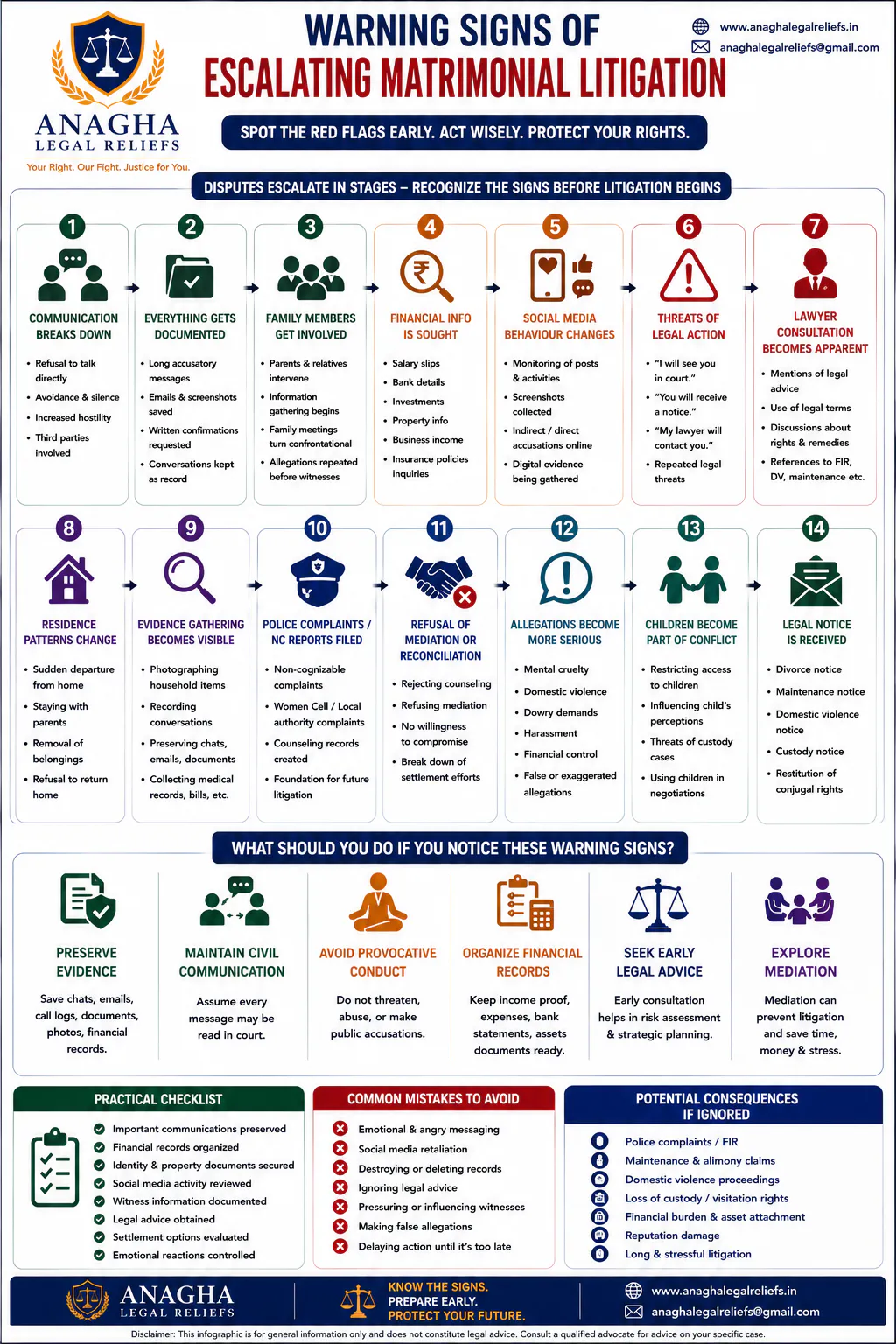
Matrimonial disputes rarely escalate overnight. In most cases, litigation follows a predictable pattern of deteriorating communication, increasing hostility, documentation gathering, legal consultations, and strategic positioning by one or both parties.
Unfortunately, many individuals fail to recognize these warning signs until they receive a legal notice, a domestic violence complaint, a maintenance petition, or even an FIR alleging cruelty under Section 498A IPC.
Recognizing early indicators of escalating matrimonial litigation can help spouses:
- Protect their legal rights
- Preserve important evidence
- Avoid unnecessary mistakes
- Explore settlement opportunities
- Prepare an effective legal strategy
- Reduce emotional and financial damage
This article explains the most common warning signs that a matrimonial dispute is moving toward litigation and the practical steps that individuals should take when these red flags appear.
Why Early Detection Matters
Once litigation begins, emotions often give way to legal strategy.
A spouse who identifies warning signs early can:
- Preserve evidence before it disappears
- Avoid damaging communications
- Seek timely legal advice
- Explore mediation opportunities
- Prepare financial records
- Prevent unnecessary escalation
In many cases, proactive preparation significantly improves the outcome of future proceedings.
Stage 1: Communication Begins to Break Down
One of the earliest indicators of future litigation is a complete shift in communication patterns.
Common signs include:
- Refusal to discuss issues directly
- Communication only through messages
- Deliberate avoidance of conversations
- Increased hostility in discussions
- Repeated accusations without resolution
- Third parties becoming involved in marital discussions
When ordinary marital disagreements transform into documented accusations, litigation risk often increases.
Stage 2: Everything Starts Getting Documented
A significant warning sign appears when routine conversations suddenly become formal.
Examples include:
- Long accusatory WhatsApp messages
- Emails detailing past grievances
- Screenshots being preserved
- Calls being avoided in favor of text communication
- Requests for written confirmations
This often indicates that one party may be preparing evidence for future legal proceedings.
Stage 3: Family Members Become Actively Involved
Family involvement is common in matrimonial disputes.
However, litigation risks increase when:
- Parents begin communicating on behalf of spouses
- Relatives collect information about disputes
- Family meetings become confrontational
- Allegations are repeated before witnesses
- Extended family members become intermediaries
Such developments often indicate strategic preparation for future proceedings.
Stage 4: Financial Information Is Suddenly Requested
Another major warning sign is an unexpected interest in financial details.
Examples include:
- Salary slips being requested
- Bank account inquiries
- Investment details being sought
- Property ownership questions
- Business income investigations
- Questions about insurance policies
This may signal preparation for:
- Maintenance proceedings
- Alimony claims
- Domestic violence litigation
- Property-related disputes
Stage 5: Social Media Behaviour Changes
Modern matrimonial litigation often leaves digital footprints.
Warning signs include:
Sudden Social Media Monitoring
A spouse closely tracks:
- Posts
- Check-ins
- Friend lists
- Photographs
- Comments
Evidence Collection Through Screenshots
Posts are regularly captured and stored.
Public Allegations
Indirect or direct accusations begin appearing online.
These developments often indicate future evidentiary use.
Stage 6: Threats of Legal Action Begin
This is one of the clearest indicators.
Examples include:
- “I will see you in court.”
- “You will receive a notice soon.”
- “My lawyer will contact you.”
- “You will regret this legally.”
Even if made emotionally, repeated legal threats often precede actual litigation.
Stage 7: Consultation With Lawyers Becomes Apparent
Sometimes litigation intentions become visible through:
- References to legal advice
- Mentions of specific legal provisions
- Discussions about maintenance rights
- Statements regarding domestic violence laws
- References to FIRs or police complaints
A spouse who previously showed little legal awareness may suddenly begin using legal terminology.
This often indicates professional consultation.
Stage 8: Residence Patterns Change
Changes in living arrangements frequently precede litigation.
Examples include:
- Sudden departure from matrimonial home
- Temporary separation becoming permanent
- Staying with parents indefinitely
- Removal of personal belongings
- Refusal to return despite reconciliation efforts
Physical separation often becomes the foundation for future legal claims.
Stage 9: Evidence Gathering Becomes Visible
Many litigants begin collecting evidence before initiating proceedings.
Examples include:
- Photographing household items
- Recording conversations
- Preserving messages
- Collecting financial documents
- Seeking medical records
- Gathering witness statements
When evidence collection becomes systematic, litigation risk increases significantly.
Stage 10: Police Complaints or NC Reports Are Filed
A particularly serious warning sign is the filing of:
- Non-cognizable complaints
- Police station entries
- Women Cell complaints
- Counseling complaints
- Local authority representations
Even if no FIR is registered initially, these complaints often create a documentary foundation for future litigation.
Stage 11: Refusal of Mediation or Reconciliation
When one spouse refuses:
- Counseling
- Family meetings
- Mediation
- Settlement discussions
the possibility of litigation often increases.
A complete breakdown of dispute resolution efforts is a significant red flag.
Stage 12: Allegations Become More Serious Over Time
A dispute may begin with ordinary marital disagreements but gradually escalate into allegations involving:
- Mental cruelty
- Emotional abuse
- Domestic violence
- Dowry demands
- Financial control
- Harassment
Escalating allegations often indicate movement toward formal legal action.
Stage 13: Children Become Part of the Conflict
Warning signs include:
- Restricting access to children
- Influencing children’s perceptions
- Threatening custody proceedings
- Using children during negotiations
Child-related disputes frequently accompany larger matrimonial litigation.
Stage 14: Formal Legal Notice Is Received
A legal notice is often the final stage before litigation.
Common notices involve:
- Restitution of conjugal rights
- Divorce
- Maintenance
- Domestic violence allegations
- Custody disputes
A legal notice should never be ignored.
Common Mistakes People Make After Noticing Warning Signs
Avoid:
Emotional Messaging
Angry messages often become evidence.
Social Media Retaliation
Public responses frequently worsen disputes.
Destroying Records
Deletion of messages or documents can be damaging.
Ignoring Legal Advice
Delaying consultation may reduce available options.
Pressuring Witnesses
This may create additional legal complications.
What Should You Do If You Notice These Warning Signs?
Preserve Evidence
Keep:
- WhatsApp chats
- Emails
- Bank records
- Call logs
- Photographs
- Financial documents
Maintain Civil Communication
Assume every message may eventually be read in court.
Avoid Provocative Conduct
Do not:
- Threaten
- Abuse
- Harass
- Publicly accuse
Organize Financial Records
Maintenance disputes often depend heavily on financial evidence.
Seek Early Legal Advice
Early legal consultation allows:
- Risk assessment
- Evidence preservation
- Strategic planning
- Settlement evaluation
Explore Mediation
Where appropriate, mediation may prevent prolonged litigation and preserve relationships.
Practical Litigation Readiness Checklist
If matrimonial litigation appears likely, ensure:
- Important communications preserved
- Financial records organized
- Identity and property documents secured
- Social media activity reviewed
- Witness information documented
- Legal advice obtained
- Settlement options evaluated
- Emotional reactions controlled
Conclusion
Matrimonial litigation rarely emerges without warning. Most disputes pass through identifiable stages before formal legal proceedings begin.
By recognizing early warning signs such as:
- Communication breakdown
- Evidence gathering
- Legal consultations
- Financial inquiries
- Police complaints
- Formal notices
individuals can make informed decisions, protect their legal position, and avoid mistakes that may later affect court proceedings.
The goal is not to assume litigation is inevitable, but to remain prepared if it becomes unavoidable.
In matrimonial disputes, the spouse who remains calm, preserves evidence, and acts strategically is often far better positioned than the spouse who reacts emotionally to every development.
Index of Legal Strategies and Defence is here.