Facing a criminal complaint, matrimonial dispute, FIR, arrest threat, trial, or court proceedings can be overwhelming. Every stage of litigation requires a different legal approach.
This Legal Strategies & Defence Guide provides practical legal information, procedural guidance, and defence strategies to help individuals understand their rights and take informed decisions.
The guides are arranged according to different stages of a legal dispute — from early warning signs, FIR registration, arrest, bail, investigation, trial, settlement, and post-litigation remedies.
Matrimonial Criminal Litigation – Complete Defence & Strategy Guides
For individuals facing matrimonial disputes, criminal complaints, or allegations arising from marital conflicts.
Explore:
- Matrimonial Criminal Litigation – The Complete Defence Guide here.
Understand defence strategy, legal rights, evidence preparation, and practical steps when facing matrimonial criminal proceedings.
- Matrimonial Criminal Litigation – The Complete Prosecution Strategy Guide here.
Understand how complainants approach matrimonial criminal cases and the legal framework involved.
- Falsely Accused Under Section 498A IPC – Legal Defence Strategy here.
Learn the steps to protect yourself against false or exaggerated allegations.
- False Domestic Violence Allegations – Legal Defence Strategy in India here.
Understand available remedies and defence planning against misuse of domestic violence proceedings.
- Top 10 Mistakes Accused Make in Matrimonial Cases – And How to Avoid Them here.
Avoid common errors that can negatively impact your defence.
- How Courts Quash Omnibus Allegations in Matrimonial FIRs – Case Study here.
Understand how courts examine vague and general allegations.
- Myth vs Reality: Bail in 498A Cases – Legal Position Explained here.
Understand practical bail considerations in matrimonial offences.
- Defence Strategy When Elderly Parents Are Named in FIR here.
Learn how elderly family members can protect themselves when unnecessarily implicated.
Arrest Protection & Bail Strategy
For individuals facing arrest, police action, or criminal proceedings.
Explore:
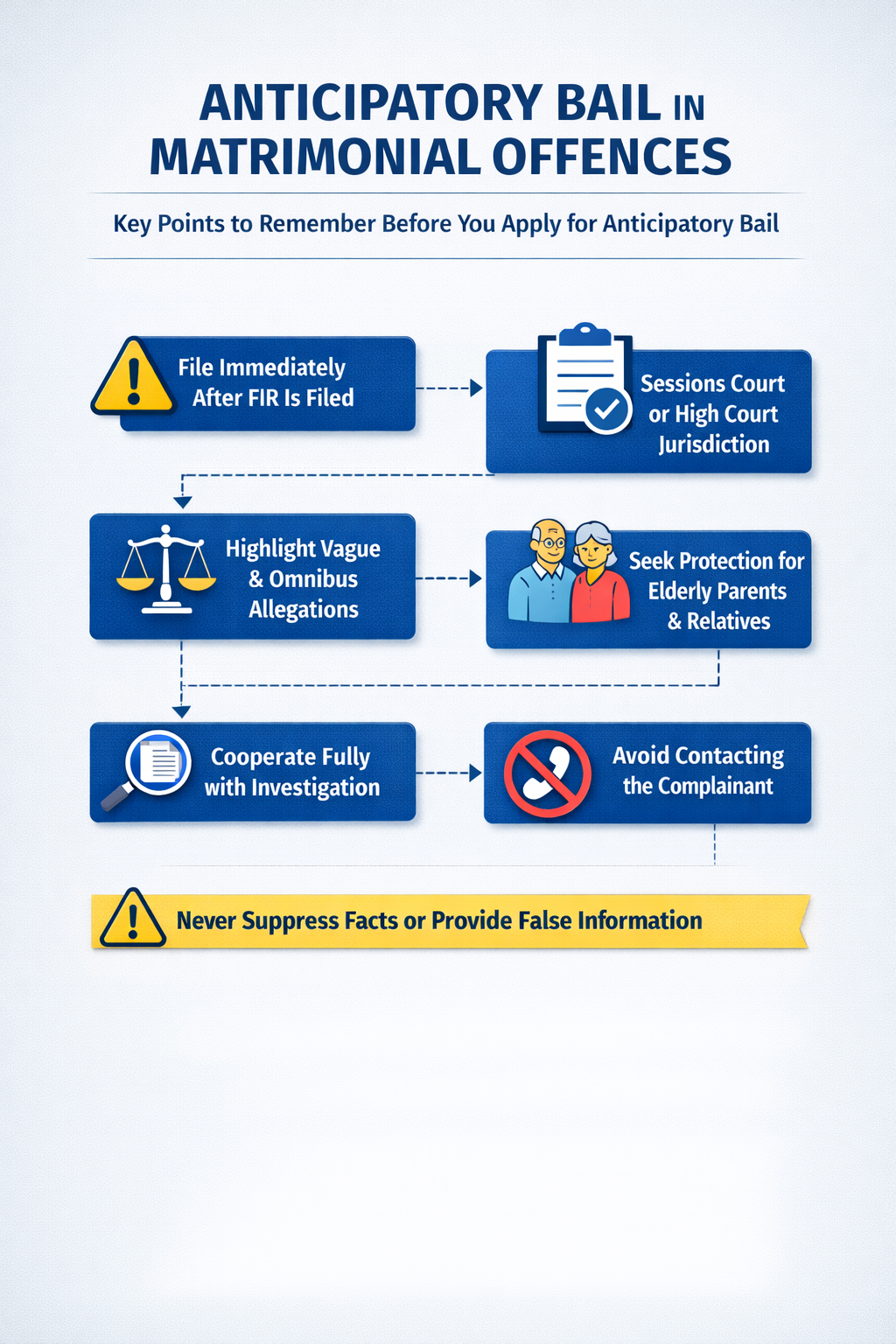
9. Anticipatory Bail in Matrimonial Offences – Complete Guide here.
Understand pre-arrest protection, procedure, and strategy.
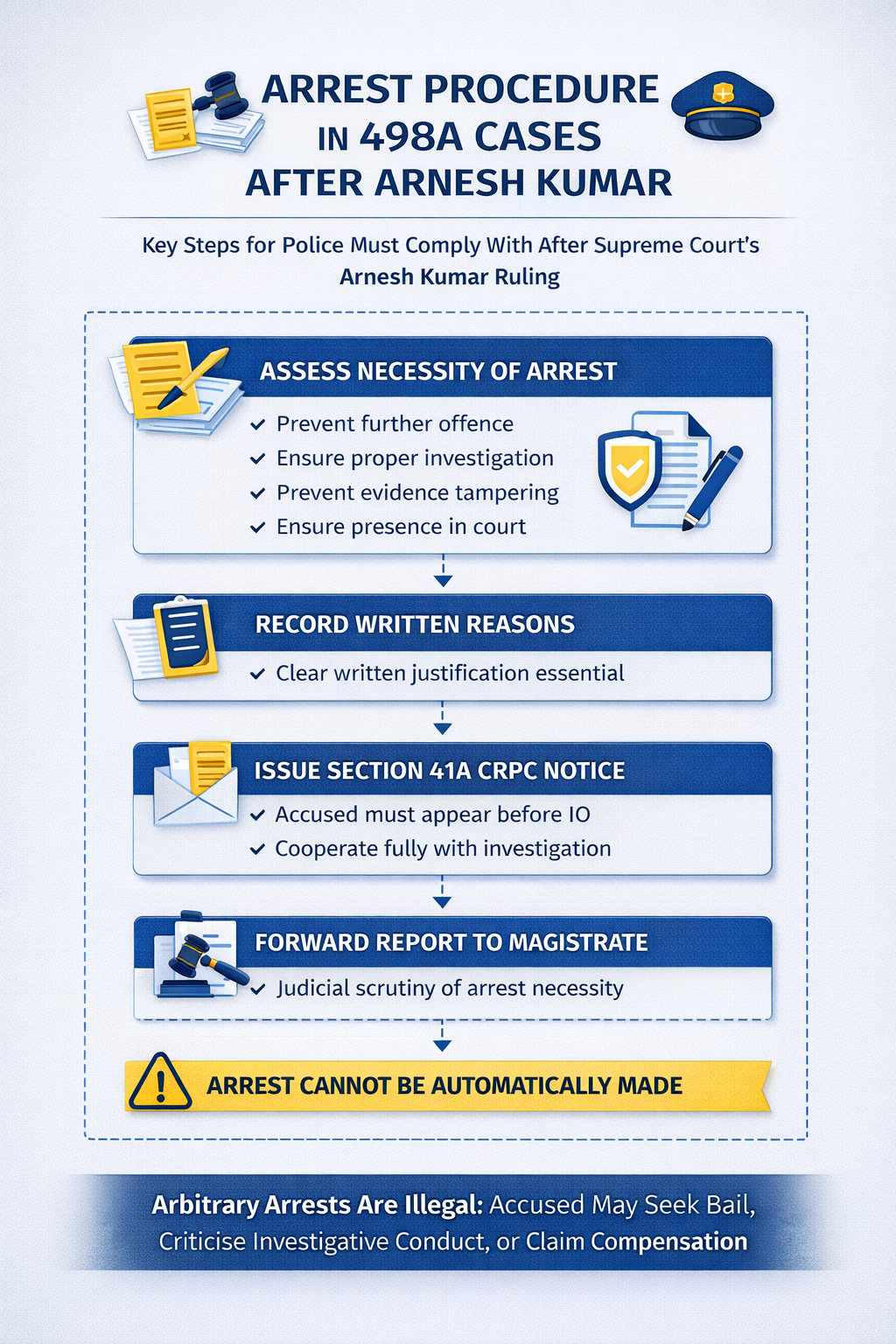
10. Arrest Procedure in 498A Cases After Arnesh Kumar here.
Learn arrest safeguards and important legal protections.
11. Second Anticipatory Bail Application – Is It Legally Possible? Complete Strategy here.
Understand when a second bail application may be considered.
12. Bail Conditions – How to Avoid Cancellation of Bail here.
Learn how to comply with bail conditions and avoid cancellation.
13. How to Prepare for Police Interrogation? – Legal Rights and Practical Guidance here.
Understand what to do and what to avoid during investigation.
14. Can You Travel Abroad After an FIR Is Registered? – Legal Position Explained here.
Understand travel restrictions, court permissions, and practical steps.
15. Passport Implications in 498A Cases – A Complete Practical Guide here.
Understand how FIRs, bail conditions, court permissions, and pending criminal proceedings can affect passport renewal, travel abroad, and immigration decisions.
FIR, Investigation & Chargesheet Defence Strategy
For individuals dealing with police complaints and criminal proceedings.
Explore:
16. Quashing of FIR Under Section 482 CrPC – Explained here.
Understand when High Courts can stop criminal proceedings.
17. Checklist Before Filing Quashing Petition – Complete Practical Guide here.
A step-by-step preparation guide before approaching the High Court.
18. Compromise-Based Quashing in Matrimonial Cases – Complete Legal Strategy here.
Understand how settlement may help resolve matrimonial criminal cases.
19. What to Do After Chargesheet Is Filed – Defence Strategy here.
Learn the next steps after investigation is complete.
20. Speedy Trial Rights in Matrimonial Litigation here.
Understand your right to timely proceedings.
Investigation, Evidence & Trial Defence Strategy
For individuals whose matters have progressed to court proceedings.
Explore:
21. What to Say (and Not Say) During Investigation – A Practical Legal Guide here.
Learn how communication during investigation can affect your case.
22. Cross-Examination Strategy in 498A Trials – Defence Tactics That Can Change the Outcome here.
Understand how witness examination impacts trial results.
23. How to Handle Hostile Witnesses in Criminal Trials – Complete Defence Strategy here.
Learn how courts evaluate witnesses who change testimony.
24. Objections a Defence Advocate Can Raise When the Prosecution Produces Documentary Evidence – Complete Trial Strategy Guide here.
Understand how documentary evidence can be challenged.
Court Remedies & Procedural Challenges
For challenging unfair proceedings or seeking legal remedies.
Explore:
25. How to Challenge Ex Parte Orders in Criminal and Matrimonial Proceedings – Legal Remedies here.
Learn available options against orders passed without your presence.
26. When Can Court Cancel Exemption Under Section 205 CrPC – Explained here.
Understand when personal appearance exemption may be withdrawn.
27. How to Seek Compensation for False Arrest in India? here.
Understand legal remedies available after wrongful arrest.
28. When to File Defamation for False Allegations – Legal Strategy here.
Learn when false allegations may justify defamation proceedings.
29. Petition Prayers Are Not Final Outcomes – Understanding Legal Strategy Before Making Decisions here.
Understand why allegations and prayers are only requests — and how final court outcomes depend on legal evaluation.
Maintenance & Financial Dispute Strategy
For cases involving financial claims and maintenance disputes.
Explore:
30. How to Defend Excessive Maintenance Claims in Matrimonial Cases here.
Understand legal grounds to challenge unreasonable maintenance demands.
31. Reducing Maintenance – Legal Grounds and Strategy here.
Learn when maintenance amounts may be modified.
32. Strategic Divorce Filing After Criminal Complaint – A Legal Perspective here.
Understand timing and strategy behind divorce proceedings.
Settlement & Resolution Strategy
For individuals looking for practical ways to resolve disputes.
Explore:
33. Compromise-Based Quashing in Matrimonial Cases – Complete Legal Strategy here.
Understand settlement-based closure of criminal proceedings.
34. Warning Signs of Escalating Matrimonial Litigation – Early Red Flags Every Spouse Should Recognise here.
Identify early indicators before disputes become prolonged litigation.
35. How to Protect Reputation During Criminal Litigation – Complete Legal & Practical Strategy here.
Learn how to protect professional and personal reputation during legal proceedings.
Digital Evidence & Reputation Protection
Modern litigation often depends heavily on digital records.
Explore:
36. How to Protect Digital Evidence in Matrimonial Disputes – A Practical Legal Guide here.
Learn how to preserve chats, emails, recordings, and online evidence.
37. How to Protect Reputation During Criminal Litigation – Complete Legal & Practical Strategy here.
Understand digital reputation management and responsible legal communication.
Advocate Complaints & Professional Ethics
For clients facing issues with legal representation.
Explore:
38. How to File a Complaint Against an Advocate in India – A First-Timer’s Complete Guide here.
Understand the process, documents required, and disciplinary mechanism.
Need Legal Strategy for Your Situation?
Every case depends on its facts, evidence, and procedural stage.
A timely legal strategy can help you:
- Protect your rights
- Avoid procedural mistakes
- Preserve important evidence
- Make informed decisions
- Prepare effectively for litigation
Views: 310