web analytics

Menu

Skip to content
Shades of Knife
  • Home
  • True Colors of a Vile Wife
  • Need Inspiration?
  • Blog Updates
  • SOK Gallery
  • Vile News Reporter
  • About Me
  • Contact Me

Shades of Knife

True Colors of a Vile Wife

Geddam Jhansi and Anr Vs State of Telangana and Anr on 07 Feb 2025

Posted on December 6, 2025 by ShadesOfKnife

A division bench of the Supreme Court invoked Article 142 of the Constitution to quash a DV case, which has same allegations as in a false 498A IPC case.

40. Accordingly, we allow both the present Criminal Appeals as below:
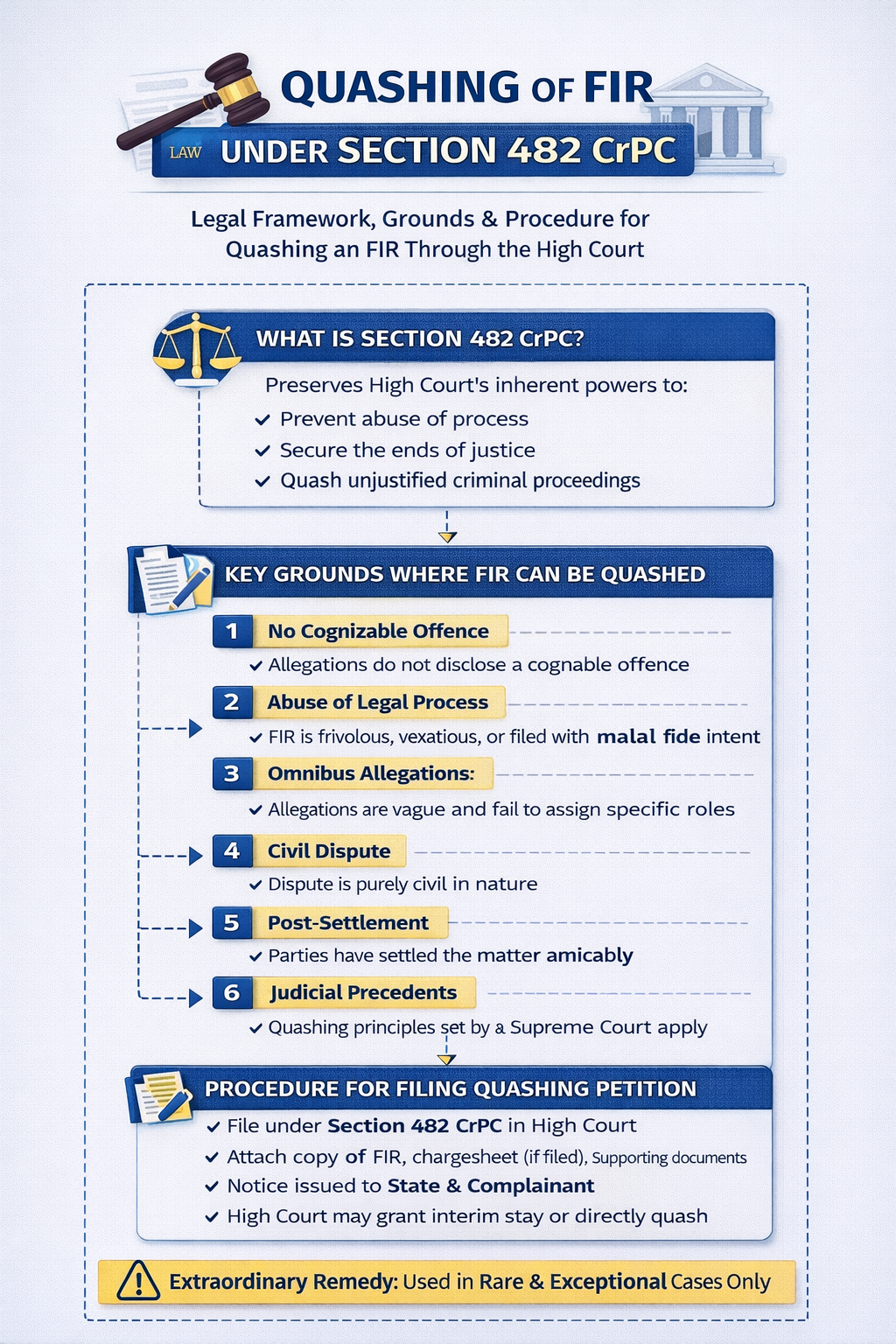
(i) The impugned judgement and order dated 04.04.2022 passed by the Ld. Single Bench of the High Court for the State of Telangana in Criminal Petition No. 3105 of 2022 is set aside and the criminal proceedings in “C.C. No. 46 of 2022” pending before the Court of the Judicial Magistrate, First Class, Bhongir under Section 482 of the Code of Criminal Procedure, 1973 is quashed qua the two appellants, Geddam Jhansi and Geddam Sathyakama Jabali.
(ii) The impugned judgement and order dated 03.02.2022 passed by the Ld. Single Bench of the High Court for the State of Telangana in Criminal Petition No. 1002 of 2022 is set aside and the criminal proceedings in DVC No. 25 of 2021 pending before the Court of the Additional Judicial Magistrate, First Class, Bhongir is quashed qua the appellant, Geddam Jhansi. This is having regard to the criminal proceeding against her being quashed as above and as identical allegation (paragraph 28 above) are made against her in DVC No. 25 of 2021, and in exercise of our powers under Article 142 of the Constitution of India. This is also by bearing in mind the relationship of the appellant Geddam Jhansi to the complainant, being the latters’s mother-in-law’s sister.

Geddam Jhansi and Anr Vs State of Telangana and Anr on 07 Feb 2025

Citations: [2025] 3 S.C.R. 1], [2025 INSC 160]

Other Sources:

https://indiankanoon.org/doc/192533816/

https://www.casemine.com/judgement/in/67a6e0c4a1572e13dd1ca525

https://testbook.com/recent-judgements/geddam-jhansi-vs-the-state-of-telangana

https://www.livelaw.in/supreme-court/s498a-ipc-when-family-relations-are-sought-to-be-brought-under-criminal-proceedings-courts-should-be-cautious-supreme-court-283311

https://www.verdictum.in/court-updates/supreme-court/geddam-jhansi-v-the-state-of-telangana-2025-insc-160-domestic-violence-1567439


https://www.verdictum.in/court-updates/supreme-court/geddam-jhansi-v-the-state-of-telangana-2025-insc-160-domestic-violence-1567439

https://www.verdictum.in/court-updates/supreme-court/geddam-jhansi-v-the-state-of-telangana-2025-insc-160-domestic-violence-1567439


Index of DV Judgments is here. Index of Quash Judgments is here.

Post Views: 607
Posted in Supreme Court of India Judgment or Order or Notification | Tagged 2-Judge (Division) Bench Decision Article 142 - Enforcement of decrees and orders of Supreme Court and orders as to discovery etc CrPC 482 – DVC Proceeding Quashed Geddam Jhansi Vs State of Telangana and Anr Landmark Case Reportable Judgement or Order Same Allegations in IPC 498A and DVC | Leave a comment

MS Gokaldas Paper Products Vs MS Lilliput Kidswear Ltd Anr on 5 Apr 2023

Posted on November 23, 2025 by ShadesOfKnife

A single judge of Delhi High Court held that acts of Contempt may be purged/remedies but not acts of perjury.

From Paras 7 and 8,

7. This brings us to the next issue i.e., whether Respondents have committed the offence of perjury by making a false statement in the reply to the present petition. In the reply, Respondent No. 2 has categorically denied the liability for Petitioner’s dues, in contrast to his earlier admission. Mr. Nakul Mohta, counsel for Respondent No. 2, argues that the stand taken in the reply was in light of aforementioned facts that came to the knowledge of Respondent No. 2 at a later stage, and for this reason a civil suit was also filed against the Petitioner. Without prejudice, to the above, he contends that a mere contradictory stand taken in a pleading should not on its own invite an action for perjury in exercise of the Court’s discretion provided under Section 340 of the Code of Criminal Procedure, 1973 [hereinafter “CrPC, 1973”]. Respondent No. 2, present in-person, explains that his stand was revised on account of fresh information received from his accounts team regarding debit notes that had been raised on the Petitioner for defective supplies. He states that earlier at the time of confirming Petitioner’s dues, he was unaware of the said debit notes and was in fact, hard pressed by multiple legal proceedings which were ongoing. At this juncture, he is willing to tender an unconditional apology to this Court.
8. The Court is unconvinced by the above submissions. Respondent No. 2, initially refuted the liability to pay the Petitioner’s dues, as recorded in order dated 17thDecember, 2012 in CO. PET. 519/2012. Subsequently in the said proceedings, he filed an affidavit in reply in February, 2013 [hereinafter “Affidavit of February, 2013”, provided at Annexure-C] admitting his liability and clarifying that the earlier denial was a bona fide mistake on account of a mix-up of files with a similarly named company. He further undertook to pay Petitioner’s dues in ten equal monthly instalments commencing from 01st April, 2013. Now, faced with the present contempt action he has denied his liability entirely by raising a plea of debit notes and has instead raised a claim on the Petitioner.

From Paras 10-12,

10. In the opinion of the Court, reply to the contempt petition, supported by Respondent No. 2’s affidavit, which denies the liability to pay Petitioner’s dues is plainly false in view of unambiguous and categorical admission made to the contrary, in the Affidavit of February, 2013. The explanation or the change in stand premised on Respondents being burdened by multiple pending litigations, downsizing/ lack of staff and lack of knowledge, is not convincing. In the opinion of the Court, the revised stand in the reply appears to be a wilful false statement. In the Affidavit of February, 2013, Respondent No. 2 verified that he was well-versed with the facts and circumstances of the case and that he is competent to swear the affidavit. He further verified that the statements made therein were true and correct to best of his knowledge. The legal system relies heavily on the honesty and integrity of individuals who appear before courts. When one makes a statement before the court or signs an affidavit, they are making a solemn declaration to tell the truth, the whole truth and nothing but the truth. Filing of a false affidavit is a serious offence that undermines the very foundation of the legal system. The subsequent reply and accompanying affidavit prima facie contain false statements made in the course of judicial proceedings, which is punishable under Section 193, 199 and 200 of the Indian Penal Code, 1860 [hereinafter, “IPC, 1860”].
11. Respondent No. 2 has offered to tender an unconditional apology. However, in the opinion of the Court, the same is of no avail. Perjury, is the act of knowingly and wilfully making false statements under oath, with the intent to deceive or mislead the court. It is a serious criminal offence, as it strikes at the very heart of the judicial process by undermining the integrity of the evidence presented in Court. The act of contempt can be purged or remedied, by the offending party, but in contrast, perjury cannot. Simply recanting or correcting a false statement cannot undo the act. Affidavits in a court of law have sanctity and cannot be taken casually. Thus, a false statement to the Court has to necessarily invite adverse action. In the present matter, the Court is not concerned as to why the promised schedule of payments has been breached by Respondents. The primary concern is Respondent No. 2’s statement of denying the liability of the dues in face of an earlier unequivocal admission. Such a contradictory stand without any cogent explanation is prima facie a deliberate false statement to mislead the Court and thus an apology by Respondent No. 2 would not deter an action invited for perjury.
12. Accordingly, this Court is prima facie of the view that offences under Sections 191 and 192 of IPC, 1860 punishable under Section 193, 199 and 200 of IPC, 1860 have been committed by Respondent No.2 in relation to the present proceedings. In terms of Section 340(1) of CrPC, 1973 read with Section 195(1)(b)(i) of CrPC, 1973, this Court is of the opinion that it is expedient in the interests of justice that an inquiry should be made into the false statement made by Respondent No. 2 in the reply to the present petition, for which a written complaint should be made to the concerned Metropolitan Magistrate. The Registrar General is hereby directed to draw up and make a complaint in the above terms and send it to the appropriate Metropolitan Magistrate within four weeks. The said complaint will be accompanied by a complete certified copy of the entire file of the present matter and CO. PET. 519/2012.

MS Gokaldas Paper Products Vs MS Lilliput Kidswear Ltd Anr on 5 Apr 2023

Index of Perjury Judgments is here.

Post Views: 198
Posted in High Court of Delhi Judgment or Order or Notification | Tagged 1-Judge Bench Decision CrPC 340 read with CrPC 195 MS Gokaldas Paper Products Vs MS Lilliput Kidswear Ltd Anr Perjury - Forged Evidence or False Statements on Oath or False Affidavit Submitted Perjury - Initiate Prosecution Perjury Under 340 CrPC | Leave a comment

Rekha Sharad Ushir Vs Saptashrungi Mahila Nagari Sahkari Patsansta Ltd on 26 Mar 2025

Posted on November 23, 2025 by ShadesOfKnife

A division bench of the Apex Court held (again!) as follows,

From Para 11,

11. It is settled law that a litigant who, while filing proceedings in the court, suppresses material facts or makes a false statement, cannot seek justice from the court. The facts suppressed must be material and relevant to the controversy, which may have a bearing on the decision making. Cases of those litigants who have no regard for the truth and those who indulge in suppressing material facts need to be thrown out of the court.

From Para 15,

15. It is pertinent to note that in the counter to the present appeal, the respondent has not denied the receipt of the letters dated 28th November 2016 and 13th December 2016. The complaint and affidavit in support of the complaint only refer to the notice dated 15th November 2016 issued by the advocate for the appellant to the respondent. What is stated in the complaint reads thus:
“……………………………………………………..
[D] The notice sent on the first address has been received on 15.11.2016. However, from the second address, envelope has been returned on 15.11.2016 with the postal remark as ‘left’.”
However, the respondent suppressed the letters dated 28th November 2016 and 13th December 2016 in the complaint and its statement on oath.

From Para 18 and 19,

18. The fact remains that in the complaint, the respondent has suppressed the reply dated 28th November 2016 and the letter dated 13th December 2016 sent by the appellant’s advocate. These two documents have also been suppressed in the statement on oath. The respondent made out a false case that the appellant did not reply to the demand notice. Moreover, the case that the documents as demanded were supplied is not pleaded in the complaint and statement under Section 200 of CrPC.
19. If these two letters were disclosed in the complaint, the learned Magistrate while recording the statement under Section 200 of CrPC, could have always questioned the respondent on the supply of documents to the appellant. What is important is that in the reply dated 28th November 2016, the appellant had reserved her right to give a reply to the demand notice after receiving the documents. It was the respondent’s duty to supply documents to the appellant or her advocate to enable the appellant to properly reply to the demand notice. At least, the inspection of documents could have been provided to the appellant. After noticing the fact that notwithstanding service of two letters written by the appellant, relied upon documents were not provided to the appellant, the learned Magistrate could have dismissed the complaint by exercising power under Section 203 of CrPC, as the appellant could not have replied to the statutory notice without looking at the documents relied upon.

From Para 21,

21. While filing a complaint under Section 200 of CrPC and recording his statement on oath in support of the complaint, as the complainant suppresses material facts and documents, he cannot be allowed to set criminal law in motion based on the complaint. Setting criminal law in motion by suppressing material facts and documents is nothing but an abuse of the process of law.

Rekha Sharad Ushir Vs Saptashrungi Mahila Nagari Sahkari Patsansta Ltd on 26 Mar 2025

Citations: [2025 INSC 399], [2025 SCC OnLine SC641]

Other Sources:

https://indiankanoon.org/doc/120031673/


Index of Perjury Judgments is here.

Post Views: 516
Posted in Supreme Court of India Judgment or Order or Notification | Tagged 2-Judge (Division) Bench Decision Abuse Or Misuse of Process of Court Perjury - Wilful Omission or Supression of Material Information Reportable Judgement or Order | Leave a comment

Sangeeta Gera Vs Sanjeev Gera on 22 Sep 2025

Posted on November 22, 2025 by ShadesOfKnife

A division bench of Delhi High Court held that, if you put any property in the joint names of wife and husband, other person, who paid nothing, will also get 50% of that said property.

From Para 29-35,

29. The question for consideration is whether the Respondent is entitled to a 50% share in the proceeds of the property held jointly by the parties. In the Order dated 17.01.2020, the Supreme Court made it clear that this question relating to 50% share of the wife will be taken up for consideration at the time of the MAT Appeal (FC) No. 38 of 2019.
30. Learned counsel for the Respondent had contended that the said proceeds have become part of the Respondent‟s stridhan under Section 14 of the HSA and therefore, she has the exclusive ownership over the same. However, a property jointly purchased at the time of marriage cannot be treated as the stridhan of the woman, as stridhan is confined to those properties which are gifted to her voluntarily by her parents, relatives, husband, or in-laws, either before or after the marriage, and which are intended for her exclusive ownership and enjoyment. A jointly acquired property, purchased in the name of both spouses, is by its very nature a joint asset and cannot fall within the ambit of stridhan, since it is not a gift exclusively made to the wife but rather an acquisition contributed to and held by both parties.
31. Normally, when a husband and wife acquire property during the subsistence of marriage, the presumption in law is that such acquisition is made from common family funds and that both spouses have contributed equally, irrespective of whether one of them is earning or not. In the present case, the subject property was purchased in the joint names of the husband and wife, although it is an admitted position that the entire consideration, including the payment of EMIs, was borne solely by the Appellant/Husband. It is further a matter of record that the title of the subject property is held in the names of both spouses as joint owners, and even the account in HSBC Bank, in which the surplus amount was deposited, was maintained in the joint names of the parties.
32. In this regard, a reference may be made to Section 4 of the Prohibition of Benami Property Transactions Act, 1988 [hereinafter referred to as “Benami Act”], which sets out as follows:-
“4. Prohibition of the right to recover property held benami.—
(1) No suit, claim or action to enforce any right in respect of any property held benami against the person in whose name the property is held or against any other person shall lie by or on behalf of a person claiming to be the real owner of such property.
(2) No defence based on any right in respect of any property held benami, whether against the person in whose name the property is held or against any other person, shall be allowed in any suit, claim or action by or on behalf of a person claiming to be the real owner of such property.”
33. Section 4 creates an absolute bar against the enforcement of rights in respect of property held benami. It stipulates that no person claiming to be the real owner of such property can institute any suit, claim, or action to enforce rights against the benamidar or any other person in whose name the property stands. Equally, it prohibits the raising of any defence in a pending suit, claim, or action on the ground that the property, though standing in the name of another, actually belongs to the real owner. The combined effect of sub-Sections (1) and (2) is that the real owner is entirely disabled from seeking recognition of any right, title, or interest in the benami property, either by way of initiating proceedings or by way of defence.
34. In this backdrop, once the property stands in the joint names of the spouses, the husband cannot be permitted to claim exclusive ownership merely on the ground that he alone provided the purchase consideration. Such a plea would contravene Section 4 of the Benami Act, which imposes an absolute bar against the enforcement of rights in respect of property held benami. The provision clearly stipulates that no person claiming to be the real owner of a property standing in another‟s name can either institute proceedings or raise a defence asserting such ownership. Thus, the combined effect of the presumption of equal ownership between spouses and the statutory prohibition under Section 4 is that the Appellant is prevented from contending that the amount from the sale of the joint property belongs to him alone.
35. Therefore, the Respondent is entitled to a 50% share in the proceeds of the property held jointly by the parties, and the money must be released to her.

Sangeeta Gera Vs Sanjeev Gera on 22 Sep 2025

Citations: [2025:DHC:8356-DB]

Other Sources:

https://indiankanoon.org/doc/30016714/

https://www.casemine.com/judgement/in/68d2fb6b3a3e913fa6f579c2

Husband Cannot Claim Sole Ownership of Joint Property Even if He Paid EMIs, Wife Entitled to 50% Proceeds: Delhi High Court

https://transfer-pricing.in/t/husband-cannot-claim-exclusive-ownership-of-a-property-jointly-held-by-both-the-spouses-merely-on-the-ground-that-he-alone-paid-the-emis/148


Index of

Post Views: 268
Posted in High Court of Delhi Judgment or Order or Notification | Tagged 2-Judge (Division) Bench Decision Property purchased in the name of wife Sangeeta Gera Vs Sanjeev Gera Section 4 of the Prohibition of Benami Property Transactions Act 1988 | Leave a comment

Ratheesh Vs Sreelakshmi and Ors on 14 Mar 2025

Posted on October 22, 2025 by ShadesOfKnife

A single judge of Kerala High Court held as follows, Even to dispose Interim Maintenance Applications, call for affidavits.

From Paras 6 and 7,

6. A slew of directions in the form of guidelines issued by the Supreme Court in Rajnesh (supra) and extracted above are mandatory in nature and  must be followed in all maintenance cases by all Courts dealing with maintenance throughout the country. The judgment in Rajnesh (supra) was delivered on 04/11/2020 and the guidelines therein have been circulated to all the Courts in India for compliance. After the judgment in Rajnesh (supra) was rendered, the Supreme Court in the judgment in Aditi Alias Mithi v. Jithesh Sharma [(2023) SCC OnLine SC 1451] which was delivered on 06/11/2023 noticed that guidelines in Rajnesh (supra) have not been followed by many courts in the country while fixing the maintenance, either interim or final. The Supreme Court expressed its deep concern in not adhering to the mandatory guidelines given in Rajnesh (supra) so far as the requirement of filing the Affidavit of Disclosure is concerned. Accordingly, the Supreme Court has issued directions to re-circulate a copy of the judgment containing guidelines for expeditious disposal of cases involving grant of maintenance to judicial officers in all High Courts across the country. However, it is quite unfortunate to notice that, despite the specific directions of the Supreme Court in Rajnesh (supra) and Aditi Alias Mithi (supra), various Courts in the State, like in the present one, are passing orders, either interim or final, fixing maintenance, without there being any Affidavit of Disclosure on record filed by the parties. This Court can take judicial notice of the said fact from the number of Original Petitions [(OP(Crl.)] and Revision Petitions [(RP(FC)] filed before this Court challenging the interim as well as final order of maintenance passed without bringing on record the Affidavit of Disclosure of the parties in terms of the directions in Rajnesh (supra).
7. Coming to the facts of the case, admittedly, neither of the parties has filed the disclosure affidavit in terms of the decision rendered by the Apex Court in Rajnesh (supra). However, the Family Court disposed of the interim maintenance application as per the impugned order considering the pleadings. The petitioner herein, while considering the application for interim maintenance, pointed before the Family Court that the 1st respondent did not file the affidavit showing her assets and liabilities. However, the Family Court took the view that since the petitioner himself did not file the affidavit, he could not take up such a contention. Guideline No.72.1(a) in Rajnesh (supra) specifically says that the parties in all maintenance proceedings, including pending proceedings, throughout the country, shall file an Affidavit of Disclosure of Assets and Liabilities before the concerned court as a mandatory requirement. Guideline No.72.2(b) in Rajnesh (supra) makes it mandatory for the applicant making a claim for maintenance to file a concise application accompanied by the Affidavit of Disclosure of Assets. It was further observed that based on the pleadings filed by both parties and the Affidavits of Disclosure, the court would be in a position to make an objective assessment of the approximate amount to be awarded towards maintenance at the interim stage. It is true that guideline No.72.3 says that the respondent also must submit the reply along with the Affidavit of Disclosure within a maximum period of four weeks, and the court may not grant more than two opportunities for submission of the affidavit of Disclosure of Assets and Liabilities to the respondent. But the mere fact that the petitioner herein did not file an Affidavit of Disclosure as directed in Rajnesh (supra) would not absolve the 1st respondent from filing such an affidavit. Since the impugned order is passed without the affidavits of both parties, it cannot be sustained and is liable to be set aside. The matter is required to be remitted back for fresh consideration in accordance with the law by complying with the directions in Rajnesh (supra). The counsel for the 1st respondent submitted that the 1st respondent has now filed an Affidavit of Disclosure of Assets and Liabilities before the Family Court.

Ratheesh Vs Sreelakshmi and Ors on 14 Mar 2025

Citations: [2025:KER:22087]

Other Sources:


Index of Maintenance Judgments u/s 144 BNSS is here.

Post Views: 270
Posted in High Court of Kerala Judgment or Order or Notification | Tagged 1-Judge Bench Decision Insist On Income and Assets Affidavit In Matrimonial Cases Ratheesh Vs Sreelakshmi and Ors | Leave a comment

Srinivasa D Vs Asha on 20 Mar 2025

Posted on October 20, 2025 by ShadesOfKnife

A wonderful judgment from a single judge of Karnataka High Court, Bengaluru bench, acknowledging that litigants lie in their income affidavit and directing the Family Courts to initiate perjury proceedings in accordance with law.

From Paras 10 to 13,

10. Time and again, it is seen by this Court that in several matters, the parties deliberately do not disclose their correct income, avocation, details of assets and liabilities with an intent to portray lesser income and secure favourable order by misleading and misguiding the Court, which is highly deplorable. In the present case, the respondent has deliberately suppressed the materials, which was well within her knowledge and played mischief and mislead the Court to get a favourable order. The sanctity of the Court and its orders would necessarily have to be respected by all the parties to the proceedings and so also by the learned counsel representing the parties.
11. This Court hopes and trusts that the learned counsels representing the parties advise their respective parties with regard to seriousness and sanctity of the Court orders and also be aware themselves of the sanctity of the Court orders and warn their clients/parties with regard to legal consequences of misleading, misrepresenting, filing false affidavit and adducing false statements on oath by way of oral and documentary evidence.
12. In view of several instances where parties are careless and deliberately making false statements on oath and filing false affidavits, this Court deems it appropriate to direct the Family Court/Trial Court dealing with such matters to initiate suitable action in accordance with law so that careless filing of affidavits and casual approach before the Court while filing assets and liabilities in the form of affidavits and adducing evidence before the Court is curbed and the person at fault is penalized by appropriate action of the Court.
13. At this stage, this Court deems it appropriate to issue following guidelines and directions to Family Courts and trial Courts dealing in maintenance applications:
a) Family Courts/Trial Courts dealing in maintenance applications shall insist on filing assets and liabilities and expenses as per the judgment in the case of Rajnesh -vs- Neha and another reported in (2021)2 SCC 324.
b) If an application is filed to summon salary details or other source of income by either spouse, the same shall be considered favourably, in the interest of justice.
c) If the Family Courts/Trial Courts are of the opinion that the salary certificates/details and particulars of other source of income are required to decide the maintenance application, it shall do so by passing suo motu orders for the same from either or both spouses.
d) In case of false Affidavits filed on oath and false information given deliberately to mislead and secure favourable orders by such information, the defaulting party shall be liable to face legal consequences in accordance to law.
e) Any such maintenance secured by way of such misleading and false/wrong information, shall be ordered to be refunded to the aggrieved party.
f) Maintenance applications both interim and main shall be decided expeditiously.
g) These Guidelines shall be strictly followed and adhered.

Srinivasa D Vs Asha on 20 Mar 2025

Citations: [2025:KHC:11787]

Other Sources:


Index of Maintenance Judgments u/s 144 BNSS is here. Index of DV Judgments is here.

Post Views: 373
Posted in High Court of Karnataka Judgment or Order or Notification | Tagged 1-Judge Bench Decision CrPC Sec 125 or BNSS Sec 144 - Interim Maintenance Denied Issued or Recommended Guidelines or Directions or Protocols to be followed Landmark Case Perjury - Initiate Prosecution Reportable Judgement or Order Srinivasa D Vs Asha | Leave a comment

Vinod Kumar K Vs Chaitra N on 3 Apr 2025

Posted on October 20, 2025 by ShadesOfKnife

A good judgment from a single judge of Karnataka High Court, Bengaluru bench, refusing maintenance to a lying wife and directing to initiate perjury proceedings in accordance with law.

From Paras 7 to 11,

7. As per the judgment of the Hon’ble Supreme Court in the case of Rajnesh stated supra, in all the maintenance petitions, parties are duty bound to file assets and liabilities and disclose their true income, avocation, employment and so also details of income, assets and liabilities of the other spouse. In the present case, petitioner – husband has filed assets and liabilities showing the details of his employment, income etc., It is also stated about job of the respondent and what is the income drawn by the respondent – wife. On the contrary, respondent – wife though filed assets and liabilities for the 2nd time on 8.11.2022, very cleverly and intentionally suppressed fact of her employment as a Guest Teacher in Government Junior Primary School and income she is getting from the said employment. Nothing prevented the respondent from saying so in the affidavit of assets and she was not asked by her counsel with regard to disclosing her employment and the income and if it was brought to her notice and knowledge, she would have definitely disclosed the same in the affidavit. The fact that she has sought for unconditional apology itself apparently clear that she has suppressed the true facts before the Court. This kind of suppression of material before the Court with deliberate intention to mislead the Court to obtain a favourable order in the maintenance cases is deplorable and cannot be accepted. Fortunately, the petitioner is able to secure certain information under the RTI Act, due to which Court came to know with regard to employment of the respondent, otherwise, it would not have come to the notice of the Court. Such attitude and behaviour of the respondent before the Court is deplorable and cannot be accepted.
8. In the present case on hand, the income generated by the respondent – wife during her employment as a Guest Teacher was around Rs.10,000/- to Rs.15,000/-, which is not clearly stated. If the average is taken, it is Rs.12,500/- per month. Whereas, the petitioner – husband is earning Rs.47,240/- and after deduction getting Rs.21,000/- per month.
9. In view of the discussion made hereinabove, it is apparently clear that the respondent – wife was working and capable of working and earning as on the date of filing 2nd affidavit of assets and liabilities before the Family Court. It is not the case of the respondent that she is unable to work and incapable to earn income and therefore to be maintained by the petitioner. It is also stated that there are no children from the marriage. Considering the totality of facts and circumstances of the case, this Court is of the opinion that the respondent – wife would not be entitled to maintenance.
10. The intent of the Hon’ble Supreme Court in the case of Rajnesh stated supra is to render justice to the parties on the basis of self declaration of assets and liabilities including income and occupation. But, it is seen that in most of the cases, there is deliberate suppression of facts only with an intention to secure favourable order. In view of several instances where parties are careless and deliberately making false statements on oath and filing false affidavits, this Court in RPFC No.24/2023 decided on 20th March 2025 directed the Family Court/Trial Court dealing with such matters to initiate suitable action in accordance with law so that careless filing of affidavits and casual approach before the Court while filing assets and liabilities in the form of affidavits and adducing evidence before the Court is curbed and the person at fault is penalized by appropriate action of the Court. This Court issued certain guidelines and directions to the Family Courts/Trial Courts dealing in maintenance applications. Accordingly, this Court deems it appropriate to direct the Family Court to initiate suitable action against the respondent – wife after affording reasonable opportunity
to both the parties.
11. Learned counsel for the petitioner submits that in compliance of the order of the Family Court, petitioner has deposited Rs.25,000/- in the execution proceedings. In view of the respondent – wife having suppressed the material facts of her employment and income and this Court coming to the conclusion that the respondent – wife would not be entitled for maintenance, I deem it appropriate to direct the respondent – wife to refund the said amount of Rs.25,000/- to the petitioner – husband.

Vinod Kumar K Vs Chaitra N on 3 Apr 2025

Citations: [2025:KHC:14149]

Other Sources:

https://www.casemine.com/judgement/in/67eef65cd50c1c738ee6dd37


Index of Maintenance Judgments u/s 144 BNSS is here.

Post Views: 379
Posted in High Court of Karnataka Judgment or Order or Notification | Tagged 1-Judge Bench Decision Catena of Landmark Judgments Referred/Cited to CrPC 125 or BNSS 144 - Refund of Maintenance CrPC Sec 125 or BNSS Sec 144 - Interim Maintenance Denied Landmark Case Perjury - Initiate Prosecution Vinod Kumar K Vs Chaitra N | Leave a comment

Jagdamba Trivedi Vs Neha Trivedi on 18 Jan 2021

Posted on October 19, 2025 by ShadesOfKnife

A good judgment from a single judge of High Court of Chhattisgarh Judgment explaining how important it is to follow the mandate u/s 421 Cr.P.C. while executing maintenance orders u/s 125(1) Cr.P.C.

From Paras 10, 11 and 12,

10.A careful perusal of the aforesaid provision would show that for recovery of the amount of maintenance, procedure under Section 421(1) has to be followed by either issuing warrant for levying the amount due by attachment and sale of movable property belonging to the offender or by issuing a warrant to the Collector of the district, for authorising him to realise the amount as arrears of land revenue from the movable or immovable property, or both, of the defaulter. Section 421(3) provides that where the Court issues a warrant to the Collector under clause (b) of Subsection (1), the Collector shall realise the amount in accordance with the law relating to recovery of arrears of land revenue, as if such warrant were a certificate issued under such law.
11.A conjoint reading of the provisions contained under Section 125(3) read with Section 421 of CrPC would show that by virtue of Section 125(3) of CrPC, the Magistrate has been empowered to recover the amount of arrears of maintenance by following the procedure prescribed for levy of fine under Section 421 of CrPC. Two modes are prescribed under Section 421 of CrPC for recovery of the arrears of maintenance due as if it were a fine levied. The Court can either issue a warrant for the levy of the amount by attachment and sale of any movable property belonging to the defaulter or issue a warrant to the Collector of the District, authorising him to realise the amount as arrears of land revenue from the movable or immovable property, or both, of the defaulter under Section 421(1)(a) and 421(1)(b) of CrPC. It is only after the Magistrate has exhausted the two modes prescribed under Section 421 of CrPC and still fails to recover the arrears of maintenance due that he can sentence the person who committed the default to imprisonment as enjoined under Section 125(3) of CrPC for the period prescribed in the above-stated provision and if in the execution of sentence of imprisonment so awarded, the defaulter does not appear to suffer, the sentence so awarded, the Court should at the first instance issue summons/notice for his appearance and if the defaulter seems to be avoiding the summons, the Court in the second instance should issue bailable warrant for his appearance to undergo sentence. The Courts, at first and second instance, shall refrain from issuing non-bailable warrant.
12.It is quite vivid that the provisions contained under Section 125(3) of CrPC itself provide that the Court may sentence such a person for whole or
any part of each month’s allowance after the execution of the warrant, as such, Section 125(3) CrPC speaks only of issue of a warrant for levying the amount in the manner provided for levying fines and does not speak of a warrant of arrest. The issue of a warrant for levy of the amount due by way of attachment and sale is a condition precedent to the sentencing of the defaulter to imprisonment. As such, without following the procedure prescribed under Section 421(1)(a) and 421(1)(b) of CrPC and without issuance of warrant of attachment and sale, no warrant can be issued and no order for imprisonment can be passed under Section 125(3) of CrPC.

From Para 17,

17. Reverting to the facts of the instant case in light of the aforesaid legal analysis, it is quite vivid that learned Family Court, finding that the arrears of maintenance is due from the petitioner, straightway issued warrant of arrest without following the procedure laid down in Section 421(1)(a) and 421(1)(b) of CrPC, whereas learned Magistrate ought to have followed the procedure laid down in Section 421 of CrPC for recovering the arrears of the amount of maintenance, and if after following the procedure as envisaged in Section 421 of CrPC by issuance of warrant of attachment of movable and immovable property of the defaulter and sale thereof; still arrears of amount of maintenance remains due, then order of imprisonment can be passed, as such, the order directing issuance of non-bailable warrant of arrest against the petitioner is contrary to Section 125(3) read with Sections 421(1)(a) and 421(1)(b) of the CrPC. Accordingly, the order dated 09/05/2019 (Annexure A/1) passed in MJC No. 43/2019 is hereby set aside and learned Family Court is directed to follow the procedure laid down by the Supreme Court in the matter of Rajnesh (supra) strictly for recovery of the amount of maintenance.

Jagdamba Trivedi Vs Neha Trivedi on 18 Jan 2021

Citations: [LAWS(CHH)-2021-1-96]

Other Sources:

https://www.courtkutchehry.com/judgements/1070468/jagdamba-trivedi-vs-neha-trivedi/

https://www.casemine.com/judgement/in/6050d0e69fca195f67640edb

https://www.indianemployees.com/judgments/details/jagdamba-trivedi-versus-neha-trivedi

https://www.the-laws.com/encyclopedia/browse/case?caseId=021202701000&title=jagdamba-trivedi-vs-neha-trivedi#:~:text=He%20would%20also%20submit%20that%20if%20the,(Annexure%20A/2)%20deserve%20to%20be%20set%20aside.


Index of Maintenance Orders u/s 144 BNSS is here.

Post Views: 251
Posted in High Court of Chhattisgarh Judgment or Order or Notification | Tagged 1-Judge Bench Decision BNSS Sec 144 - Order for maintenance of wives children and parents Catena of Landmark Judgments Referred/Cited to CrPC 421 - Warrant for levy of fine Follow CrPC 421 For Maintenance Recovery Issued or Recommended Guidelines or Directions or Protocols to be followed Jagdamba Trivedi Vs Neha Trivedi Not followed Guidelines in Rajnesh Vs Neha Judgment Reportable Judgement or Order | Leave a comment

S.Mumthas and Anr Vs M.Nizar @ Nizarudeen and Anr

Posted on October 19, 2025 by ShadesOfKnife

Case No: OP (Crl.) 802/ 2024


Index of Maintenance Judgments under Sec 144 BNSS is here.

Post Views: 267
Posted in High Court of Kerala Judgment or Order or Notification | Tagged 1-Judge Bench Decision BNSS Sec 144 - Order for maintenance of wives children and parents S.Mumthas and Anr Vs M.Nizar @ Nizarudeen and Anr | Leave a comment

Rita Raj Vs Pabitra Roy Chaudhuri on 17 Oct 2025

Posted on October 19, 2025 by ShadesOfKnife

A division bench of Delhi High Court observed as follows, while upholding the Family Court’s decision not to grant alimony.

From Paras 53 to 57,

53. In the present Appeal, the Appellant‟s primary challenge is directed against the learned Family Court‟s finding on cruelty. The evidence on record unequivocally establishes a sustained pattern of mental cruelty inflicted by the Appellant upon the Respondent.
54. The most compelling evidence comprises the series of text messages sent from the Appellant‟s mobile number between March and June 2011. These messages, which contained vile, derogatory, and scandalous language, including questioning the Respondent‟s legitimacy and making reprehensible allegations against his mother, were proved beyond doubt.
55. Specific messages dated 09.05.2011, 15.05.2011, and 27.06.2011, which included terms such as “bastard”, “son of a bitch,” and suggestions that his mother should “earn through prostitution”, are by themselves sufficient to constitute mental cruelty of the gravest kind.
56. The Appellant‟s explanation that the Respondent must have sent these messages to himself from her phone is inherently improbable and was rightly rejected by the learned Family Court as an afterthought, particularly since this defense was never pleaded in the written statement and no corroborative evidence was adduced to support it.
57. Words and communications of the sort proved in this case are not innocuous. The law recognizes that mental cruelty may be visited by persistent and deliberate verbal abuse and conduct that degrades a spouse and injures reputation and self-respect. The text messages in question contained imputations of illegitimacy, filthy epithets directed at the Respondent‟s mother and other degrading expressions a pattern of conduct which, cumulatively, the learned Family Court was entitled to regard as causing grave mental agony to the Respondent.

From Para 82,

82. The provision under Section 25 is fundamentally equitable in nature and aims to secure financial justice between spouses, ensuring that a party lacking independent means of subsistence is not left destitute following the dissolution of marriage. However, the grant of such relief is not automatic; it is contingent upon proof of genuine financial necessity and equitable considerations.
83. In the present case, the Appellant is an officer of the IRTS, a highly esteemed branch of the Indian Civil Services, whereas the Respondent is a practicing lawyer.
84. It is an undisputed fact that the Appellant, being a Group ‘A’ officer, holds a senior and responsible position in the Government of India and receives a regular and substantial salary along with numerous allowances and service benefits commensurate with her post. The material on record does not disclose any evidence of financial hardship, dependency, or extraordinary circumstances that would render her incapable of maintaining herself with dignity. There is also no pleading or proof of any financial liability, medical condition, or familial obligation that could necessitate monetary support from the Respondent. Additionally, there is no evidence to suggest a substantial difference between the incomes of the parties.
85. Judicial discretion under Section 25 cannot be exercised to award alimony where the applicant is financially self-sufficient and independent, and such discretion must be exercised properly and judiciously, based on the record, the relative financial capacities of the parties, and the absence of any material demonstrating economic vulnerability on the part of the Appellant.
86. A careful examination of the record further reveals that the parties cohabited as husband and wife only for a brief and transitory period, and the marriage did not evolve into a stable or enduring union characterized by emotional, social, or financial interdependence. The absence of any child from the wedlock further eliminates a continuing financial responsibility that might otherwise justify an award of alimony or maintenance.
87. It is a settled principle that permanent alimony is intended as a measure of social justice and not as a tool for enrichment or equalizing the financial status of two capable individuals. The law requires that the applicant demonstrate a genuine need for financial assistance. In the present case, the Appellant‟s position as a senior government officer, her steady and substantial income, and the absence of dependents collectively establish that she is fully capable of maintaining herself. No evidence of financial incapacity, duress, or other compelling circumstances has been presented to justify judicial intervention.

Rita Raj Vs Pabitra Roy Chaudhuri on 17 Oct 2025

Citations: [2025:DHC:9233-DB]

Other Sources:

https://indiankanoon.org/doc/156230068/

https://www.casemine.com/judgement/in/68f2a09ee5e6a9673013a510


Index of Maintenance and Alimony judgment under Hindu Marriage Act is here.

Post Views: 1,256
Posted in High Court of Delhi Judgment or Order or Notification | Tagged 2-Judge (Division) Bench Decision Catena of Landmark Judgments Referred/Cited to Family Courts Act Sec 14 - Application of Indian Evidence Act 1872 HM Act 25 - No Maintenance or Alimony To Independent Wife HM Act 25 - Permanent alimony and maintenance HM Act 25 - Permanent Alimony Denied Rita Raj Vs Pabitra Roy Chaudhuri | Leave a comment

Post navigation

  • Older posts
  • Newer posts

Search within entire Content of “Shades of Knife”

My Legal X Timeline

Advocate Sandeep Pamarati 🇮🇳💪👨🏻‍🎓 Follow

AP High Court Advocate with M Tech (CS) || 12 years in 'Software Industry' as Solution Architect || Blogs at https://t.co/29CB9BzK4w || #TDPTwitter

SandeepPamarati
Retweet on Twitter Advocate Sandeep Pamarati 🇮🇳💪👨🏻‍🎓 Retweeted
anandmahindra anand mahindra @anandmahindra ·
18 Jun

I ran across this video a few days ago and couldn’t stop watching it.

It’s about something ordinary & boring, a plastic gas lighter. But it changes how one thinks about manufacturing.

That lighter in so many of our homes, holds pressurised gas. It has over 30 microscopic parts,

Reply on Twitter 2067509022723633219 Retweet on Twitter 2067509022723633219 951 Like on Twitter 2067509022723633219 4564 X 2067509022723633219
Retweet on Twitter Advocate Sandeep Pamarati 🇮🇳💪👨🏻‍🎓 Retweeted
thebetterindia The Better India @thebetterindia ·
17 Jun

Every evening, while most people head home, Gautam Yadav begins his mission of kindness.

For the last 7 years, this daily wage worker from Berunda has been collecting leftover rotis from households and feeding nearly 300 stray animals every day. Despite facing financial

Reply on Twitter 2067283631517614204 Retweet on Twitter 2067283631517614204 114 Like on Twitter 2067283631517614204 371 X 2067283631517614204
Retweet on Twitter Advocate Sandeep Pamarati 🇮🇳💪👨🏻‍🎓 Retweeted
alongimna Temjen Imna Along @alongimna ·
18 Jun

Ye hai Northeast meri jaan 🩵

Thank you, Lieutenant General Vikas Lakhera Ji, for reminding the nation that there is much to learn from the honesty, discipline, culture, and community spirit of the Northeastern states.

Reply on Twitter 2067431201967861969 Retweet on Twitter 2067431201967861969 453 Like on Twitter 2067431201967861969 2196 X 2067431201967861969
Retweet on Twitter Advocate Sandeep Pamarati 🇮🇳💪👨🏻‍🎓 Retweeted
kadirodu_offl 🔱🐎 సుజత్ 🕉️☪️✝️ @kadirodu_offl ·
18 Jun

బాగ సంపాదించి అమ్మ నాన్న ని గొప్పగా చూసుకోవాలని కలలు కనే ప్రతి కొడుక్కి చివర్లో ఒక విషయం తెలుస్తుంది ..

అదే 👇 ఇది !!

ఈ విషయం తెలిసాక వాడి మనసు ఎంత ఆవేదన పడుతుందో అనుభవించిన వాడికే అర్థం అవుతుంది !!

Reply on Twitter 2067493903490851119 Retweet on Twitter 2067493903490851119 345 Like on Twitter 2067493903490851119 2238 X 2067493903490851119
Load More

Recent Posts

  • Pavul Yesu Dhasan Vs Registrar SHRC of TN and Ors on 30 Apr 2025 June 18, 2026
  • Manoj Kumar Vs Nita Bharti on 17 Mar 2026 June 17, 2026
  • Cruelty as a Criminal Offence Explained June 12, 2026
  • Bail Compliance Undertaking Format – Draft, Legal Requirements & Sample Template June 12, 2026
  • Warning Signs of Escalating Matrimonial Litigation – Early Red Flags Every Spouse Should Recognize June 12, 2026

Most Read Posts

  • Reply to Section 41A CrPC Notice – Format with Legal Explanation (4,921 views)
  • Anu Aggarwal Vs Sushant Aggarwal on 20 Jan 2026 (3,451 views)
  • Umme Farva Vs State of U.P. and Anr on 14 Jan 2026 (3,329 views)
  • Charge Sheet and Final Report Explained (2,768 views)
  • Regular Bail Application Format (Section 437/439 CrPC) (2,155 views)
  • Neha Lal Vs Abhishek Kumar on 20 Jan 2026 (1,972 views)
  • Arrest Procedure in 498A cases after Arnesh Kumar (1,906 views)
  • Discharge Application Format in 498A Case – Draft, Procedure & Sample Template (1,741 views)
  • Can You Travel Abroad After an FIR Is Registered? – Legal Position Explained (1,655 views)
  • Atul Kumar Bajpai Vs State of UP and Anr on 17 Sep 2025 (1,518 views)

Tags

Reportable Judgement or Order (433)2-Judge (Division) Bench Decision (413)Legal Procedure Explained - Interpretation of Statutes (382)Landmark Case (381)1-Judge Bench Decision (362)Catena of Landmark Judgments Referred/Cited to (293)Work-In-Progress Article (215)3-Judge (Full) Bench Decision (101)Sandeep Pamarati (92)Article 21 - Protection of life and personal liberty (80)Issued or Recommended Guidelines or Directions or Protocols to be followed (71)Perjury Under 340 CrPC (66)Absurd Or After Thought Or Baseless Or False Or General Or Inherently Improbable Or Improved Or UnSpecific Or Omnibus Or Vague Allegations (61)Reprimands or Setbacks to YCP Govt of Andhra Pradesh (49)Summary Post (47)CrPC 482 - Quash (43)HM Act 13 - Divorce Granted to Husband (42)Legal Terrorism (41)Divorce granted on Cruelty ground (41)Not Authentic copy hence to be replaced (40)

Categories

Supreme Court of India Judgment or Order or Notification (753)Bare Acts or State Amendments or Statutes or GOs or Notifications issued by Central or State Governments (328)High Court of Andhra Pradesh Judgment or Order or Notification (186)High Court of Delhi Judgment or Order or Notification (164)High Court of Bombay Judgment or Order or Notification (112)High Court of Karnataka Judgment or Order or Notification (93)Legal Procedure (77)High Court of Madras Judgment or Order or Notification (70)High Court of Allahabad Judgment or Order or Notification (61)LLB Study Material (59)General Study Material (56)High Court of Punjab & Haryana Judgment or Order or Notification (52)Assorted Court Judgments or Orders or Notifications (50)High Court of Kerala Judgment or Order or Notification (46)Prakasam DV Cases (46)Judicial Activism (for Public Benefit) (45)District or Sessions or Magistrate Court Judgment or Order or Notification (44)High Court of Madhya Pradesh Judgment or Order or Notification (38)High Court of Gujarat Judgment or Order or Notification (28)High Court of Calcutta Judgment or Order or Notification (27)

Recent Comments

  • The Divorce Law Firm on Life Cycle Stages of a Divorce case
  • The Divorce Law Firm on Life Cycle Stages of a Divorce case
  • ShadesOfKnife on Sandeep Pamarati Vs Ungrateful Knife (IPC 498A Case)
  • KONURU VINAYKUMAR on Sandeep Pamarati Vs Ungrateful Knife (IPC 498A Case)
  • ShadesOfKnife on Lifecycle Stages of a Section 498A IPC Case

Archives of SoK

  • June 2026 (9)
  • May 2026 (24)
  • April 2026 (33)
  • March 2026 (42)
  • February 2026 (30)
  • January 2026 (21)
  • December 2025 (2)
  • November 2025 (3)
  • October 2025 (17)
  • September 2025 (12)
  • August 2025 (5)
  • July 2025 (10)
  • June 2025 (15)
  • May 2025 (3)
  • April 2025 (10)
  • March 2025 (7)
  • February 2025 (8)
  • January 2025 (1)
  • December 2024 (3)
  • November 2024 (4)
  • October 2024 (16)
  • September 2024 (15)
  • August 2024 (14)
  • July 2024 (11)
  • June 2024 (18)
  • May 2024 (13)
  • April 2024 (9)
  • March 2024 (23)
  • February 2024 (15)
  • January 2024 (11)
  • December 2023 (11)
  • November 2023 (9)
  • October 2023 (13)
  • September 2023 (12)
  • August 2023 (15)
  • July 2023 (17)
  • June 2023 (11)
  • May 2023 (6)
  • April 2023 (5)
  • March 2023 (10)
  • February 2023 (9)
  • January 2023 (12)
  • December 2022 (12)
  • November 2022 (8)
  • October 2022 (13)
  • September 2022 (17)
  • August 2022 (10)
  • July 2022 (21)
  • June 2022 (27)
  • May 2022 (23)
  • April 2022 (32)
  • March 2022 (17)
  • February 2022 (6)
  • January 2022 (2)
  • December 2021 (7)
  • November 2021 (7)
  • October 2021 (6)
  • September 2021 (10)
  • August 2021 (31)
  • July 2021 (45)
  • June 2021 (17)
  • May 2021 (17)
  • April 2021 (18)
  • March 2021 (58)
  • February 2021 (14)
  • January 2021 (50)
  • December 2020 (35)
  • November 2020 (68)
  • October 2020 (67)
  • September 2020 (28)
  • August 2020 (41)
  • July 2020 (20)
  • June 2020 (36)
  • May 2020 (40)
  • April 2020 (38)
  • March 2020 (26)
  • February 2020 (43)
  • January 2020 (35)
  • December 2019 (34)
  • November 2019 (4)
  • October 2019 (18)
  • September 2019 (57)
  • August 2019 (33)
  • July 2019 (12)
  • June 2019 (18)
  • May 2019 (5)
  • April 2019 (19)
  • March 2019 (58)
  • February 2019 (11)
  • January 2019 (90)
  • December 2018 (97)
  • November 2018 (43)
  • October 2018 (31)
  • September 2018 (73)
  • August 2018 (47)
  • July 2018 (143)
  • June 2018 (92)
  • May 2018 (97)
  • April 2018 (59)
  • March 2018 (8)

Blogroll

  • Daaman Promoting Harmony 0
  • Fight against Legal Terrorism Fight against Legal Terrorism along with MyNation Foundation 0
  • Good Morning Good Morning News 0
  • Insaaf India Insaaf Awareness Movement 0
  • MyNation Hope Foundation Wiki 0
  • MyNation.net Equality, Justice and Harmony 0
  • Sarvepalli Legal 0
  • Save Indian Family Save Indian Family Movement 0
  • SIF Chandigarh SIF Chandigarh 0
  • The Male Factor The Male Factor 0
  • Unitedmen Foundation a dedicated community forged with the mission to unite men facing legal challenges in marital disputes. 0
  • Vaastav Foundation The Social Reality 0
  • Vinayak my2centsworth – This blog is for honest law abiding men, married or planning to get married 0
  • Voice4india Indian Laws, Non-profits, Environment 0
  • Writing Law Writing Law by Ankur 0

RSS Cloudflare Status

  • MSP (Minneapolis) on 2026-06-23 June 23, 2026
    THIS IS A SCHEDULED EVENT Jun 23, 03:00 - 08:00 UTC Jun 18, 18:30 UTC Scheduled - We will be performing scheduled maintenance in MSP (Minneapolis) datacenter on 2026-06-23 between 03:00 and 08:00 UTC.Traffic might be re-routed from this location, hence there is a possibility of a slight increase in latency during this maintenance window […]
  • Scheduled Workers Platform Configuration Maintenance June 22, 2026
    THIS IS A SCHEDULED EVENT Jun 22, 12:00 - 13:00 UTC Jun 10, 20:16 UTC Scheduled - On 2026-06-22 from 12:00-13:00 UTC, Cloudflare will be performing scheduled maintenance on the data store responsible for Workers platform configuration. During this maintenance window, customers will be unable to make configuration changes for up to 3 minutes. This […]
  • EWR (Newark) on 2026-06-22 June 22, 2026
    THIS IS A SCHEDULED EVENT Jun 22, 01:00 UTC  -  Jun 23, 09:00 UTC Jun 19, 06:32 UTC Scheduled - We will be performing scheduled maintenance in EWR (Newark) datacenter between 2026-06-22 01:00 and 2026-06-23 09:00 UTC.Traffic might be re-routed from this location, hence there is a possibility of a slight increase in latency during […]

RSS List of Spam Server IPs from Project Honeypot

  • 34.86.127.194 | S June 18, 2026
    Event: Bad Event | Total: 2 | First: 2026-06-18 | Last: 2026-06-18
  • 198.62.4.63 | SD June 18, 2026
    Event: Bad Event | Total: 220 | First: 2026-06-18 | Last: 2026-06-18
  • 198.62.4.142 | SD June 18, 2026
    Event: Bad Event | Total: 220 | First: 2026-06-18 | Last: 2026-06-18
Owned and Operated by Advocate Sandeep Pamarati
Proudly powered by WordPress
Theme: Flint by Star Verte LLC

Bad Behavior has blocked 811 access attempts in the last 7 days.

pixel