web analytics

Menu

Skip to content
Shades of Knife
  • Home
  • True Colors of a Vile Wife
  • Need Inspiration?
  • Blog Updates
  • SOK Gallery
  • Vile News Reporter
  • About Me
  • Contact Me

Shades of Knife

True Colors of a Vile Wife

Author: Suprajaa Rajan

Framing of Charges Explained

Posted on March 20 by Suprajaa Rajan

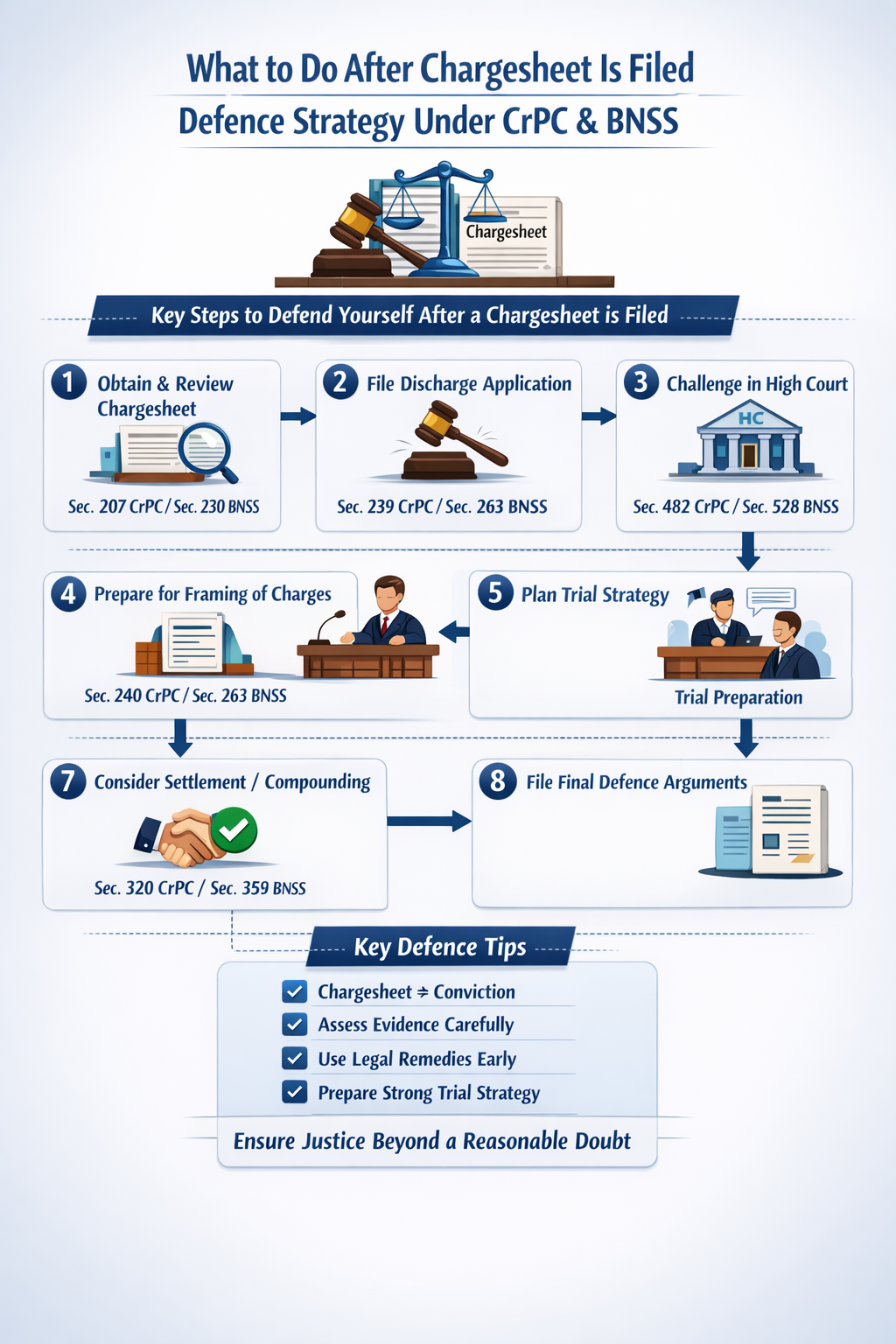
Framing of charges is a crucial stage in criminal proceedings where the court formally defines the specific accusations against the accused. At this stage, the court determines whether sufficient grounds exist to proceed with a trial.

Under Indian criminal law, the provisions relating to framing of charges are contained in:

  • Section 228 CrPC (Section 251 BNSS) – Framing of charge in Sessions cases

  • Section 240 CrPC (Section 263 BNSS) – Framing of charge in warrant cases

These provisions ensure that the accused receives clear and precise notice of allegations, thereby enabling the preparation of an effective defence.

Meaning and Purpose of Framing of Charges

Framing of charges refers to the process by which the court specifies the offences for which the accused will be tried.

At this stage, the court:

  • Identifies the applicable legal provisions

  • Defines the nature of the accusation

  • Clarifies the scope of the trial

Therefore, framing of charges serves as the foundation of the trial process, as it determines the direction and scope of evidence.

Statutory Framework

The procedure for framing charges varies depending on the nature of the case.

Sessions Cases

For serious offences triable by a Court of Session:

  • Section 228 CrPC (Section 251 BNSS)

Warrant Cases

For cases based on police reports:

  • Section 240 CrPC (Section 263 BNSS)

These provisions require the court to assess the material on record before proceeding further.

Stage of Framing of Charges

The court frames charges after considering discharge applications and before the commencement of trial.

At this stage, the court examines:

  • Charge sheet and accompanying documents

  • Statements of witnesses

  • Submissions of the prosecution and defence

However, the court does not conduct a detailed evaluation of evidence. Instead, it determines whether a prima facie case exists.

Standard Applied by Courts

While framing charges, courts apply a prima facie standard, not proof beyond reasonable doubt.

This means:

  • The court assumes the prosecution case to be true at this stage

  • The court checks whether the allegations disclose an offence

  • The court avoids detailed scrutiny of evidence

If the material raises a strong suspicion against the accused, the court proceeds to frame charges.

Procedure for Framing of Charges

The court follows a structured process while framing charges.

First, the judge examines the record and hears both parties.
Next, the judge determines whether sufficient grounds exist.
Then, the court formally frames the charges in writing.

After framing charges:

  • The charges are read and explained to the accused

  • The accused is asked whether they plead guilty or claim trial

This ensures that the accused fully understands the nature of the allegations.

Contents of a Charge

A charge must contain specific details to ensure clarity and fairness.

It generally includes:

  • Name of the offence

  • Relevant legal provisions

  • Time and place of occurrence

  • Particulars of the alleged act

Clear drafting of charges prevents ambiguity and ensures a fair trial process.

Alteration or Addition of Charges

Courts retain the power to modify charges if required.

Under Section 216 CrPC (Section 239 BNSS), the court may:

  • Alter existing charges

  • Add new charges

This power can be exercised at any stage before judgment, provided the accused is not prejudiced.

Difference Between Discharge and Framing of Charges

Although both stages occur consecutively, they serve different purposes.

Discharge:

  • Occurs when evidence is insufficient

  • Prevents the case from proceeding

Framing of Charges:

  • Occurs when sufficient grounds exist

  • Initiates the trial

Thus, discharge filters cases, while framing charges commences the adjudicatory process.

Importance in Criminal Trials

Framing of charges plays a vital role in ensuring fairness and transparency.

It:

  • Defines the scope of trial

  • Informs the accused of allegations

  • Prevents surprise during trial

  • Ensures focused presentation of evidence

Therefore, it safeguards both prosecution interests and defence rights.

Conclusion

Framing of charges marks the formal beginning of a criminal trial. It ensures that the accused clearly understands the allegations and that the trial proceeds within a defined legal framework.

By applying a prima facie standard and maintaining procedural safeguards, courts ensure that only legally sustainable cases proceed to trial, thereby upholding the integrity of the criminal justice system.

Related Legal Concepts

Understand how framing of charges fits into the broader criminal procedure:

  • First Information Report (FIR)
  • Police Investigation
  • Charge Sheet and Final Report
  • Discharge of Accused
  • Criminal Trial Procedure


Index of Law Concepts explained here.


Key Contributor :

Mrs. Suprajaa Rajan B.Com., LL.B., LL.M.

+91-9606345150


Posted in LLB Study Material | Tagged Criminal Trial process CrPC 228 - Framing of charge CrPC 240 - Framing of Charge framing of charges | Leave a comment

Memo to Court Seeking Compliance of Affidavit of Assets & Liabilities

Posted on March 20 by Suprajaa Rajan

A strategic legal remedy when courts proceed with interim maintenance without financial disclosure.

In matrimonial litigation, courts sometimes proceed to pass interim maintenance orders without insisting on the mandatory Affidavit of Assets & Liabilities. However, such an approach directly contradicts the binding guidelines laid down by the Supreme Court in Rajnesh v. Neha.

Therefore, when a court attempts to grant interim relief without financial disclosure, the aggrieved party must act immediately by filing a Memo seeking compliance with Supreme Court guidelines.

This article provides a practical legal response, procedural clarity, and a ready-to-use draft format.

I. Legal Position – Mandatory Financial Disclosure

The Supreme Court in Rajnesh v. Neha clearly held that:

  • Both parties must file Affidavit of Assets & Liabilities

  • Courts must not decide maintenance arbitrarily

  • Financial disclosure ensures fair and realistic assessment

Therefore, passing interim orders without such affidavits may result in:

  • Violation of principles of natural justice

  • Arbitrary determination of maintenance

  • Grounds for challenge before appellate court

II. What Should You Do in This Situation?

If the court indicates that it may proceed without affidavit:

Step 1: File a Memo Immediately

You must bring this issue formally on record.

Step 2: Refer to Supreme Court Guidelines

Specifically highlight Rajnesh v. Neha compliance.

Step 3: Request Court to Defer Interim Order

Seek direction to both parties to file affidavits first.

Step 4: Preserve Your Right to Challenge

This memo creates a record for appeal/revision if needed.

III. Who Should File This Memo?

  • The Respondent (usually husband in maintenance cases)

  • Through advocate on record

  • Or in person, if no advocate is engaged

IV. Drafting Strategy

While drafting this memo:

  • Keep it respectful, not confrontational

  • Avoid accusing the court directly

  • Use language like “in light of binding precedent”

  • Focus on procedural compliance, not merits

V. Sample Draft Format – Memo Seeking Compliance with Affidavit Requirement


Sample Draft – Memo Seeking Filing of Affidavit of Assets & Liabilities (Rajnesh v. Neha Compliance)

BEFORE THE HONOURABLE COURT OF [COURT NAME] AT [CITY]

Case No.: [____]

In the matter of:

[Name of Applicant/Wife]
…Applicant

Versus

[Name of Respondent/Husband]
…Respondent


MEMO ON BEHALF OF RESPONDENT SEEKING COMPLIANCE OF AFFIDAVIT OF ASSETS & LIABILITIES

Most Respectfully Submitted:

1. That the present matter is pending before this Hon’ble Court and is listed for hearing on interim relief.

2. That this Hon’ble Court is considering grant of interim maintenance in the present proceedings.

3. It is respectfully submitted that the Hon’ble Supreme Court in Rajnesh v. Neha (2021) 2 SCC 324 has laid down mandatory guidelines requiring both parties to file detailed Affidavit of Assets and Liabilities before determination of maintenance.

4. That in the present case, the Applicant has not filed the Affidavit of Assets and Liabilities as mandated by the Hon’ble Supreme Court.

5. That in absence of such financial disclosure, any determination of interim maintenance may not reflect the true financial position of the parties.

6. Therefore, it is most respectfully submitted that both parties may be directed to file their Affidavit of Assets and Liabilities before passing any interim order.

PRAYER

In view of the above, it is most respectfully prayed that this Hon’ble Court may be pleased to:

a) Direct the parties to file Affidavit of Assets and Liabilities in compliance with Supreme Court guidelines; and

b) Defer consideration of interim maintenance till such affidavits are placed on record.


Place: [City]
Date: [Date]


Counsel for the Respondent
[Signature]

✔ Draft Copied Successfully!

VI. What If the Court Still Passes an Interim Order?

If the court proceeds despite this memo:

  • You can file Revision / Appeal before higher court

  • Challenge order as contrary to Supreme Court guidelines

  • Highlight absence of financial disclosure

This memo becomes critical evidence to show you objected at the right stage.

Conclusion

When courts proceed without insisting on Affidavit of Assets & Liabilities, it is essential to respond strategically rather than passively. Therefore, filing a well-drafted memo invoking Supreme Court guidelines ensures procedural fairness and protects your legal rights.

Ultimately, this approach strengthens your case both at the trial stage and in appellate proceedings.


Index of Legal Templates and Drafting is here.


Disclaimer

These templates are provided for educational and informational purposes. Every case depends on specific facts and procedural posture. Professional legal advice should be obtained before filing any application.


Key Contributor :

Mrs. Suprajaa Rajan B.Com., LL.B., LL.M.

+91-9606345150


Posted in Legal Procedure | Tagged Affidavit of assets and liabilities Filing a memo Rajnesh Vs Neha | Leave a comment

Discharge Application Format in 498A Case – Draft, Procedure & Sample Template

Posted on March 19 by Suprajaa Rajan

A practical guide to seeking discharge in matrimonial criminal cases under Indian law.

In matrimonial criminal litigation, accused persons often face allegations under Section 498A IPC (cruelty) and Section 406 IPC (criminal breach of trust). However, in many cases, the allegations are general, omnibus, or unsupported by evidence. Therefore, the law provides a remedy to seek discharge before trial begins.

A discharge application allows the accused to request the court to drop proceedings at an early stage, provided no prima facie case exists. Consequently, drafting a clear and precise discharge application becomes critical.

This article explains the legal framework, drafting strategy, and provides a ready-to-use format with copy-to-clipboard functionality.

I. Legal Provisions Governing Discharge

Under the Code of Criminal Procedure, 1973

  • Section 239 CrPC – Discharge in warrant cases (by Magistrate)

  • Section 227 CrPC – Discharge in sessions cases

Corresponding Provisions under BNSS, 2023

  • Section 262 BNSS – Discharge in warrant cases (equivalent to Section 239 CrPC)

  • Section 250 BNSS – Discharge in sessions cases (equivalent to Section 227 CrPC)

Thus, in most 498A cases (triable by Magistrate), the discharge application is filed under Section 239 CrPC (Section 262 BNSS)

II. What is a Discharge Application?

A discharge application is filed after filing of chargesheet but before framing of charges. At this stage, the court examines whether:

  • There is sufficient material to proceed, or

  • The case is groundless and should be dismissed

Therefore, discharge acts as a filter mechanism to prevent unnecessary trial.

III. When Can Discharge Be Sought in 498A Cases?

A discharge application may be filed when:

  • Allegations are vague or general in nature

  • No specific role is attributed to the accused

  • Evidence in the chargesheet does not support allegations

  • The accused is unnecessarily implicated (e.g., distant relatives)

  • The dispute is purely matrimonial without criminal intent

Consequently, courts have repeatedly held that mechanical prosecution must be avoided in matrimonial disputes.

IV. Key Grounds for Discharge

Before drafting, you should incorporate strong legal grounds. For instance:

1. Absence of Specific Allegations

Courts often discharge accused where allegations are general and omnibus.

2. No Prima Facie Case

If the chargesheet does not disclose essential ingredients of the offence, discharge must follow.

3. False Implication of Relatives

In many cases, distant relatives are unnecessarily roped in without evidence.

4. Civil Nature of Dispute

Where the dispute relates to matrimonial discord without criminal elements, discharge may be granted.

5. Lack of Evidence

If documentary or witness evidence does not support allegations, continuation of proceedings becomes unjustified.

V. Important Drafting Principles

While drafting a discharge application, you should:

  • Keep facts concise and structured

  • Avoid detailed trial-level arguments

  • Focus on chargesheet deficiencies

  • Highlight absence of ingredients of offence

  • Maintain a neutral and professional tone

A well-drafted application focuses on legal insufficiency, not emotional narrative.

VI. Sample Draft Format – Discharge Application in 498A Case

Below is a standard format used before the Magistrate.

Sample Draft – Discharge Application in 498A Case (Section 239 CrPC | Section 262 BNSS)

BEFORE THE HONOURABLE COURT OF [MAGISTRATE] AT [CITY]

Criminal Case No. [____]

In the matter of:

State of [State]
…Complainant

Versus

[Name of Accused]
…Accused/Applicant


APPLICATION FOR DISCHARGE UNDER SECTION 239 CrPC
(READ WITH SECTION 262 BNSS)

Most Respectfully Submitted:

1. That the present application is being filed by the Applicant seeking discharge in the above-mentioned case.

2. That the chargesheet has been filed under Sections 498A, 406 IPC and other allied provisions.

3. That the allegations made in the FIR and chargesheet are vague, general and do not disclose any specific role attributed to the Applicant.

4. That the Applicant has been falsely implicated due to matrimonial disputes and no prima facie case is made out against the Applicant.

5. That the material on record does not disclose the essential ingredients of the alleged offences.

6. That continuation of proceedings against the Applicant would amount to abuse of process of law.

7. That the Applicant is entitled to be discharged at this stage as no sufficient grounds exist to proceed further.

PRAYER

In view of the facts and circumstances stated above, it is most respectfully prayed that this Hon’ble Court may be pleased to discharge the Applicant from the present case.


Place: [City]
Date: [Date]


Counsel for the Applicant
[Signature]

✔ Draft Copied Successfully!

VII. Common Mistakes to Avoid

While filing discharge applications, avoid:

  • Arguing the entire case like final arguments

  • Filing without analysing the chargesheet

  • Using aggressive or emotional language

  • Ignoring legal ingredients of offences

Instead, focus on legal insufficiency and lack of prima facie material.

Conclusion

A discharge application is a powerful remedy to prevent unnecessary criminal trials in matrimonial disputes. Therefore, a carefully drafted application can save time, cost, and reputational harm.

By focusing on lack of evidence, vague allegations, and absence of legal ingredients, the accused can effectively seek discharge under Section 239 CrPC (Section 262 BNSS).


Index of Legal Templates and Drafting is here.


Disclaimer

These templates are provided for educational and informational purposes. Every case depends on specific facts and procedural posture. Professional legal advice should be obtained before filing any application.


Key Contributor :

Mrs. Suprajaa Rajan B.Com., LL.B., LL.M.

+91-9606345150

Posted in Legal Procedure | Tagged CrPC 227 - Discharge CrPC 239 - Discharge discharge application draft Legal templates and drafting Matrimonial Criminal Law | Leave a comment

Discharge of Accused Explained

Posted on March 18 by Suprajaa Rajan

Discharge of an accused is a crucial stage in criminal proceedings where the court examines the material on record and decides whether the case should proceed to trial. At this stage, the court evaluates whether sufficient grounds exist to continue proceedings against the accused.

Under Indian criminal law, provisions relating to discharge are contained in:

  • Section 227 CrPC (Section 250 BNSS) – Discharge in Sessions cases

  • Section 239 CrPC (Section 262 BNSS) – Discharge in warrant cases based on police report

  • Section 245 CrPC (Section 268 BNSS) – Discharge in warrant cases otherwise than on police report

These provisions ensure that courts do not subject individuals to unnecessary trials when the evidence does not disclose a prima facie case.

Meaning and Scope of Discharge

Discharge refers to the release of an accused person from criminal proceedings before the commencement of trial.

At this stage, the court does not conduct a detailed examination of evidence. Instead, it assesses whether:

  • The allegations, even if accepted as true, make out an offence, and

  • The material on record justifies proceeding further

If the court finds that the case lacks sufficient grounds, it discharges the accused.

Thus, discharge acts as a filtering mechanism to prevent misuse of criminal law.

Statutory Framework

The law provides different provisions for discharge depending on the nature of the case.

Sessions Cases

In serious offences triable by a Court of Session, the court exercises power under:

  • Section 227 CrPC (Section 250 BNSS)

Warrant Cases (Police Report)

Where the case arises from a police investigation:

  • Section 239 CrPC (Section 262 BNSS)

Warrant Cases (Complaint Cases)

Where the case is instituted otherwise than on a police report:

  • Section 245 CrPC (Section 268 BNSS)

Each provision ensures that the court applies judicial mind before allowing the case to proceed.

Stage at Which Discharge is Considered

The court considers discharge after the filing of the charge sheet and before framing of charges.

At this stage, the court examines:

  • Police report and documents

  • Statements of witnesses

  • Submissions made by the accused

Importantly, the court does not conduct a mini-trial. Instead, it only determines whether sufficient grounds exist to proceed.

Grounds for Discharge

Courts may discharge an accused under the following circumstances:

  • Absence of prima facie evidence

  • Allegations do not constitute any offence

  • Evidence appears inherently unreliable

  • Legal bar to prosecution exists

  • Proceedings are manifestly frivolous or vexatious

Therefore, discharge ensures that only legally sustainable cases proceed to trial.

Difference Between Discharge and Acquittal

Although both result in the release of the accused, they operate at different stages.

Discharge:

  • Occurs before trial

  • Based on preliminary evaluation

  • No detailed evidence examination

Acquittal:

  • Occurs after trial

  • Based on full appreciation of evidence

  • Results in final adjudication

Thus, discharge prevents unnecessary trials, while acquittal follows a complete judicial process.

Judicial Approach to Discharge

Courts have consistently held that while deciding discharge applications, judges must:

  • Apply judicial mind to the material on record

  • Avoid detailed analysis of evidence

  • Consider whether the case discloses a prima facie offence

If two views are possible, and one supports the prosecution, courts generally allow the case to proceed to trial.

However, if the material clearly fails to establish an offence, courts must discharge the accused to prevent abuse of process.

Importance of Discharge in Criminal Law

Discharge plays a vital role in ensuring fairness in criminal proceedings.

It protects individuals from:

  • Harassment through baseless prosecutions

  • Unnecessary criminal trials

  • Prolonged litigation without sufficient grounds

At the same time, it ensures that genuine cases proceed to trial based on credible material and legal justification.

Conclusion

Discharge of an accused serves as an important safeguard within the criminal justice system. It ensures that courts do not proceed with cases that lack sufficient legal basis.

By filtering out weak or unfounded cases at an early stage, discharge maintains the balance between individual liberty and the need to prosecute offences effectively.

Related Legal Concepts

To understand how discharge fits within criminal procedure, explore these related concepts:

  • First Information Report (FIR)
  • Police Investigation
  • Charge Sheet and Final Report
  • Framing of Charges
  • Criminal Trial Procedure


Index of Law Concepts explained here.


Key Contributor :

Mrs. Suprajaa Rajan B.Com., LL.B., LL.M.

+91-9606345150

Posted in LLB Study Material | Tagged Code of Criminal Procedure Criminal law CrPC 227 - Discharge CrPC 239 - Discharge CrPC 245 - When accused shall be discharged Law Concepts explained | Leave a comment

Charge Sheet and Final Report Explained

Posted on March 18 by Suprajaa Rajan

A charge sheet is a formal report that the police file after completing an investigation into a criminal offence. It contains the evidence collected against the accused and forms the basis for initiating trial proceedings before a court.

Under Indian criminal procedure, the filing of a charge sheet is governed by Section 173 of the Code of Criminal Procedure, 1973 (Section 193 of the Bharatiya Nagarik Suraksha Sanhita, 2023). This provision requires the investigating agency to submit a report to the Magistrate after completing the investigation.

In contrast, when the police do not find sufficient evidence, they file a final report (closure report) instead of a charge sheet.

Statutory Framework

The legal basis for submission of investigation reports lies in:

  • Section 173 CrPC (Section 193 BNSS) – Report of police officer on completion of investigation

  • Section 190 CrPC (Section 210 BNSS) – Cognisance of offences by Magistrates

These provisions ensure that the investigation transitions into judicial scrutiny in a structured manner.

What is a Charge Sheet?

A charge sheet is filed when the police conclude that sufficient evidence exists to proceed against the accused.

It typically includes:

  • Details of the accused persons

  • Nature and sections of the alleged offence

  • List of witnesses

  • Statements recorded during investigation

  • Documentary and material evidence

  • Opinion of the investigating officer

Once the charge sheet is filed, the Magistrate may take cognisance of the offence and proceed with the case.

What is a Final Report (Closure Report)?

A final report, often referred to as a closure report, is filed when the police determine that:

  • No offence has been committed, or

  • Evidence is insufficient to proceed, or

  • The complaint is false or mistaken

In such cases, the police submit a report requesting the court to close the proceedings.

However, the Magistrate is not bound by this conclusion and may:

  • Accept the closure report

  • Reject it and take cognizance

  • Order further investigation

Difference Between Charge Sheet and Final Report

Although both are filed under the same provision, they serve different purposes.

A charge sheet:

  • Indicates sufficient evidence

  • Leads to trial proceedings

  • Supports prosecution

A final report:

  • Indicates lack of evidence

  • Seeks closure of proceedings

  • May still be challenged before the court

Procedure After Filing of Charge Sheet

Once the police file a charge sheet, the court begins the judicial process.

The Magistrate may:

  • Take cognisance under Section 190 CrPC (Section 210 BNSS)

  • Issue summons or warrant to the accused

  • Proceed to the stage of framing of charges

At this stage, the case formally enters the trial phase.

Procedure After Filing of Final Report

When the police file a closure report, the court evaluates the material independently.

The court may:

  • Accept the report and close the case

  • Issue notice to the complainant

  • Permit the complainant to file a protest petition

  • Direct further investigation

Therefore, the filing of a final report does not automatically terminate proceedings.

Supplementary Charge Sheet

In certain situations, the investigation may continue even after filing the charge sheet.

Under Section 173(8) CrPC (Section 193(9) BNSS), the police may file a supplementary charge sheet if new evidence emerges.

This ensures that the investigation remains dynamic and responsive to new material.

Judicial Interpretation

Courts have consistently held that the Magistrate must apply independent judicial mind while dealing with both charge sheets and closure reports.

The Magistrate is not merely a passive authority but plays an active role in ensuring that:

  • Justice is not defeated due to improper investigation

  • Genuine cases proceed to trial

  • Frivolous cases are filtered out

Importance in Criminal Proceedings

The filing of a charge sheet or final report marks a critical transition from investigation to adjudication.

It determines:

  • Whether the accused will face trial

  • Whether the case will proceed further

  • The scope and direction of judicial proceedings

Therefore, this stage holds immense significance in the administration of criminal justice.

Conclusion

A charge sheet and a final report represent two possible outcomes of a police investigation. While a charge sheet initiates trial proceedings, a final report seeks closure of the case.

However, the court retains the ultimate authority to decide the course of action. This ensures that the criminal justice process remains balanced, fair, and subject to judicial oversight.

Related Legal Concepts

Explore related stages of criminal procedure to better understand how a case progresses:

  • First Information Report (FIR)
  • Police Investigation
  • Discharge of Accused
  • Framing of Charges
  • Criminal Trial Procedure


Index of Law Concepts explained here.


Key Contributor :

Mrs. Suprajaa Rajan B.Com., LL.B., LL.M.

+91-9606345150


Posted in LLB Study Material | Tagged charge sheet CrPC 173 - Report of Police Officer on Completion of Investigation CrPC 190 - Cognizance of Offences by Magistrates Final Report Law Concepts explained | Leave a comment

Police Investigation in Criminal Law

Posted on March 18 by Suprajaa Rajan

Police investigation is a fundamental stage in the criminal justice process, commencing after the registration of a First Information Report. It involves the systematic collection of facts, evidence, and material necessary to determine whether a criminal offence has been committed and to identify the person responsible.

The process of investigation is governed by the provisions of the Code of Criminal Procedure, 1973, particularly Sections 156 to 173. These provisions empower the police to investigate cognizable offences and lay down the procedure to be followed during such investigation.

Investigation serves as the foundation of a criminal case, as the material collected during this stage forms the basis for further judicial proceedings.

Meaning and Scope of Investigation

The term “investigation” refers to all proceedings undertaken by the police for the purpose of collecting evidence relating to an offence.

It includes:

  • Collection of information and evidence

  • Examination of witnesses

  • Inspection of the scene of occurrence

  • Arrest of the accused, where necessary

  • Formation of an opinion as to whether there is sufficient evidence to proceed

Investigation is not limited to proving guilt. Instead, it is aimed at discovering the truth of the allegations, whether they support or negate the commission of an offence.

Statutory Framework Governing Investigation

The legal basis of police investigation is contained in the
Code of Criminal Procedure, 1973.

Important provisions include:

  • Section 156 CrPC – Power of police to investigate cognizable offences

  • Section 157 CrPC – Procedure for investigation

  • Section 161 CrPC – Examination of witnesses by police

  • Section 165 CrPC – Search by police officer

  • Section 173 CrPC – Submission of final report

These provisions collectively regulate how investigation must be conducted and ensure that it follows procedural safeguards recognised by law.

Commencement of Investigation

Investigation generally begins after the registration of a First Information Report under Section 154 of the Code of Criminal Procedure, 1973.

Once an FIR discloses the commission of a cognizable offence, the police are empowered to initiate investigation without prior approval from a Magistrate.

However, in certain cases, the police may conduct a preliminary inquiry before registering an FIR. The scope of such inquiry has been clarified by the Supreme Court in Lalita Kumari v. Government of Uttar Pradesh.

Powers of Police During Investigation

During the course of investigation, the police possess various statutory powers that enable them to collect evidence effectively.

These powers include:

Examination of Witnesses

The police may record statements of witnesses acquainted with the facts of the case. These statements assist in reconstructing the sequence of events.

Search and Seizure

The police may conduct searches and seize material objects relevant to the investigation in accordance with legal procedure.

Arrest of Accused

In appropriate cases, the police may arrest the accused if it is necessary for investigation or to prevent further offences.

Collection of Evidence

This includes gathering documentary evidence, forensic material, and other relevant records.

These powers must be exercised in accordance with legal safeguards and constitutional protections.

Recording of Statements

Statements of witnesses are recorded under Section 161 CrPC. These statements are not taken on oath and are primarily used during investigation.

In certain cases, statements may also be recorded before a Magistrate under Section 164 CrPC, which carry greater evidentiary value.

The accuracy and consistency of witness statements play a significant role in the evaluation of evidence during trial.

Role of Evidence in Investigation

The objective of investigation is to collect evidence that may later be presented before the court.

Evidence collected during investigation may include:

  • Oral statements of witnesses

  • Documentary records

  • Electronic evidence

  • Forensic and scientific material

The quality of investigation directly impacts the strength of the prosecution’s case during trial.

Completion of Investigation

Upon completion of investigation, the police are required to submit a report before the Magistrate under
Section 173 of the Code of Criminal Procedure, 1973.

This report may take one of the following forms:

  • Charge Sheet – Filed when sufficient evidence exists against the accused

  • Closure Report – Filed when no sufficient evidence is found

The submission of this report marks the end of the investigation stage and the beginning of judicial proceedings.

Judicial Oversight of Investigation

Although investigation is primarily conducted by the police, courts exercise limited supervisory control to ensure fairness and legality.

Courts may:

  • Monitor investigation in exceptional cases

  • Direct further investigation

  • Examine the validity of the final report

This ensures that investigation is conducted in a manner that is fair, impartial, and consistent with legal principles.

Importance of Fair Investigation

A fair investigation is essential to uphold the integrity of the criminal justice system. Courts have repeatedly emphasised that investigation must be:

  • Impartial

  • Objective

  • Free from bias or external influence

The purpose of investigation is not to secure a conviction at any cost, but to ensure that justice is served based on truth and evidence.

Role of Investigation in Criminal Justice Process

Investigation forms the foundation of a criminal case. The material collected during this stage determines whether the case proceeds to trial and influences the outcome of judicial proceedings.

A properly conducted investigation ensures that:

  • Genuine cases are prosecuted effectively

  • Innocent persons are not subjected to unnecessary trial

  • Courts receive reliable and relevant evidence

Thus, investigation plays a critical role in maintaining the balance between individual rights and societal interest in the administration of justice.

Related Legal Concepts

Readers seeking to understand the broader framework of criminal procedure may also refer to:

  • First Information Report (FIR)
  • Charge Sheet and Final Report
  • Discharge of Accused
  • Framing of Charges
  • Criminal Trial Procedure


Index of Law Concepts explained here.


Key Contributor :

Mrs. Suprajaa Rajan B.Com., LL.B., LL.M.

+91-9606345150


Posted in LLB Study Material | Tagged Code of Criminal Procedure Law Concepts explained Police Investigation | Leave a comment

Law Concepts Explained

Posted on March 17 by Suprajaa Rajan

Legal proceedings often involve specialised terminology and procedural stages that may be unfamiliar to readers who are not trained in law. However, understanding these concepts is essential for anyone attempting to follow court proceedings, analyse legal developments, or study the functioning of the legal system.

This section serves as a legal knowledge hub, explaining key concepts that frequently arise in criminal law and matrimonial litigation. Each topic below explains the legal meaning, statutory framework, and judicial interpretation of important legal principles used in courts.

The aim of this section is to provide clear and structured explanations of foundational legal concepts, enabling readers to develop a deeper understanding of how the law operates in practice.

Criminal Procedure Concepts

First Information Report (FIR) here.

Cognizable and Non-Cognizable Offences here.

Police Investigation here.

Arrest and Custodial Procedures here.

Charge Sheet and Final Report here.

Discharge of an Accused here.

Framing of Charges here.

Criminal Trial Procedure here.

Judgment in Criminal Cases here.

Appeals and Revisions here.

Bail Jurisprudence

Concept of Bail in Criminal Law here.

Anticipatory Bail here.

Regular Bail here.

Default Bail here.

Bail Conditions here.

Cancellation of Bail here.

Matrimonial Criminal Law Concepts

Cruelty as a Criminal Offence here.

Criminal Proceedings Arising from Matrimonial Disputes here.

Role of Mediation in Matrimonial Litigation here.

Compounding of Matrimonial Offences here.

Quashing of Matrimonial FIRs here.

Domestic Violence Law Concepts

Meaning of Domestic Violence here.

Protection Orders here.

Residence Orders here.

Monetary Relief here.

Custody Orders here.

Enforcement of Orders under Domestic Violence Law here.

Maintenance Law Concepts

Maintenance under Section 125 CrPC here.

Interim Maintenance here.

Permanent Alimony here.

Financial Disclosure in Maintenance Proceedings here.

Factors Considered by Courts in Determining Maintenance here.

High Court Powers and Remedies

Inherent Powers of High Courts here.

Quashing of FIR here.

Abuse of Process of Law here.

Judicial Review in Criminal Proceedings here.

Posted in Legal Procedure | Leave a comment

First Information Report (FIR)

Posted on March 17 by Suprajaa Rajan

A First Information Report (FIR) is the earliest recorded information given to the police regarding the commission of a cognizable offence. It marks the formal beginning of the criminal justice process and enables the police to initiate an investigation into the alleged offence.

Under Indian criminal law, the registration of an FIR is governed by Section 154 of the Code of Criminal Procedure, 1973. Once an FIR is recorded, the police acquire the authority to investigate the matter and take necessary procedural steps in accordance with law.

The concept of an FIR plays a central role in criminal procedure because it ensures that allegations of serious offences are officially documented and subjected to investigation by the police authorities.

Statutory Framework

The legal basis for registration of an FIR is contained in Section 154 of the Code of Criminal Procedure, 1973.

This provision requires the police to record information relating to the commission of a cognizable offence if such information is provided by a person to the officer in charge of a police station.

Key features of this provision include:

  • The information may be given orally or in writing.

  • If given orally, the police officer must reduce it into writing.

  • The statement must be read over to the informant.

  • The informant must sign the recorded statement.

Once these steps are completed, the information becomes a First Information Report.

Purpose of an FIR

The registration of an FIR serves several important functions within the criminal justice system.

First, it ensures that the allegation of a cognizable offence is formally recorded by the police authorities. This prevents subsequent disputes regarding whether the complaint was actually made.

Secondly, it enables the police to initiate investigation immediately. For cognizable offences, the police have the authority to investigate without seeking prior permission from a court.

Finally, the FIR provides a contemporaneous account of the alleged incident, which may later assist courts in evaluating the credibility of the prosecution’s case.

Essential Elements of an FIR

Although no rigid format is prescribed for an FIR, it typically contains certain essential details that help the police commence investigation.

These details generally include:

  • Name and details of the informant

  • Date and time of the incident

  • Place where the offence occurred

  • Description of the alleged acts constituting the offence

  • Names of accused persons, if known

  • Names of witnesses, if available

The FIR is not expected to contain an exhaustive narrative of events. Its primary function is to convey basic information sufficient to trigger a police investigation.

Cognizable and Non-Cognizable Offences

An FIR is ordinarily registered when the information relates to a cognizable offence.

In cognizable offences, the police possess the authority to:

  • Register an FIR

  • Conduct investigation

  • Arrest the accused without a warrant in appropriate cases

In contrast, when information relates to a non-cognizable offence, the police cannot investigate the matter without an order from a Magistrate.

Understanding the distinction between these categories is therefore essential in determining whether an FIR can be registered immediately by the police.

Registration of FIR by Police

When information regarding a cognizable offence is received, the officer in charge of the police station is required to record the FIR and assign it a unique registration number.

Once the FIR is registered, the police may proceed with the investigation, which may involve:

  • Visiting the scene of occurrence

  • Recording statements of witnesses

  • Collecting documentary or physical evidence

  • Conducting searches and seizures where necessary

The investigation eventually culminates in the filing of a charge sheet or final report before the jurisdictional court.

Delay in Registration of FIR

In many criminal cases, courts examine whether there has been unreasonable delay in lodging the FIR.

While delay does not automatically invalidate a criminal case, unexplained delay may sometimes raise questions regarding:

  • The authenticity of the allegations

  • Possible embellishment or fabrication

  • Motives behind the complaint

Courts therefore analyse the circumstances surrounding the delay before drawing any adverse inference.

Judicial Interpretation of FIR

The Supreme Court has clarified the mandatory nature of FIR registration in the landmark judgment of Lalita Kumari v. Government of Uttar Pradesh.

The Court held that registration of an FIR is mandatory when information discloses the commission of a cognizable offence. Preliminary inquiry may be conducted only in limited categories of cases.

This judgment strengthened the principle that police authorities cannot refuse to register an FIR when a cognizable offence is disclosed.

Evidentiary Value of an FIR

Although the FIR is an important document in criminal proceedings, it is not considered substantive evidence of the facts stated in it.

Instead, it serves primarily as:

  • A record of the earliest information regarding the alleged offence

  • A document used to corroborate or contradict statements of witnesses during trial

Therefore, the evidentiary value of an FIR depends on the circumstances of each case and the evidence presented during trial.

Role of FIR in the Criminal Justice Process

The FIR acts as the foundation upon which the criminal investigation is built. It triggers the investigative powers of the police and sets the criminal law in motion.

From the perspective of criminal procedure, the FIR represents the starting point of a structured legal process that may ultimately culminate in a criminal trial before a court of law.

Understanding the nature and purpose of an FIR therefore helps readers appreciate how criminal cases originate and progress through the legal system.

Related Legal Concepts

To understand the broader framework of criminal procedure, you may also refer to the following concepts:

  • Police Investigation
  • Charge Sheet and Final Report
  • Arrest and Custodial Procedure
  • Criminal Trial Process
  • Quashing of Criminal Proceedings


Index of Law Concepts explained here.


Key Contributor :
Mrs. Suprajaa Rajan B.Com., LL.B., LL.M.
+91-9606345150


Posted in LLB Study Material | Tagged CrPC Sec 154 - Registration of an FIR First Information Report Law Concepts explained | Leave a comment

Deep Dey Vs State of West Bengal and Anr on 6 Mar 2026

Posted on March 15 by Suprajaa Rajan

Calcutta High Court: Stamp Paper Marriage Has No Legal Validity; Bigamy Case Quashed

A single-judge Bench of the Calcutta High Court held that a marriage executed only through an agreement on stamp paper has no legal recognition under the Hindu Marriage Act, 1955.

The complainant claimed that she married the petitioner through a written agreement on stamp paper. Later, the petitioner entered into a registered marriage with another woman. The complainant then filed a criminal case alleging bigamy under Section 494 IPC and cruelty under Section 498A IPC.

However, the Court clarified that Hindu law requires solemnisation of marriage through recognised rites and ceremonies. A mere written agreement cannot create a valid marriage. Therefore, criminal liability for bigamy cannot arise from such an arrangement. As a result, the Court held that continuation of the criminal case would amount to an abuse of the process of law.

“A marriage by signature on an agreement paper is a mode of union unrecognised under this Act. It is a procedure unknown to Hindu Law; consequently, a ‘contractual marriage’ is a legal nullity.” (Para 13)

“Unless the marriage is ‘solemnized’ in the legal sense, it cannot be said to be a marriage for the purposes of the penal section.” (Para 14)

“There is a vital distinction between a marriage that is technically void… and a union that is legally non-existent from the start.” (Para 17)

“The shift from a ‘stamp paper marriage’ in the FIR to a ‘temple marriage’ in subsequent witness statements is a transparent attempt to cure a fatal legal infirmity.” (Para 18)

Decision of the Court

Therefore, the Calcutta High Court held that the alleged stamp-paper marriage had no legal validity under Hindu law. Consequently, the ingredients of Section 494 IPC and Section 498A IPC were not satisfied.

The Court thus exercised its inherent powers under Section 482 CrPC (Section 528 BNSS) and quashed the criminal proceedings against the petitioner. However, the Court clarified that the complainant may pursue other remedies available in law, if applicable.


Deep day Vs State of West Bengal and Anr on 6 Mar 2026

Citation :

Other Sources :


Index of Bigamy Judgments under Sections 494 and 495 of IPC is here.


Key Contributor :

Mrs. Suprajaa Rajan B.Com., LL.B., LL.M.

+91-9606345150


Posted in High Court of Calcutta Judgment or Order or Notification | Tagged 1-Judge Bench Decision CrPC 482 – Criminal Proceeding Quashed CrPC 482 – IPC 498A Quashed Deep Dey Vs State of West Bengal and Anr Hindu Marriage Act Matrimonial dispute Summary Post | Leave a comment

How to Prepare for Police Interrogation? – Legal Rights and Practical Guidance

Posted on March 14 by Suprajaa Rajan

Police interrogation forms an important part of criminal investigations. However, many individuals become anxious when they receive a notice asking them to appear before the police for questioning. Therefore, it is essential to understand the legal framework governing police interrogation and the rights available to individuals during the investigation process. Indian criminal procedure provides safeguards to ensure that police interrogation remains lawful, fair, and respectful of personal liberty.

This article explains how to prepare for police interrogation, the legal rights available during questioning, and the relevant provisions under both CrPC and BNSS.

Understanding the Purpose of Police Interrogation

Police interrogation primarily aims to collect information relevant to an ongoing investigation. Investigating officers question individuals to understand the circumstances of the alleged offence and gather evidence.

Generally, the police may question:

  • The accused person

  • Witnesses

  • Persons suspected of having information about the incident

The law authorises the police to summon individuals for questioning under Section 160 CrPC (Section 179 BNSS), which empowers a police officer to require the attendance of witnesses during investigation.

However, this power must be exercised reasonably and only for the purpose of investigation.

Receiving a Notice for Interrogation

In many situations, the police issue a formal notice directing a person to appear before the investigating officer.

Such notices are typically issued under Section 41A CrPC (Section 35 BNSS). This provision requires the police to issue a notice of appearance in cases where arrest is not immediately necessary.

When you receive such a notice, you should carefully verify:

  • Date and time of appearance

  • Name and designation of the investigating officer

  • Police station issuing the notice

  • Case reference details

Responding to the notice responsibly and appearing before the police as required demonstrates cooperation with the investigation and may also reduce the likelihood of arrest.

Consult a Lawyer Before Appearing

Before attending police interrogation, it is advisable to consult a legal professional. A lawyer can explain your rights and help you understand the nature of the allegations.

Legal advice becomes particularly important when:

  • You are named in the FIR

  • The alleged offence is serious

  • The investigation may lead to arrest

Although the lawyer may not always be present throughout the interrogation, courts have recognised the right of the accused to consult legal counsel during investigation.

Carry Relevant Documents and Information

Proper preparation can make the interrogation process smoother. Therefore, you should organize all relevant documents and information connected to the investigation.

These may include:

  • Identification documents

  • Communication records such as emails or messages

  • Financial or transaction records

  • Travel documents if relevant to the case

Providing accurate documentation helps ensure that the investigation proceeds efficiently and transparently.

Remain Calm and Cooperative

During interrogation, it is important to maintain a calm and cooperative approach. Investigating officers ask questions to clarify facts and gather information.

Therefore:

  • Listen carefully to each question

  • Provide factual and accurate answers

  • Avoid speculation or unnecessary statements

At the same time, cooperation does not mean that you must accept allegations without clarification.

Right Against Self-Incrimination

One of the most important constitutional protections during police interrogation is the right against self-incrimination.

Article 20(3) of the Constitution of India provides that no person accused of an offence shall be compelled to be a witness against themselves.

Therefore:

  • You cannot be forced to confess

  • Statements obtained through coercion have no legal value

  • Investigating officers must follow lawful procedures during questioning

This safeguard ensures that investigations respect the fundamental rights of individuals.

Protection Against Unnecessary Arrest

In many situations, individuals fear that police interrogation may lead to immediate arrest. However, the law places important restrictions on the power of arrest.

Under Section 41A CrPC (Section 35 BNSS), the police must issue a notice of appearance rather than arrest a person in certain cases where arrest is not necessary.

Furthermore, the Supreme Court in Arnesh Kumar v. State of Bihar emphasised that police officers must avoid automatic or mechanical arrests during investigations.

Consequently, if a person cooperates with the investigation, arrest may often be avoided.

Avoid Signing Documents Without Reading Them

During interrogation, investigating officers may record statements or prepare documents related to the investigation.

Before signing any document, you should:

  • Carefully read the contents

  • Confirm that the statement accurately reflects your responses

  • Seek clarification if any portion is unclear

Signing documents without understanding them may lead to serious legal consequences later in the proceedings.

Maintain Personal Records of the Interrogation

It is also advisable to maintain a record of important details related to the interrogation process.

You may note:

  • Date and time of questioning

  • Duration of interrogation

  • Name and designation of the investigating officer

  • Important questions asked during the session

Keeping such records can help identify procedural irregularities if they arise later in the investigation.

What to Do if You Face Harassment

Police interrogation must always remain lawful and respectful. Investigating authorities cannot use threats, intimidation, or physical coercion.

If any such conduct occurs, you may:

  • Inform your lawyer immediately

  • Approach senior police authorities

  • Seek legal remedy before the appropriate court

Courts treat allegations of illegal interrogation practices very seriously and may intervene to protect the rights of individuals.

Importance of Legal Awareness

Many individuals feel uncertain when they are called for police questioning. However, understanding the legal framework governing interrogation can significantly reduce anxiety.

By knowing your rights and responsibilities, you can cooperate with the investigation while safeguarding your legal interests.

Legal awareness ensures that the investigation proceeds in a fair, transparent, and lawful manner.

Conclusion

Police interrogation is a crucial stage of the criminal investigation process. At the same time, the law provides safeguards to protect individuals from arbitrary or coercive practices.

If you receive a notice to appear before the police, you should:

  • Review the notice carefully

  • Seek legal advice when necessary

  • Appear before the investigating officer as required

  • Cooperate with the investigation while protecting your rights

By understanding the legal provisions under Section 41A CrPC (Section 35 BNSS) and Section 160 CrPC (Section 179 BNSS), individuals can approach police interrogation with confidence and awareness of their legal protections.


Index of Legal Strategies and Defence is here.


Key Contributor :

Mrs. Suprajaa Rajan B.Com., LL.B., LL.M.

+91-9606345150


Posted in Legal Procedure | Tagged Article 20(3) - Right to Remain Silent police interrogation Section 160 CrPC Section 41A Notice | Leave a comment

Post navigation

  • Older posts
  • Newer posts

Search within entire Content of “Shades of Knife”

My Legal X Timeline

Advocate Sandeep Pamarati 🇮🇳💪👨🏻‍🎓 Follow

AP High Court Advocate with M Tech (CS) || 12 years in 'Software Industry' as Solution Architect || Blogs at https://t.co/29CB9BzK4w || #TDPTwitter

SandeepPamarati
Retweet on Twitter Advocate Sandeep Pamarati 🇮🇳💪👨🏻‍🎓 Retweeted
andhrafact మన ఆంధ్ర @andhrafact ·
22h

వాడే🃏vs వీడు🧛‍♂️=సిగ్గుమాలిన అపరిచుతుడు

రాష్ట్ర మద్య నీళ్లున్న చోట WASHINGTONకడతా,center ఇవ్వదు అయినా కడతా.నా బుర్రలో వచ్చే ఆలోచనతో కడతా.CBN వల్ల కాదు ఎట్లా చెయ్యాలో ACCENTUREతో 10 సిట్టింగు వేసా,ఇదిగో డిటైల్డ్ plan.రాజధాని RE హంగామాతో 2BILLION$ తెస్తా🧛‍♂️

vs

రాజధాని అంటే ఏంటి?🃏

Reply on Twitter 2062217009140576691 Retweet on Twitter 2062217009140576691 37 Like on Twitter 2062217009140576691 77 X 2062217009140576691
Retweet on Twitter Advocate Sandeep Pamarati 🇮🇳💪👨🏻‍🎓 Retweeted
narendramodi Narendra Modi @narendramodi ·
3 Jun

Delighted to meet the Chairman of the Rastriya Swatantra Party of Nepal Mr. Rabi Lamichhane. I welcome and fully share his desire to work closely together for a shared and prosperous future.

Nepal is a priority partner under our Neighbourhood First policy and we look forward to

Reply on Twitter 2062085139031810119 Retweet on Twitter 2062085139031810119 4893 Like on Twitter 2062085139031810119 36952 X 2062085139031810119
Retweet on Twitter Advocate Sandeep Pamarati 🇮🇳💪👨🏻‍🎓 Retweeted
pradip103 Pradeep Bhandari(प्रदीप भंडारी)🇮🇳 @pradip103 ·
9h

CONGRESS ALLOWS SHARIA COMPLIANT GYM IN KERALA!

Congress’ win in Kerala has ensured one thing : IUML gets a free hand and Congress bends itself to the diktats of Muslim League.

Kerala’s so-called ‘Islam-friendly gym’ mandates No music. Gender segregation. Mandatory religious

Reply on Twitter 2062415901740470707 Retweet on Twitter 2062415901740470707 173 Like on Twitter 2062415901740470707 410 X 2062415901740470707
Retweet on Twitter Advocate Sandeep Pamarati 🇮🇳💪👨🏻‍🎓 Retweeted
ani ANI @ani ·
2 Jun

#WATCH | Maharashtra: The passing out parade at the Combat Army Aviation Training School in Nashik, concluded on an emotional note for a couple as Captain Bharat Bhardwaj proposed marriage to his partner.

Reply on Twitter 2061739907320860704 Retweet on Twitter 2061739907320860704 858 Like on Twitter 2061739907320860704 14162 X 2061739907320860704
Load More

Recent Posts

  • Are Offices of Dowry Prohibition Officers in AP designated as Police Stations? June 3, 2026
  • Pune Bar Association Vs Union of India on 22 May 2026 June 2, 2026
  • Chidurala Shyamsubder Vs State of Telangana on 27 Aug 2018 May 28, 2026
  • Birendra Kumar Tiwari Vs Neetu Tiwari on 07 Dec 2022 May 27, 2026
  • Parvinder Singh Khurana Vs Enforcement of Directorate on 19 May 2026 May 26, 2026

Most Read Posts

  • Reply to Section 41A CrPC Notice – Format with Legal Explanation (4,833 views)
  • Anu Aggarwal Vs Sushant Aggarwal on 20 Jan 2026 (3,363 views)
  • Umme Farva Vs State of U.P. and Anr on 14 Jan 2026 (3,191 views)
  • Charge Sheet and Final Report Explained (2,438 views)
  • Jinesh CR Vs Aswathy PR on 19 Nov 2025 (2,125 views)
  • Geddam Jhansi and Anr Vs State of Telangana and Anr on 07 Feb 2025 (2,089 views)
  • Regular Bail Application Format (Section 437/439 CrPC) (1,997 views)
  • Neha Lal Vs Abhishek Kumar on 20 Jan 2026 (1,877 views)
  • Arrest Procedure in 498A cases after Arnesh Kumar (1,783 views)
  • Discharge Application Format in 498A Case – Draft, Procedure & Sample Template (1,570 views)

Tags

Reportable Judgement or Order (433)2-Judge (Division) Bench Decision (411)Legal Procedure Explained - Interpretation of Statutes (381)Landmark Case (381)1-Judge Bench Decision (361)Catena of Landmark Judgments Referred/Cited to (293)Work-In-Progress Article (215)3-Judge (Full) Bench Decision (101)Sandeep Pamarati (92)Article 21 - Protection of life and personal liberty (80)Issued or Recommended Guidelines or Directions or Protocols to be followed (71)Perjury Under 340 CrPC (66)Absurd Or After Thought Or Baseless Or False Or General Or Inherently Improbable Or Improved Or UnSpecific Or Omnibus Or Vague Allegations (61)Reprimands or Setbacks to YCP Govt of Andhra Pradesh (49)Summary Post (47)CrPC 482 - Quash (43)HM Act 13 - Divorce Granted to Husband (42)Legal Terrorism (41)Not Authentic copy hence to be replaced (40)Divorce granted on Cruelty ground (40)

Categories

Supreme Court of India Judgment or Order or Notification (752)Bare Acts or State Amendments or Statutes or GOs or Notifications issued by Central or State Governments (327)High Court of Andhra Pradesh Judgment or Order or Notification (186)High Court of Delhi Judgment or Order or Notification (164)High Court of Bombay Judgment or Order or Notification (112)High Court of Karnataka Judgment or Order or Notification (93)Legal Procedure (73)High Court of Madras Judgment or Order or Notification (70)High Court of Allahabad Judgment or Order or Notification (61)LLB Study Material (58)General Study Material (56)High Court of Punjab & Haryana Judgment or Order or Notification (52)Assorted Court Judgments or Orders or Notifications (50)High Court of Kerala Judgment or Order or Notification (46)Prakasam DV Cases (46)Judicial Activism (for Public Benefit) (45)District or Sessions or Magistrate Court Judgment or Order or Notification (44)High Court of Madhya Pradesh Judgment or Order or Notification (38)High Court of Gujarat Judgment or Order or Notification (28)High Court of Telangana Judgment or Order or Notification (27)

Recent Comments

  • The Divorce Law Firm on Life Cycle Stages of a Divorce case
  • The Divorce Law Firm on Life Cycle Stages of a Divorce case
  • ShadesOfKnife on Sandeep Pamarati Vs Ungrateful Knife (IPC 498A Case)
  • KONURU VINAYKUMAR on Sandeep Pamarati Vs Ungrateful Knife (IPC 498A Case)
  • ShadesOfKnife on Lifecycle Stages of a Section 498A IPC Case

Archives of SoK

  • June 2026 (2)
  • May 2026 (24)
  • April 2026 (33)
  • March 2026 (42)
  • February 2026 (30)
  • January 2026 (21)
  • December 2025 (2)
  • November 2025 (3)
  • October 2025 (17)
  • September 2025 (12)
  • August 2025 (5)
  • July 2025 (10)
  • June 2025 (15)
  • May 2025 (3)
  • April 2025 (10)
  • March 2025 (7)
  • February 2025 (8)
  • January 2025 (1)
  • December 2024 (3)
  • November 2024 (4)
  • October 2024 (16)
  • September 2024 (15)
  • August 2024 (14)
  • July 2024 (11)
  • June 2024 (18)
  • May 2024 (13)
  • April 2024 (9)
  • March 2024 (23)
  • February 2024 (15)
  • January 2024 (11)
  • December 2023 (11)
  • November 2023 (9)
  • October 2023 (13)
  • September 2023 (12)
  • August 2023 (15)
  • July 2023 (17)
  • June 2023 (11)
  • May 2023 (6)
  • April 2023 (5)
  • March 2023 (10)
  • February 2023 (9)
  • January 2023 (12)
  • December 2022 (12)
  • November 2022 (8)
  • October 2022 (13)
  • September 2022 (17)
  • August 2022 (10)
  • July 2022 (21)
  • June 2022 (27)
  • May 2022 (23)
  • April 2022 (32)
  • March 2022 (17)
  • February 2022 (6)
  • January 2022 (2)
  • December 2021 (7)
  • November 2021 (7)
  • October 2021 (6)
  • September 2021 (10)
  • August 2021 (31)
  • July 2021 (45)
  • June 2021 (17)
  • May 2021 (17)
  • April 2021 (18)
  • March 2021 (58)
  • February 2021 (14)
  • January 2021 (50)
  • December 2020 (35)
  • November 2020 (68)
  • October 2020 (67)
  • September 2020 (28)
  • August 2020 (41)
  • July 2020 (20)
  • June 2020 (36)
  • May 2020 (40)
  • April 2020 (38)
  • March 2020 (26)
  • February 2020 (43)
  • January 2020 (35)
  • December 2019 (34)
  • November 2019 (4)
  • October 2019 (18)
  • September 2019 (57)
  • August 2019 (33)
  • July 2019 (12)
  • June 2019 (18)
  • May 2019 (5)
  • April 2019 (19)
  • March 2019 (58)
  • February 2019 (11)
  • January 2019 (90)
  • December 2018 (97)
  • November 2018 (43)
  • October 2018 (31)
  • September 2018 (73)
  • August 2018 (47)
  • July 2018 (143)
  • June 2018 (92)
  • May 2018 (97)
  • April 2018 (59)
  • March 2018 (8)

Blogroll

  • Daaman Promoting Harmony 0
  • Fight against Legal Terrorism Fight against Legal Terrorism along with MyNation Foundation 0
  • Good Morning Good Morning News 0
  • Insaaf India Insaaf Awareness Movement 0
  • MyNation Hope Foundation Wiki 0
  • MyNation.net Equality, Justice and Harmony 0
  • Sarvepalli Legal 0
  • Save Indian Family Save Indian Family Movement 0
  • SIF Chandigarh SIF Chandigarh 0
  • The Male Factor The Male Factor 0
  • Unitedmen Foundation a dedicated community forged with the mission to unite men facing legal challenges in marital disputes. 0
  • Vaastav Foundation The Social Reality 0
  • Vinayak my2centsworth – This blog is for honest law abiding men, married or planning to get married 0
  • Voice4india Indian Laws, Non-profits, Environment 0
  • Writing Law Writing Law by Ankur 0

RSS Cloudflare Status

  • Cloudflare Storage Maintenance June 15, 2026
    THIS IS A SCHEDULED EVENT Jun 15, 12:00 - 13:00 UTC May 28, 22:16 UTC Scheduled - Cloudflare has scheduled maintenance for our backend storage systems. Services will continue to operate normally, but customers will be unable to create/delete/modify tunnels, routes, hostname routes, virtual networks, devices and tunnel configurations via the Dashboard or the public […]
  • Cloudflare Storage Maintenance June 4, 2026
    THIS IS A SCHEDULED EVENT Jun 4, 12:00 - 13:00 UTC May 21, 00:41 UTC Scheduled - Cloudflare has scheduled maintenance for our backend storage systems. Services will continue to operate normally, customers will be unable to modify configurations via the Dashboard or the public API for a period of up to 3 minutes. This […]
  • Network Congestion in Frankfurt June 4, 2026
    Jun 4, 06:59 UTC Resolved - Cloudflare observed network congestion in Frankfurt from 05:53 UTC to 06:08 UTC. The issue is now resolved.

RSS List of Spam Server IPs from Project Honeypot

  • 193.193.237.158 | SD June 3, 2026
    Event: Bad Event | Total: 1,352 | First: 2025-11-25 | Last: 2026-06-03
  • 158.94.211.154 | S June 3, 2026
    Event: Bad Event | Total: 987 | First: 2026-01-28 | Last: 2026-06-03
  • 45.164.196.232 | S June 3, 2026
    Event: Bad Event | Total: 5 | First: 2026-06-03 | Last: 2026-06-03
Owned and Operated by Advocate Sandeep Pamarati
Proudly powered by WordPress
Theme: Flint by Star Verte LLC

Bad Behavior has blocked 602 access attempts in the last 7 days.

pixel