web analytics

Menu

Skip to content
Shades of Knife
  • Home
  • True Colors of a Vile Wife
  • Need Inspiration?
  • Blog Updates
  • SOK Gallery
  • Vile News Reporter
  • About Me
  • Contact Me

Shades of Knife

True Colors of a Vile Wife

Author: Suprajaa Rajan

Strategic Divorce Filing After Criminal Complaint – A Legal Perspective

Posted on April 27 by Suprajaa Rajan

Introduction

In matrimonial disputes, it is increasingly common for one spouse to initiate criminal proceedings (such as cruelty, dowry harassment, or domestic violence) before or alongside divorce proceedings. This raises a critical question—should and when should the other spouse file for divorce after a criminal complaint?

Filing for divorce after a criminal complaint is not merely a reactive step. Instead, it can be a strategic legal decision that influences both civil and criminal proceedings.

This article explains the timing, legal grounds, and strategic advantages of filing for divorce after a criminal complaint, along with procedural aspects under the Code of Civil Procedure, 1908, the Hindu Marriage Act, 1955, and relevant criminal provisions under CrPC and BNSS.

Understanding the Legal Landscape

When a criminal complaint is filed (commonly under Section 498A IPC or domestic violence laws), two parallel legal tracks may emerge:

  1. Criminal Proceedings
  2. Civil Matrimonial Proceedings (Divorce)

These proceedings are independent, but they often influence each other in practice.

Why Consider Divorce After a Criminal Complaint?

Filing for divorce after a criminal complaint can serve multiple legal and strategic purposes.

1. Allegations May Constitute Mental Cruelty

False or exaggerated criminal allegations can amount to mental cruelty, which is a valid ground for divorce under:

  • Section 13 Hindu Marriage Act

Courts have repeatedly held that false criminal cases against a spouse or their family can justify dissolution of marriage.

2. Break Down of Matrimonial Relationship

A criminal complaint often reflects:

  • Complete breakdown of trust
  • Irretrievable breakdown of marriage (though not a statutory ground, courts consider it)

Therefore, filing for divorce acknowledges the practical reality of a failed marriage.

3. Strategic Pressure for Settlement

Divorce proceedings can:

  • Encourage settlement discussions
  • Lead to mediation or mutual consent divorce
  • Balance negotiating positions between parties

Thus, it becomes a strategic legal counterstep.

When Should You File for Divorce?

Timing plays a crucial role in maximising legal advantage.

1. After Filing of FIR

Once an FIR is registered under:

  • Section 154 CrPC (Section 173 BNSS)

you may consider initiating divorce proceedings.

At this stage:

  • Allegations are formally on record
  • You can rely on the contents of the complaint

2. After Interim Protection or Bail

It is often advisable to file for divorce after securing:

  • Anticipatory bail → Section 438 CrPC (Section 482 BNSS)

This ensures:

  • Protection from arrest
  • Stability to pursue civil proceedings

3. After Chargesheet or Weak Evidence

If the investigation results in:

  • Weak chargesheet → Section 173 CrPC (Section 193 BNSS)
  • Lack of evidence

you gain a stronger footing to claim false implication and cruelty.

4. After Acquittal (Strongest Ground)

If the court acquits the accused:

  • It significantly strengthens the divorce case
  • It establishes falsity of allegations

This becomes the most powerful ground for divorce based on cruelty.

Legal Grounds for Divorce in Such Cases

1. Mental Cruelty

False criminal allegations, harassment through legal proceedings, and damage to reputation constitute mental cruelty.

2. Desertion (if applicable)

If the complainant has:

  • Left the matrimonial home
  • Refused cohabitation

you may also invoke desertion as an additional ground.

3. Irretrievable Breakdown (Judicial Consideration)

Although not codified, courts often consider irretrievable breakdown of marriage in such disputes.

Step-by-Step Strategic Approach

Step 1: Secure Criminal Law Protection

First, ensure:

  • Anticipatory bail
  • Protection from coercive action

Step 2: Analyse Allegations

Carefully evaluate:

  • Nature of allegations
  • Evidence on record
  • Role attributed to each accused

Step 3: Decide Timing of Divorce Petition

Choose timing based on:

  • Stage of criminal case
  • Strength of evidence
  • Settlement possibilities

Step 4: Draft Divorce Petition Strategically

Your petition should clearly highlight:

  • False allegations
  • Harassment through legal proceedings
  • Impact on mental health and reputation

Step 5: Explore Settlement Options

Simultaneously consider:

  • Mediation
  • Mutual consent divorce
  • Comprehensive settlement agreements

Impact on Criminal Proceedings

While divorce and criminal cases are separate:

  • Statements in divorce petitions can be used in criminal trial
  • Settlement in matrimonial disputes may lead to quashing of FIR

Relevant provision:

  • Section 482 CrPC (Section 528 BNSS)

Thus, both proceedings often become strategically interconnected.

Judicial Approach

Courts adopt a balanced view:

  • They protect genuine victims
  • They discourage misuse of criminal law

Courts have repeatedly held that:

  • Filing false criminal complaints amounts to cruelty
  • Matrimonial litigation should not become a tool of harassment

Risks and Considerations

Before filing for divorce, you must consider:

  • Ongoing criminal liability
  • Possibility of counter-allegations
  • Impact on settlement negotiations

A poorly timed divorce petition may weaken your position.

Conclusion

Filing for divorce after a criminal complaint is not merely a reaction—it is a strategic legal decision.

By:

  • Choosing the right timing
  • Securing criminal law protection
  • Highlighting false allegations as cruelty

you can effectively strengthen your case in matrimonial proceedings.

A well-planned approach ensures that both criminal defence and matrimonial strategy work in alignment, leading to better legal outcomes.


Related Legal Concepts

  • First Information Report (FIR)
  • Anticipatory Bail
  • Quashing of FIR
  • Mental Cruelty in Divorce
  • Chargesheet

Index of Legal Strategies and Defence is here. 


Key Contributor : 

Mrs. Suprajaa Rajan B.Com., LL.B., LL.M.

+91-9606345150


Posted in Legal Procedure | Tagged 498A cases CrPC 438 - Anticipatory Bail Divorce Strategy Legal Strategies and Defence Matrimonial dispute Matrimonial law | Leave a comment

When Can Court Cancel Exemption Under Section 205 CrPC?

Posted on April 27 by Suprajaa Rajan

Introduction

Courts often grant exemption from personal appearance to accused persons to reduce hardship, especially in cases involving distance, health issues, or professional constraints. This relief is granted under Section 205 of the Code of Criminal Procedure, 1973 (CrPC) and its corresponding provision under Section 227 of the Bharatiya Nagarik Suraksha Sanhita, 2023 (BNSS).

However, this exemption is not absolute. Courts retain the power to cancel such exemption at any stage of proceedings if circumstances demand.

Therefore, it becomes essential to understand when and why courts cancel exemption from personal appearance, and how the accused should respond.

What Is Exemption Under Section 205 CrPC?

Under:

  • Section 205 CrPC (Section 227 BNSS)

the Magistrate may permit the accused to:

  • Appear through an advocate
  • Avoid personal appearance in court

This provision aims to:

  • Reduce unnecessary hardship
  • Ensure convenience without affecting proceedings
  • Balance personal liberty with judicial process

Nature of Exemption: Conditional, Not Absolute

The exemption granted under Section 205 is discretionary and conditional.

Courts usually impose conditions such as:

  • Mandatory representation through counsel
  • No delay in proceedings
  • Appearance when specifically directed

Therefore, the accused must strictly comply with these conditions to retain the benefit.

Grounds on Which Courts Cancel Exemption

Courts cancel exemption when they find that the accused is misusing the relief or obstructing the judicial process.

1. Non-Compliance with Court Directions

If the accused:

  • Fails to appear when directed
  • Violates conditions imposed by the court

the court may cancel exemption and require personal appearance.

2. Delay in Trial Proceedings

Courts prioritise expeditious disposal of cases.

If exemption causes:

  • Repeated adjournments
  • Delays in recording evidence

the court may withdraw the benefit to ensure smooth progress.

3. Lack of Proper Representation

If the advocate:

  • Fails to appear
  • Seeks repeated adjournments

the court may hold that exemption is being misused and cancel it.

4. Seriousness of Allegations

In cases involving:

  • Serious offences
  • Complex factual disputes

courts may require the accused to be present for:

  • Identification
  • Clarification of facts

Thus, exemption may be revoked depending on the nature of the offence.

5. Requirement During Key Stages

Courts often insist on personal appearance during critical stages such as:

  • Framing of charges → Section 240 CrPC (Section 263 BNSS)
  • Examination under → Section 313 CrPC (Section 351 BNSS)
  • Final arguments (in some cases)

If the accused fails to appear during such stages, exemption may be cancelled.

6. Misuse of Liberty Granted by Court

If the accused:

  • Avoids court deliberately
  • Uses exemption to delay proceedings
  • Acts in bad faith

the court may cancel exemption to prevent abuse of process.

Power of Court to Enforce Appearance

Once exemption is cancelled, the court may:

  • Issue summons
  • Issue bailable or non-bailable warrants

Relevant provisions:

  • Section 204 CrPC (Section 227 BNSS – process issuance contextually aligned)
  • Section 87 CrPC (Section 90 BNSS) – Warrant in lieu of summons

Thus, non-compliance can lead to serious legal consequences.

Judicial Approach

Courts adopt a balanced approach:

  • They grant exemption to reduce hardship
  • They cancel exemption to prevent misuse

Courts consistently emphasise that:

  • Exemption is a privilege, not a right
  • Proceedings must not suffer due to absence of accused

Practical Defence Strategy

Step 1: Ensure Continuous Representation

Always ensure that your advocate:

  • Appears regularly
  • Avoids unnecessary adjournments

Step 2: Comply with Court Directions

Strictly follow:

  • Conditions of exemption
  • Directions for personal appearance

Step 3: Appear During Critical Stages

Even if exemption is granted, you should appear during:

  • Framing of charge
  • Statement under Section 313
  • Any stage specifically directed

Step 4: Avoid Delay Tactics

Courts quickly detect delay strategies. Therefore:

  • Cooperate with proceedings
  • Maintain consistency in defence

Step 5: Seek Modification If Needed

If genuine difficulty arises (health, travel, etc.), you should:

  • File an application explaining reasons
  • Seek continuation or modification of exemption

Consequences of Cancellation

If the court cancels exemption:

  • Personal appearance becomes mandatory
  • Non-appearance may lead to warrants
  • Bail conditions may be affected

Therefore, it is crucial to handle exemption carefully and responsibly.

Conclusion

Exemption from personal appearance under Section 205 CrPC (Section 227 BNSS) provides significant relief to accused persons. However, courts retain full authority to cancel such exemption if it is misused or hampers the trial.

By:

  • Complying with court conditions
  • Ensuring proper representation
  • Appearing when required

the accused can continue to benefit from this provision without facing adverse consequences.

Ultimately, courts aim to strike a balance between convenience of the accused and effective administration of justice.

Related Legal Concepts

  • Exemption Application under Sec 205 CrPC
  • Abuse of Process of law
  • First Information Report (FIR)


Index of Legal Strategies and Defence is here. 


Key Contributor : 

Mrs. Suprajaa Rajan B.Com., LL.B., LL.M.

+91-9606345150


Posted in Legal Procedure | Tagged BNSS Sec 227 CrPC Sec 205 Exemption Exemption from Appearance Legal Strategies and Defence | Leave a comment

Exemption Application Under Section 205 CrPC – Format, Procedure & Sample Draft

Posted on April 26 by Suprajaa Rajan

A practical guide to seeking exemption from personal appearance before a Magistrate in criminal proceedings.

In criminal cases, it is not always necessary for an accused to be physically present before the court on every date of hearing. Therefore, the law provides a mechanism to seek exemption from personal appearance through an application under Section 205 of the Code of Criminal Procedure, 1973 (CrPC).

This provision becomes particularly useful in cases involving:

  • Matrimonial disputes (e.g., Section 498A IPC cases)
  • Complaint cases under Section 138 NI Act
  • Situations where the accused resides in a different city
  • Cases involving professionals or elderly persons

Accordingly, a properly drafted application under Section 205 CrPC can save time, cost, and unnecessary hardship.

I. Legal Provision

Under CrPC

  • Section 205 CrPC – Magistrate may dispense with personal attendance of the accused and permit appearance through pleader

Corresponding Provision under BNSS, 2023

  • Section 227 BNSS – Dispensing with personal attendance of accused

Thus, courts have the discretion to allow the accused to be represented through counsel instead of appearing in person.

II. What is an Application Under Section 205 CrPC?

An application under Section 205 CrPC is filed to request the court to:

  • Exempt the accused from personal appearance
  • Allow representation through an advocate
  • Avoid repeated travel and inconvenience

However, this exemption is not absolute. The court may still direct personal presence when necessary.

III. When Can This Application Be Filed?

You may file this application:

  • At the first appearance after summons
  • At any stage of the proceedings
  • When the accused is unable to attend due to:
    • Distance
    • Medical reasons
    • Professional commitments
    • Personal hardship

Therefore, the application should clearly explain why exemption is justified.

IV. Factors Considered by Courts

While deciding such applications, courts consider:

  • Nature of offence
  • Conduct of the accused
  • Whether presence is necessary for proceedings
  • Risk of delay or misuse
  • Bona fide reasons for exemption

Consequently, a well-drafted application must show that:

  • Presence is not required on every date
  • The accused will cooperate fully with the court

V. Essential Elements of the Application

Before drafting, you should include:

  • Case details and court name
  • Details of the accused
  • Grounds for seeking exemption
  • Undertaking to appear when directed
  • Statement of representation through counsel

These elements ensure the application is legally sound and persuasive.

VI. Drafting Strategy

While drafting:

  • Keep the tone respectful and concise
  • Clearly mention practical difficulty in attending court
  • Avoid unnecessary arguments on merits
  • Give a clear undertaking to comply with court directions

This builds trust and credibility before the court.

VII. Sample Draft Format – Section 205 CrPC Application


Sample Draft – Application Under Section 205 CrPC (Exemption from Personal Appearance)

BEFORE THE HONOURABLE COURT OF [MAGISTRATE] AT [CITY]

Case No.: [____]

In the matter of:

State of [State]
…Complainant

Versus

[Name of Accused]
…Accused/Applicant


APPLICATION UNDER SECTION 205 CrPC
(READ WITH SECTION 227 BNSS)

Most Respectfully Submitted:

1. That the Applicant is an accused in the above-mentioned case and has been summoned to appear before this Hon’ble Court.

2. That the Applicant resides at [location] which is at a considerable distance from this Hon’ble Court.

3. That due to personal/professional reasons, it is difficult for the Applicant to appear before this Hon’ble Court on each and every date of hearing.

4. That the Applicant has engaged counsel who will represent him/her before this Hon’ble Court.

5. That the Applicant undertakes to appear before this Hon’ble Court as and when directed.

6. That no prejudice will be caused to the prosecution if exemption is granted.

PRAYER

In view of the above, it is most respectfully prayed that this Hon’ble Court may be pleased to dispense with the personal appearance of the Applicant and permit representation through counsel.


Place: [City]
Date: [Date]


Counsel for the Applicant
[Signature]

✔ Draft Copied Successfully!

VIII. Common Mistakes to Avoid

Avoid:

  • Filing without valid reason
  • Not giving undertaking to appear
  • Using vague or casual language
  • Treating exemption as absolute right

Instead, focus on genuine difficulty and willingness to cooperate.

IX. Conclusion

An application under Section 205 CrPC (Section 227 BNSS) is an effective procedural tool to reduce unnecessary hardship while ensuring smooth conduct of trial. Therefore, a well-drafted application can help balance convenience of the accused with requirements of justice.


Index of Legal Templates and Drafting is here.

Read also : | Difference Between Section 205 and Section 317 CrPC || When Can Court Cancel Exemption? || Personal Appearance in Criminal Trial||


Disclaimer

These templates are provided for educational and informational purposes. Every case depends on specific facts and procedural posture. Professional legal advice should be obtained before filing any application.


Key Contributor :

Mrs. Suprajaa Rajan B.Com., LL.B., LL.M.

+91-9606345150

Posted in Legal Procedure | Tagged BNSS Sec 227 CrPC Sec 205 Exemption Exemption Application format Legal templates Legal templates and drafting | Leave a comment

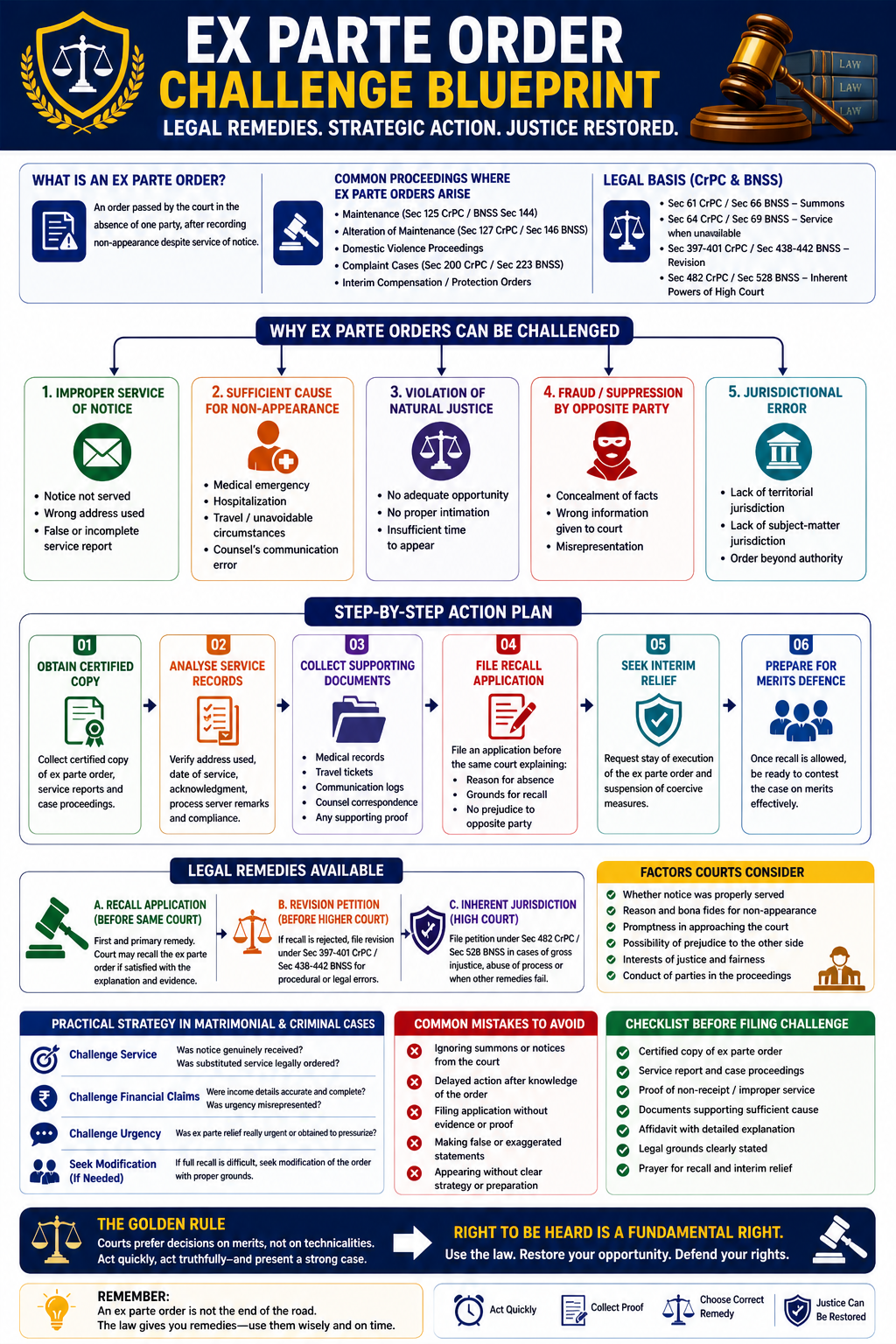
Myth vs Reality: Bail in 498A Cases – Legal Position Explained

Posted on April 25 by Suprajaa Rajan

Introduction

Section 498A of the Indian Penal Code deals with cruelty by husband or his relatives. Over time, this provision has become one of the most litigated sections in matrimonial disputes. However, there are several misconceptions surrounding arrest and bail in 498A cases.

Many individuals believe that arrest is automatic and bail is difficult to obtain, which is not entirely correct. Courts have introduced safeguards to prevent misuse while ensuring protection for genuine victims.

This article clarifies the common myths and legal realities regarding bail in 498A cases, along with the applicable provisions under the Code of Criminal Procedure, 1973 (CrPC) and the Bharatiya Nagarik Suraksha Sanhita, 2023 (BNSS).
Understanding Section 498A IPC

Section 498A of the Indian Penal Code
criminalizes cruelty inflicted upon a married woman by her husband or his relatives.

The offence is:

  • Cognizable
  • Non-bailable
  • Non-compoundable (subject to judicial exceptions)

Because of its serious nature, the law initially allowed immediate police action. However, judicial intervention has significantly changed how the provision operates in practice.

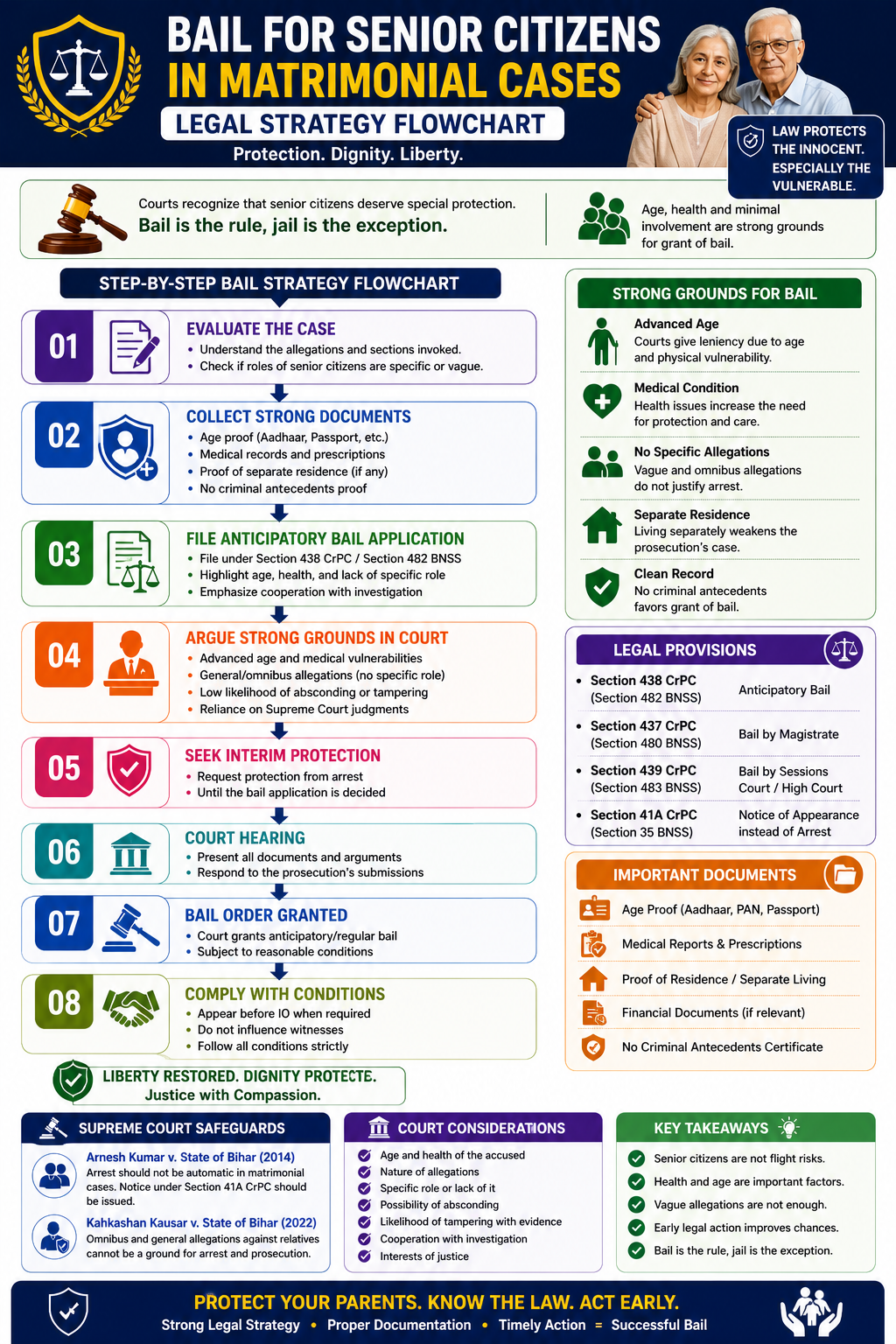
Myth 1: Arrest Is Automatic in 498A Cases

Reality

Arrest is not automatic in 498A cases.

The Supreme Court in
Arnesh Kumar v. State of Bihar
held that police must not make arrests in a routine manner.

Instead, police must:

  • Assess necessity of arrest
  • Record reasons for arrest
  • Issue notice of appearance

Relevant provisions:

  • Section 41A CrPC (Section 35 BNSS) – Notice of appearance
  • Section 41 CrPC (Section 35 BNSS – principles of arrest)

Therefore, if the accused cooperates, arrest can often be avoided.

Myth 2: Bail Is Not Possible in 498A Cases

Reality

Although 498A is a non-bailable offence, bail is very much possible.

The accused can seek:

  • Anticipatory Bail → Section 438 CrPC (Section 482 BNSS)
  • Regular Bail → Section 437/439 CrPC (Section 480/483 BNSS)

Courts consider:

  • Nature of allegations
  • Evidence on record
  • Role of the accused
  • Possibility of misuse

In many cases, courts grant bail, especially where allegations are exaggerated or general in nature.

Myth 3: Anticipatory Bail Is Rarely Granted

Reality

Courts regularly grant anticipatory bail in 498A cases when:

  • Allegations are vague
  • No specific role is attributed
  • The accused is cooperating

Courts also consider:

  • Age (especially elderly parents)
  • Medical condition
  • Absence of criminal history

Thus, anticipatory bail acts as a strong safeguard against unnecessary arrest.

Myth 4: All Family Members Will Be Arrested

Reality

Courts discourage the mechanical implication of all relatives.

In Kahkashan Kausar v. State of Bihar, the Supreme Court held that:

  • Vague allegations against relatives are not sufficient
  • Courts must scrutinize individual roles

Therefore, distant relatives and elderly parents often receive protection from arrest and early relief.

Myth 5: Bail Means the Case Is Over

Reality

Grant of bail does not end the case.

Bail only ensures that:

  • The accused remains free during trial
  • The accused cooperates with the investigation

The case continues through:

  • Chargesheet → Section 173 CrPC (Section 193 BNSS)
  • Trial process
  • Final judgment

Therefore, bail is a procedural safeguard, not an acquittal.

Myth 6: Police Can Deny Bail Completely

Reality

Police do not have the final authority to deny bail in non-bailable offences.

The accused can approach:

  • Magistrate Court
  • Sessions Court
  • High Court

Courts ultimately decide whether bail should be granted based on legal principles and facts of the case.

Step-by-Step Strategy to Secure Bail in 498A Cases

Step 1: Assess FIR and Allegations

Carefully examine:

  • Specific allegations
  • Role of each accused
  • Supporting evidence

Step 2: Apply for Anticipatory Bail

File application under:

  • Section 438 CrPC (Section 482 BNSS)

Seek interim protection where necessary.

Step 3: Cooperate with Investigation

Appear before police when required under:

  • Section 41A CrPC (Section 35 BNSS)

Cooperation strengthens the case for bail.

Step 4: Present Defence Material

Submit:

  • Proof of separate residence
  • Medical documents
  • Evidence contradicting allegations

Step 5: Challenge Weak Cases

If allegations are false or vague, consider:

  • Quashing petition → Section 482 CrPC (Section 528 BNSS)

Judicial Approach

Courts today follow a balanced approach:

  • Protect genuine victims
  • Prevent misuse of law

They emphasise:

  • Individual role of accused
  • Need to avoid unnecessary arrests
  • Importance of personal liberty

Conclusion

The law relating to bail in 498A cases has , thus, evolved significantly. While the offence remains serious, courts have introduced safeguards to ensure that criminal law is not misused as a tool of harassment.

In reality:

  • Arrest is not automatic
  • Bail is achievable
  • Courts carefully evaluate each case

Therefore, individuals facing 498A allegations should adopt a structured legal strategy and seek timely legal remedies.


Related Legal Concepts

  • Anticipatory Bail
  • Regular Bail
  • First Information Report(FIR)
  • Quashing of FIR
  • Non-Bailable Offence


Index of Legal Strategies and Defence is here. 


Key Contributor : 

Mrs. Suprajaa Rajan B.Com., LL.B., LL.M.

+91-9606345150

Posted in Judicial Review Legal Procedure | Tagged 498A Defence Arnesh Kumar Vs State Of Bihar and Anr False 498A case Legal Strategies and Defence Matrimonial law matrimonial offences | Leave a comment

Dinesh kumar Vs Neeti and Ors on 4 Apr 2026 – Judgment Summary

Posted on April 24 by Suprajaa Rajan

In a significant ruling on interim maintenance, the Delhi High Court dealt with cross-petitions filed by both husband and wife challenging the quantum of maintenance awarded under the Protection of Women from Domestic Violence Act, 2005. While the husband argued that the amount was excessive, the wife contended that it was inadequate considering his actual financial capacity.

The dispute arose after the parties separated in 2016, with the wife seeking maintenance under both Section 125 of the CrPC (now Section 144 BNSS) and proceedings under the Domestic Violence Act. After evaluating the material on record, the High Court took a balanced approach. It neither accepted the husband’s minimal income claim nor the wife’s allegation of extremely high earnings, but instead assessed his income pragmatically.

“12. Thus, the responsibility of their day-to-day care, upbringing and education is being borne by the wife. Secondly, this Court notes that the husband has alleged that the wife is earning about ₹30,000/- per month by giving tuition. However, no document or material has been placed on record by him to substantiate this allegation. In the absence of any supporting material, such assertion cannot be accepted at this stage. Therefore, this Court does not find any infirmity in the finding of the learned Trial Court, as affirmed by the learned Appellate Court, that the income of the wife is to be treated as „Nil‟ for the purpose of deciding interim maintenance.”

“14. Thus, at this stage, while the allegation of the wife regarding the extremely high income of the husband remains unsubstantiated, the claim of the husband that he is earning only ₹12,000/- per month also requires to be examined cautiously in light of the overall facts and circumstances of the case.”

“17. In these circumstances, this Court finds no reason to disagree with the observations of the learned Appellate Court that the husband appears to have withheld material information regarding his actual income and financial status. The material placed on record therefore prima facie indicates that the husband has not made a full and candid disclosure of his financial position.”

“18. Considering the fact that the husband claims to be earning only ₹12,000/- per month, which is even below the minimum wages applicable in Delhi, this Court finds no ground to accept such a claim at this stage. “

Decision

Accordingly, the High Court dismissed both cross-petitions and upheld the Appellate Court’s order granting total interim maintenance of ₹13,000 per month to the wife and two minor children.

Furthermore, the Court clarified that:

  • The maintenance awarded under Section 125 CrPC (Section 144 BNSS) would be adjusted against the amount granted under the Domestic Violence Act.
  • The findings were purely interim in nature and subject to final adjudication after trial.
  • Importantly, the Court reiterated that suppression of income invites adverse inference, and courts may assess earning capacity even in the absence of full disclosure.

Thus, the judgment reinforces the principle that financial responsibility toward dependents cannot be avoided through incomplete or misleading disclosures.


Dinesh kumar Vs Neeti and Ors on 4 Apr 2026

Citation : 2026 DHC 2819

Other Sources :


Index of Maintenance judgements is here. 


Key Contributor :
Mrs. Suprajaa Rajan B.Com., LL.B., LL.M.
+91-9606345150


Posted in High Court of Delhi Judgment or Order or Notification | Tagged 1-Judge Bench Decision CrPC Sec 125 or BNSS Sec 144 - Interim Maintenance Granted Dinesh kumar Vs Neeti and Ors Matrimonial Criminal Law Matrimonial dispute PWDV Act Sec 20 - Maintenance Granted | Leave a comment

Quashing of FIR

Posted on April 23 by Suprajaa Rajan

The power to quash an FIR is an extraordinary jurisdiction exercised by High Courts to prevent misuse of criminal law. Courts invoke this power when the continuation of criminal proceedings would result in abuse of process of law or miscarriage of justice.

Under Indian law, this power flows from the inherent jurisdiction of High Courts under the Code of Criminal Procedure, 1973 and corresponding provisions under the Bharatiya Nagarik Suraksha Sanhita, 2023.

Quashing ensures that individuals are not subjected to frivolous or malicious criminal proceedings.

Statutory Framework

The legal basis for quashing of FIR lies in:

  • Section 482 CrPC (Section 528 BNSS) – Inherent powers of High Court

This provision empowers the High Court to:

  • Prevent abuse of process of any court
  • Secure the ends of justice
  • Quash FIRs or criminal proceedings where necessary

This power is extraordinary and discretionary, and courts exercise it with caution.

Meaning of Quashing of FIR

Quashing of FIR refers to the judicial act of setting aside a First Information Report and all consequential proceedings.

When a court quashes an FIR:

  • The criminal case comes to an end
  • Investigation and trial proceedings stop
  • The accused is relieved from further legal action

Thus, quashing acts as a protective remedy against unjust prosecution.

Grounds for Quashing of FIR

Courts may quash an FIR under several circumstances.

Common grounds include:

  • Allegations do not disclose any offence
  • FIR is manifestly false or frivolous
  • Dispute is purely civil in nature
  • Proceedings initiated with mala fide intent
  • Lack of evidence to support allegations
  • Legal bar to institution of proceedings

These grounds ensure that criminal law is not used as a tool of harassment.

Landmark Principles

The Supreme Court laid down guiding principles for quashing in State of Haryana v. Bhajan Lal.

The Court identified illustrative categories where quashing may be justified, including:

  • Where allegations do not constitute an offence
  • Where allegations are absurd or improbable
  • Where proceedings are maliciously instituted

These principles continue to guide High Courts while exercising inherent powers.

Quashing in Matrimonial and Commercial Disputes

Courts frequently encounter quashing petitions in:

  • Matrimonial disputes (e.g., cruelty allegations)
  • Commercial or financial disputes

In such cases, courts examine whether:

  • The dispute has been settled amicably
  • Continuation of proceedings serves any purpose
  • The criminal case is being used to exert pressure

Thus, quashing promotes settlement and prevents unnecessary litigation.

Scope and Limitations

Although the power to quash is wide, it is subject to important limitations.

Courts:

  • Do not conduct a detailed trial
  • Do not evaluate evidence extensively
  • Do not decide disputed facts

Instead, courts examine whether the FIR, on its face, discloses a prima facie offence.

Therefore, quashing is not a substitute for trial but a safeguard against abuse of process.

Procedure for Quashing FIR

A party seeking quashing must file a petition before the High Court under:

  • Section 482 CrPC (Section 528 BNSS)

The process generally involves:

  • Filing of petition with supporting documents
  • Hearing arguments from both sides
  • Court examining the FIR and material on record
  • Passing appropriate orders

The court may:

  • Quash the FIR
  • Dismiss the petition
  • Grant interim protection

Difference Between Quashing and Discharge

Although both remedies protect the accused, they operate at different stages.

Quashing:

  • Invoked before or during investigation
  • Exercised by High Court
  • Ends proceedings at an early stage

Discharge:

  • Invoked after filing of charge sheet
  • Decided by trial court
  • Based on evaluation of material

Thus, quashing acts as an early-stage remedy, while discharge operates later.

Importance in Criminal Law

Quashing of FIR plays a crucial role in maintaining the integrity of the legal system.

It:

  • Prevents misuse of criminal law
  • Protects individuals from harassment
  • Saves judicial time
  • Ensures fairness in proceedings

Therefore, it acts as a powerful safeguard against unjust prosecution.

Conclusion

The power to quash an FIR, thus, reflects the judiciary’s commitment to ensuring that criminal law is not misused. By exercising inherent jurisdiction, High Courts prevent abuse of process and uphold the principles of justice.

However, courts exercise this power cautiously to ensure that genuine cases are not prematurely terminated, thereby maintaining a balance between individual rights and societal interests.


Related Legal Concepts

Explore related remedies and procedural safeguards in criminal law:

  • Abuse of Process of Law
  • First Information Report (FIR)
  • Discharge of Accused
  • Criminal Trial Procedure
  • Appeal, Revision & Review


Index of Law Concepts explained here.


Key Contributor :

Mrs. Suprajaa Rajan B.Com., LL.B., LL.M.

+91-9606345150

Posted in LLB Study Material | Tagged abuse of process Abuse of process of law Criminal law Criminal law in India Law Concepts explained Quashing of FIR | Leave a comment

Abuse of process of Law

Posted on April 21 by Suprajaa Rajan

The doctrine of abuse of process of law plays a vital role in preventing misuse of judicial procedures. Courts invoke this principle when legal processes are used maliciously, vexatiously, or for ulterior purposes, rather than for genuine legal redress.

Under Indian criminal law, courts exercise inherent and supervisory powers to prevent such misuse under the Code of Criminal Procedure, 1973 and corresponding provisions under the Bharatiya Nagarik Suraksha Sanhita, 2023.

This doctrine ensures that the legal system functions to advance justice and not to harass individuals.

Meaning of Abuse of Process

Abuse of process occurs when a party uses legal proceedings:

  • For an improper or ulterior motive
  • To harass, intimidate, or pressurise another party
  • To achieve objectives unrelated to justice

In such situations, courts intervene to prevent the continuation of proceedings that undermine the integrity of the judicial system.

Statutory Framework

The power to prevent abuse of process primarily flows from:

  • Section 482 CrPC (Section 528 BNSS) – Inherent powers of High Court

This provision empowers the High Court to:

  • Prevent abuse of process of any court
  • Secure the ends of justice
  • Quash criminal proceedings where necessary

These powers are extraordinary in nature and must be exercised cautiously.

Scope of Inherent Powers

Under Section 482 CrPC (Section 528 BNSS), the High Court may intervene in exceptional cases.

The court may:

  • Quash FIR or criminal proceedings
  • Prevent misuse of legal machinery
  • Ensure fairness in judicial process

However, the court does not conduct a full trial at this stage. Instead, it examines whether the proceedings are legally sustainable.

Common Instances of Abuse of Process

Courts often identify abuse of process in the following situations:

  • Filing of false or frivolous complaints
  • Initiating criminal proceedings for civil disputes
  • Multiple proceedings on the same cause of action
  • Proceedings initiated with mala fide intent
  • Use of criminal law to exert pressure in personal or commercial disputes

In such cases, continuation of proceedings would result in miscarriage of justice.

Judicial Principles Governing Quashing

Courts have developed guiding principles to determine whether proceedings amount to abuse of process.

In
State of Haryana v. Bhajan Lal, the Supreme Court laid down illustrative categories where courts may quash proceedings.

These include:

  • Where allegations do not disclose any offence
  • Where allegations are absurd or inherently improbable
  • Where proceedings are maliciously instituted

These principles continue to guide courts in exercising inherent powers.

Difference Between Abuse of Process and Legitimate Prosecution

It is important to distinguish between genuine legal action and abuse of process.

Legitimate Prosecution:

  • Based on valid legal grounds
  • Supported by evidence
  • Aims to seek justice

Abuse of Process:

  • Based on ulterior motives
  • Lacks legal foundation
  • Intended to harass or misuse law

Therefore, courts must carefully evaluate facts to ensure that genuine cases are not prematurely terminated.

Role of High Courts

High Courts play a crucial role in preventing abuse of process.

They exercise inherent powers to:

  • Protect individuals from harassment
  • Maintain judicial discipline
  • Prevent misuse of criminal law

However, courts exercise this power sparingly and with caution, as premature interference may affect legitimate prosecution.

Importance in Criminal Justice System

The doctrine of abuse of process ensures that:

  • Courts do not become tools of oppression
  • Legal procedures are not misused
  • Justice remains the primary objective of law

It, therefore, acts as a safeguard against arbitrary and malicious litigation.

Conclusion

Abuse of process of law, hence, undermines the very purpose of the legal system. Therefore, courts exercise inherent powers to prevent misuse and ensure that judicial proceedings serve the cause of justice.

By striking a balance between preventing misuse and allowing genuine cases to proceed, the law upholds the principles of fairness, integrity, and justice.


Related Legal Concepts

Explore related remedies and procedural safeguards in criminal law:

  • Quashing of FIR
  • Discharge of Accused
  • Criminal Trial Procedure
  • Appeal, Revision & Review
  • Cognizable and Non-Cognizable Offences


Index of Law Concepts explained here.


Key Contributor :

Mrs. Suprajaa Rajan B.Com., LL.B., LL.M.

+91-9606345150


Posted in General Study Material LLB Study Material | Tagged Abuse of process of law BNSS Sec 528 – Saving of inherent powers of High Court Criminal law in India CrPC 482 - Saving of inherent powers of High Court Legal Remedies after chargesheet Quashing of FIR Remedies against Malicious Prosecution in India | Leave a comment

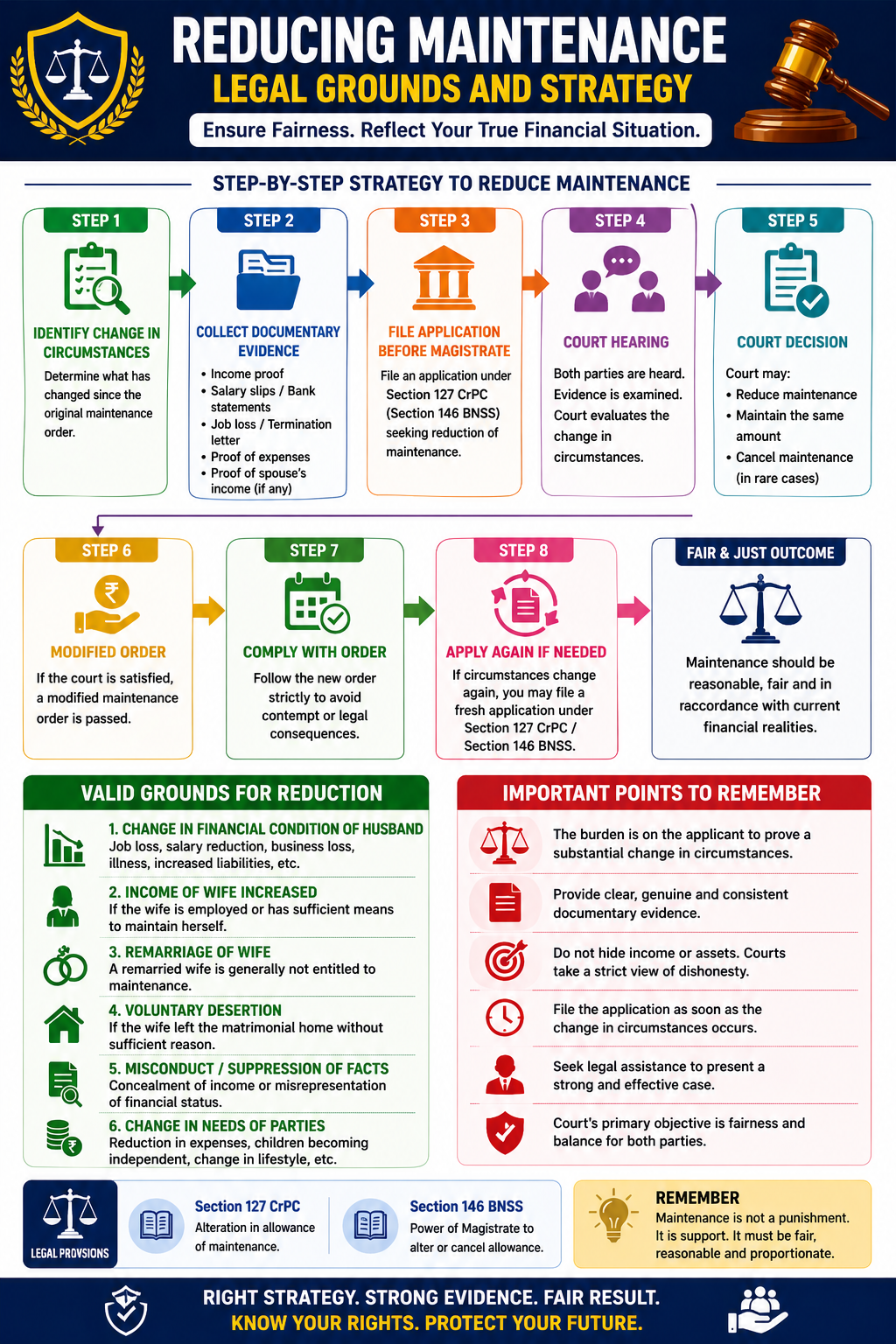
How Courts Quash Omnibus Allegations in Matrimonial FIRs – Case Study

Posted on April 18 by Suprajaa Rajan

Introduction

In matrimonial disputes, complainants often make general and sweeping allegations against multiple family members without specifying their individual roles. These are commonly referred to as “omnibus allegations.”

However, courts have consistently held that criminal law cannot be used to implicate entire families without specific evidence. Therefore, High Courts frequently exercise their powers to quash such proceedings at an early stage.

This article explains how courts deal with omnibus allegations, supported by judicial principles and practical defence strategy under the Code of Criminal Procedure, 1973 (CrPC) and the Bharatiya Nagarik Suraksha Sanhita, 2023 (BNSS).

What Are Omnibus Allegations?

Omnibus allegations refer to:

  • Vague and generalised accusations
  • Lack of specific dates, acts, or roles
  • Naming multiple family members without distinction

For example, statements such as:

“All in-laws harassed me for dowry”

without detailing who did what, when, and how, are treated as omnibus allegations. Courts view such allegations with caution because they often indicate misuse of criminal law in matrimonial disputes.

Legal Basis for Quashing

The High Court has inherent powers to quash criminal proceedings under:

  • Section 482 CrPC (Section 528 BNSS)

The court exercises this power when:

  • The FIR does not disclose a prima facie offence
  • Allegations are vague or inherently improbable
  • Proceedings amount to abuse of process

Thus, omnibus allegations form a strong ground for seeking quashing.

Judicial Approach Toward Omnibus Allegations

Courts consistently emphasise that criminal liability must be individual and specific.

In Kahkashan Kausar v. State of Bihar, the Supreme Court held that:

  • Courts must be cautious in proceeding against relatives
  • Vague allegations without specific roles are insufficient
  • Mechanical implication of family members must be discouraged

Similarly, courts often observe that continuation of proceedings based on omnibus allegations leads to injustice.

Case Study: Quashing of FIR Against Family Members

Facts of the Case

In a typical matrimonial dispute:

  • The complainant filed an FIR alleging cruelty and harassment
  • Multiple family members, including elderly parents and distant relatives, were named
  • The complaint contained general allegations without specific acts

Legal Issue

Whether the FIR disclosed sufficient material to proceed against all accused persons.

Court’s Analysis

The High Court examined:

  • The absence of specific allegations against individual accused
  • Lack of dates, incidents, or overt acts
  • No supporting evidence indicating involvement

The court noted that the complaint relied entirely on general and sweeping statements.

Court’s Decision

The High Court exercised its inherent powers under:

  • Section 482 CrPC (Section 528 BNSS)

and held that:

  • The allegations were omnibus in nature
  • No prima facie case existed against the relatives
  • Continuation of proceedings would amount to abuse of process

Accordingly, the court quashed the FIR against the family members.

Step-by-Step Defence Strategy

Step 1: Identify Omnibus Allegations

First, carefully analyse the FIR and identify:

  • Lack of specific roles
  • General statements against multiple accused
  • Absence of supporting details

Step 2: Gather Supporting Evidence

Next, collect evidence showing:

  • Separate residence
  • Lack of interaction with the complainant
  • Absence during alleged incidents

This helps demonstrate that the allegations are false or exaggerated.

Step 3: File Petition for Quashing

You should file a petition before the High Court under:

  • Section 482 CrPC (Section 528 BNSS)

The petition should clearly highlight:

  • Vague nature of allegations
  • Absence of evidence
  • Misuse of criminal law

Step 4: Rely on Judicial Precedents

You should rely on judgments like:

  • Kahkashan Kausar v. State of Bihar
  • Arnesh Kumar v. State of Bihar

These cases strengthen the argument against mechanical implication of relatives.

Step 5: Seek Interim Protection

While the quashing petition is pending, you should seek:

  • Protection from coercive action
  • Stay on further proceedings

This ensures that the accused do not face unnecessary harassment.

Importance of Specific Allegations in Criminal Law

Criminal law requires that:

  • Each accused must have a clearly defined role
  • Allegations must be supported by evidence
  • Courts must apply judicial mind before proceeding

Therefore, omnibus allegations fail to meet the basic threshold required for criminal prosecution.

Practical Insight

Courts increasingly recognise that matrimonial disputes sometimes involve over-implication of family members.

As a result:

  • High Courts actively scrutinise FIRs
  • Relief is granted at an early stage
  • Innocent relatives are protected from prolonged litigation

Conclusion

Omnibus allegations, thus, weaken the foundation of a criminal case because they lack specificity, evidence, and credibility.

By invoking the inherent powers of the High Court under Section 482 CrPC (Section 528 BNSS), accused persons can seek early relief from false and generalised accusations.

A well-drafted quashing petition, supported by evidence and judicial precedents, ensures that criminal law is not misused as a tool of harassment.

Related Legal Concepts

  • First Information Report (FIR)
  • Quashing of FIR
  • Inherent powers of High Court
  • Anticipatory Bail
  • Prima Facie case

Index of Legal Strategies and Defence is here. 


Key Contributor : 

Mrs. Suprajaa Rajan B.Com., LL.B., LL.M.

+91-9606345150

Posted in Legal Procedure | Tagged 498A Defence Absurd Or After Thought Or Baseless Or False Or General Or Inherently Improbable Or Improved Or UnSpecific Or Omnibus Or Vague Allegations Legal Strategies and Defence Quashing of FIR | Leave a comment

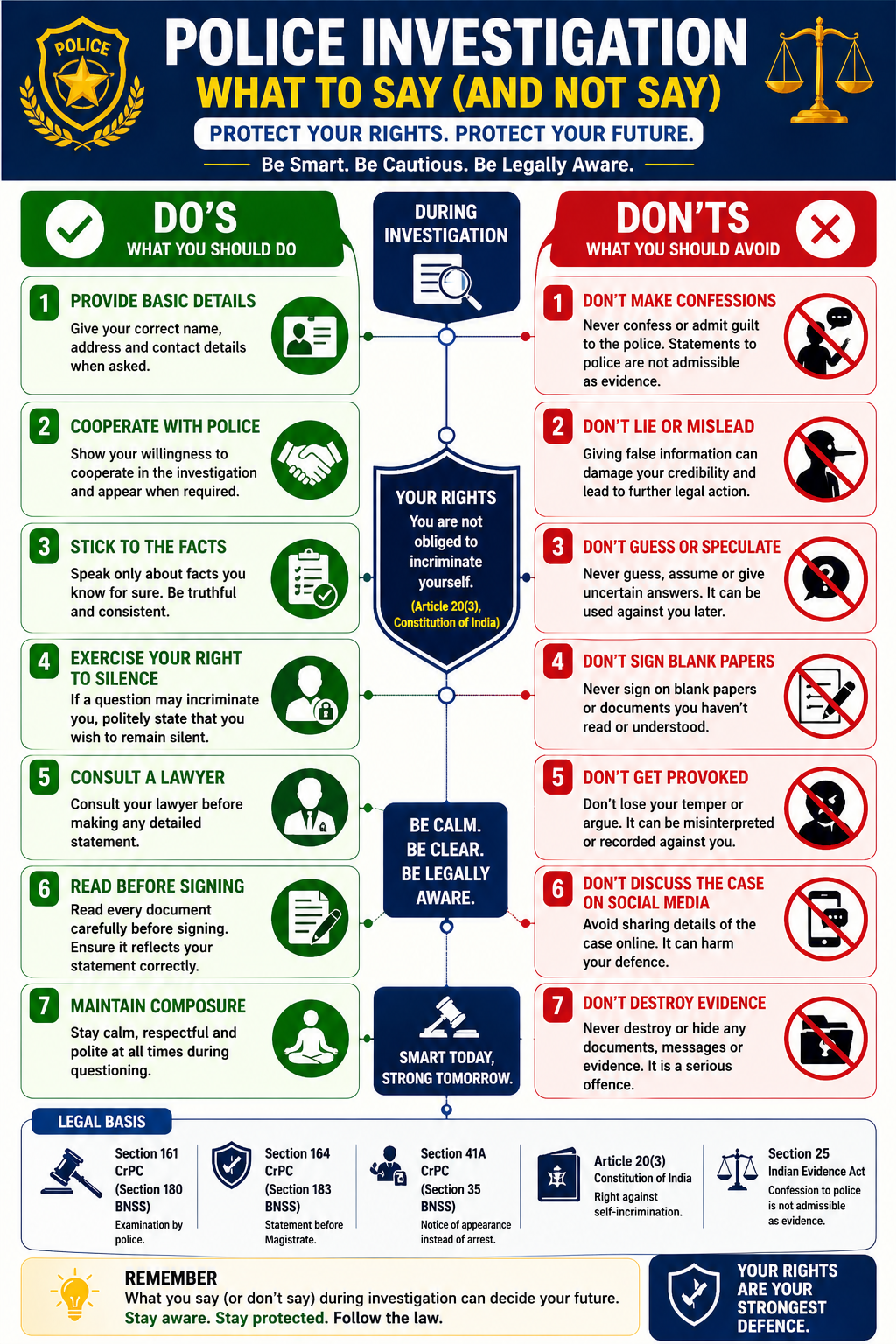
When to File Defamation for False Allegations – Legal Strategy

Posted on April 11 by Suprajaa Rajan

Introduction

False allegations in matrimonial and criminal disputes can seriously damage a person’s reputation, dignity, and social standing. While individuals often focus on defending the primary case, they may overlook an important remedy—defamation proceedings.

Therefore, when allegations are false, malicious, and harm reputation, the law allows the aggrieved person to initiate defamation action. However, timing and strategy play a crucial role in ensuring success.

This article explains when to file defamation for false allegations, along with relevant provisions under the Code of Criminal Procedure, 1973 (CrPC) and the Bharatiya Nagarik Suraksha Sanhita, 2023 (BNSS).

What Constitutes Defamation?

Defamation involves making a false statement that harms the reputation of a person.

Under Indian law:

  • Section 499 IPC (to be read with Bharatiya Nyaya Sanhita, 2023) defines defamation
  • Section 500 IPC prescribes punishment

A statement amounts to defamation when:

  • It is false
  • It is made with intent or knowledge to harm reputation
  • It is communicated to a third person

Thus, not every allegation amounts to defamation—only those that are false and damaging.

Types of Defamation Remedies

You can initiate defamation proceedings in two ways:

1. Criminal Defamation

You can file a complaint before a Magistrate.

Relevant procedure:

  • Section 200 CrPC (Section 223 BNSS) – Filing of complaint before Magistrate

2. Civil Defamation

You can file a civil suit seeking damages (compensation) for reputational harm.

Both remedies can run simultaneously, depending on the strategy.

When Should You File Defamation?

Timing plays a critical role. You should not rush to file defamation immediately in every case.

1. When Allegations Are Clearly False

You should initiate defamation only when:

  • Allegations are demonstrably false
  • No supporting evidence exists
  • Statements are malicious in nature

If the matter is still under investigation, courts may advise caution.

2. After Filing of Chargesheet or Closure Report

It is often strategically advisable to wait until:

  • The police file a closure report, or
  • The chargesheet does not support the allegations

Relevant provision:

  • Section 173 CrPC (Section 193 BNSS)

At this stage, you can show that the allegations lack evidentiary support.

3. After Acquittal by Court

The strongest ground for defamation arises after acquittal.

Once the court acquits the accused, it establishes that:

  • The allegations were not proved
  • The prosecution failed to establish guilt

You can then rely on the judgment to initiate defamation proceedings effectively.

4. When False Allegations Are Made Publicly

If the complainant:

  • Publishes allegations on social media
  • Circulates defamatory statements
  • Makes public accusations

you can initiate defamation immediately, as publication is a key element.

Step-by-Step Legal Strategy

Step 1: Collect Evidence of Defamation

First, you must gather proof of:

  • False statements
  • Mode of publication
  • Harm caused to reputation

Evidence may include:

  • Social media posts
  • Emails or messages
  • Public complaints or notices

Step 2: Analyse Whether Exceptions Apply

The law provides exceptions to defamation, such as:

  • Statements made in good faith
  • Statements made for public good
  • Complaints made to lawful authorities

Therefore, you must ensure that the case does not fall within these exceptions.

Step 3: File Criminal Complaint

You can file a criminal complaint before the Magistrate under:

  • Section 200 CrPC (Section 223 BNSS)

The Magistrate may:

  • Record your statement
  • Examine witnesses
  • Issue process against the accused

Step 4: Consider Civil Suit for Damages

In addition to criminal proceedings, you may file a civil suit claiming:

  • Compensation for reputational harm
  • Damages for mental agony

This step strengthens your overall legal strategy.

Step 5: Prepare for Preliminary Evidence Stage

The Magistrate will examine whether sufficient grounds exist to proceed.

Relevant provisions:

  • Section 202 CrPC (Section 225 BNSS) – Inquiry by Magistrate

At this stage, you must present:

  • Supporting documents
  • Witness statements
  • Proof of publication

Strategic Considerations Before Filing

Before initiating defamation, you should consider:

  • Strength of evidence
  • Stage of the main criminal case
  • Possibility of settlement
  • Risk of counter-litigation

Filing defamation prematurely may weaken your case.

Judicial Approach

Courts recognise that false allegations can seriously harm reputation. At the same time, courts also protect:

  • Genuine complainants
  • Statements made in good faith

Therefore, courts strike a balance between:

  • Protecting reputation
  • Preventing misuse of defamation law

Conclusion

Defamation serves as an important legal remedy against false and malicious allegations. However, success depends on timing, evidence, and legal strategy.

You should ideally:

  • Wait for investigation outcome or acquittal
  • Collect strong documentary evidence
  • File complaint under Section 200 CrPC (Section 223 BNSS)
  • Consider both criminal and civil remedies

By adopting a strategic and evidence-based approach, you can effectively protect your reputation and seek legal redress.


Index of Legal Strategies and Defence is here. 


Key Contributor : 

Mrs. Suprajaa Rajan B.Com., LL.B., LL.M.

+91-9606345150
Posted in Legal Procedure | Tagged Criminal complaint CrPC Sec 200 or BNSS Sec 223 - Filing of complaint before Magistrate False Allegations IPC 499 - Defamation Legal Strategies and Defence Matrimonial Litigation India | Leave a comment

Dr.Sushil Kumar Purbey and Anr Vs The State of Bihar and Ors on 9 Mar 2026 – Judgement Summary

Posted on April 9 by Suprajaa Rajan

In Dr. Sushil Kumar Purbey & Anr. vs State of Bihar & Ors. (2026), the Supreme Court addressed the issue of parity in quashing criminal proceedings under Section 482 CrPC [Section 528 BNSS] in matrimonial disputes.

The case arose from a dowry harassment FIR filed by the complainant against her husband and his family members. While the High Court quashed proceedings against the sister-in-law on the ground of vague and omnibus allegations, it declined similar relief to the parents-in-law.

Aggrieved by this differential treatment, the appellants approached the Supreme Court. The Court, upon examining the FIR, held that:

  • The allegations against all accused were identical in nature.
  • No specific role or overt act was attributed to the parents-in-law.
  • Differential treatment by the High Court was unsustainable in law.

Consequently, the Court extended the benefit of quashing to the parents-in-law as well, reiterating that criminal law cannot be invoked on the basis of generalised allegations.

“7. A comparative reading of the FIR reveals that the allegations levelled against the sister-in-law and those against the present appellants are, in all material particulars, identical.”

“7. The lone allegation that stands separately against the present appellants is that they would quarrel. This, however, does not constitute a criminal offence and cannot, by itself, sustain cognizance of the offences.”

“8. The criminal complaint against the appellants was, however, lodged only in March 2022, nearly a year after the filing of the divorce petition. Though this delay, standing alone, would not constitute a sufficient ground for quashing the criminal proceedings against the appellants. However, viewed in conjunction with the absence of any specific allegations attributable to them, the delay lends credence to the submission that the criminal complaint against the in-laws may have been instituted by way of a counter-blast to the divorce proceedings initiated by the husband.”

“10. In view of the foregoing, we are of the considered opinion that the High Court erred in applying different standards to persons who stand on an identical footing insofar as the nature of the allegations against them is concerned.”

Decision

  • The Supreme Court allowed the appeal and set aside the High Court’s order to the extent it denied relief to the parents-in-law. It held that identical allegations must be treated uniformly, and differential treatment is legally unsustainable.
  • The Court emphasized that vague and omnibus allegations without specific roles cannot sustain criminal prosecution. It further noted that the delay in filing the FIR, coupled with absence of specific allegations, supported the inference of misuse.
  • Accordingly, exercising its powers under Section 482 CrPC [Section 528 BNSS], the Court quashed the criminal proceedings against the appellants.
  • However, the Court clarified that proceedings against the husband would continue independently in accordance with law.

Dr.Sushil Kumar Purbey and Anr Vs The State of Bihar and Ors on 9 Mar 2026

Citation : 2026 INSC 212

Other Sources :


Index of Quash judgements is here.


Related Legal Concepts

  • Inherent powers of High Court
  • Quashing of FIR
  • Delay in FIR
  • Omnibus Allegations in matrimonial cases
  • Abuse of Process of Law


Key Contributor :
Mrs. Suprajaa Rajan B.Com., LL.B., LL.M.
+91-9606345150


Posted in Supreme Court of India Judgment or Order or Notification | Tagged 2-Judge (Division) Bench Decision Absurd Or After Thought Or Baseless Or False Or General Or Inherently Improbable Or Improved Or UnSpecific Or Omnibus Or Vague Allegations Dowry Harassment law Dr.Sushil Kumar Purbey and Anr Vs The State of Bihar and Ors Matrimonial dispute Quashing of FIR | Leave a comment

Post navigation

  • Older posts
  • Newer posts

Search within entire Content of “Shades of Knife”

My Legal X Timeline

Advocate Sandeep Pamarati 🇮🇳💪👨🏻‍🎓 Follow

AP High Court Advocate with M Tech (CS) || 12 years in 'Software Industry' as Solution Architect || Blogs at https://t.co/29CB9BzK4w || #TDPTwitter

SandeepPamarati
Retweet on Twitter Advocate Sandeep Pamarati 🇮🇳💪👨🏻‍🎓 Retweeted
andhrafact మన ఆంధ్ర @andhrafact ·
19h

వాడే🃏vs వీడు🧛‍♂️=సిగ్గుమాలిన అపరిచుతుడు

రాష్ట్ర మద్య నీళ్లున్న చోట WASHINGTONకడతా,center ఇవ్వదు అయినా కడతా.నా బుర్రలో వచ్చే ఆలోచనతో కడతా.CBN వల్ల కాదు ఎట్లా చెయ్యాలో ACCENTUREతో 10 సిట్టింగు వేసా,ఇదిగో డిటైల్డ్ plan.రాజధాని RE హంగామాతో 2BILLION$ తెస్తా🧛‍♂️

vs

రాజధాని అంటే ఏంటి?🃏

Reply on Twitter 2062217009140576691 Retweet on Twitter 2062217009140576691 37 Like on Twitter 2062217009140576691 77 X 2062217009140576691
Retweet on Twitter Advocate Sandeep Pamarati 🇮🇳💪👨🏻‍🎓 Retweeted
narendramodi Narendra Modi @narendramodi ·
3 Jun

Delighted to meet the Chairman of the Rastriya Swatantra Party of Nepal Mr. Rabi Lamichhane. I welcome and fully share his desire to work closely together for a shared and prosperous future.

Nepal is a priority partner under our Neighbourhood First policy and we look forward to

Reply on Twitter 2062085139031810119 Retweet on Twitter 2062085139031810119 4893 Like on Twitter 2062085139031810119 36952 X 2062085139031810119
Retweet on Twitter Advocate Sandeep Pamarati 🇮🇳💪👨🏻‍🎓 Retweeted
pradip103 Pradeep Bhandari(प्रदीप भंडारी)🇮🇳 @pradip103 ·
6h

CONGRESS ALLOWS SHARIA COMPLIANT GYM IN KERALA!

Congress’ win in Kerala has ensured one thing : IUML gets a free hand and Congress bends itself to the diktats of Muslim League.

Kerala’s so-called ‘Islam-friendly gym’ mandates No music. Gender segregation. Mandatory religious

Reply on Twitter 2062415901740470707 Retweet on Twitter 2062415901740470707 173 Like on Twitter 2062415901740470707 410 X 2062415901740470707
Retweet on Twitter Advocate Sandeep Pamarati 🇮🇳💪👨🏻‍🎓 Retweeted
ani ANI @ani ·
2 Jun

#WATCH | Maharashtra: The passing out parade at the Combat Army Aviation Training School in Nashik, concluded on an emotional note for a couple as Captain Bharat Bhardwaj proposed marriage to his partner.

Reply on Twitter 2061739907320860704 Retweet on Twitter 2061739907320860704 858 Like on Twitter 2061739907320860704 14162 X 2061739907320860704
Load More

Recent Posts

  • Are Offices of Dowry Prohibition Officers in AP designated as Police Stations? June 3, 2026
  • Pune Bar Association Vs Union of India on 22 May 2026 June 2, 2026
  • Chidurala Shyamsubder Vs State of Telangana on 27 Aug 2018 May 28, 2026
  • Birendra Kumar Tiwari Vs Neetu Tiwari on 07 Dec 2022 May 27, 2026
  • Parvinder Singh Khurana Vs Enforcement of Directorate on 19 May 2026 May 26, 2026

Most Read Posts

  • Reply to Section 41A CrPC Notice – Format with Legal Explanation (4,829 views)
  • Anu Aggarwal Vs Sushant Aggarwal on 20 Jan 2026 (3,359 views)
  • Umme Farva Vs State of U.P. and Anr on 14 Jan 2026 (3,189 views)
  • Charge Sheet and Final Report Explained (2,435 views)
  • Jinesh CR Vs Aswathy PR on 19 Nov 2025 (2,124 views)
  • Geddam Jhansi and Anr Vs State of Telangana and Anr on 07 Feb 2025 (2,087 views)
  • Regular Bail Application Format (Section 437/439 CrPC) (1,989 views)
  • Neha Lal Vs Abhishek Kumar on 20 Jan 2026 (1,877 views)
  • Arrest Procedure in 498A cases after Arnesh Kumar (1,783 views)
  • Discharge Application Format in 498A Case – Draft, Procedure & Sample Template (1,564 views)

Tags

Reportable Judgement or Order (433)2-Judge (Division) Bench Decision (411)Legal Procedure Explained - Interpretation of Statutes (381)Landmark Case (381)1-Judge Bench Decision (361)Catena of Landmark Judgments Referred/Cited to (293)Work-In-Progress Article (215)3-Judge (Full) Bench Decision (101)Sandeep Pamarati (92)Article 21 - Protection of life and personal liberty (80)Issued or Recommended Guidelines or Directions or Protocols to be followed (71)Perjury Under 340 CrPC (66)Absurd Or After Thought Or Baseless Or False Or General Or Inherently Improbable Or Improved Or UnSpecific Or Omnibus Or Vague Allegations (61)Reprimands or Setbacks to YCP Govt of Andhra Pradesh (49)Summary Post (47)CrPC 482 - Quash (43)HM Act 13 - Divorce Granted to Husband (42)Legal Terrorism (41)Not Authentic copy hence to be replaced (40)Divorce granted on Cruelty ground (40)

Categories

Supreme Court of India Judgment or Order or Notification (752)Bare Acts or State Amendments or Statutes or GOs or Notifications issued by Central or State Governments (327)High Court of Andhra Pradesh Judgment or Order or Notification (186)High Court of Delhi Judgment or Order or Notification (164)High Court of Bombay Judgment or Order or Notification (112)High Court of Karnataka Judgment or Order or Notification (93)Legal Procedure (73)High Court of Madras Judgment or Order or Notification (70)High Court of Allahabad Judgment or Order or Notification (61)LLB Study Material (58)General Study Material (56)High Court of Punjab & Haryana Judgment or Order or Notification (52)Assorted Court Judgments or Orders or Notifications (50)High Court of Kerala Judgment or Order or Notification (46)Prakasam DV Cases (46)Judicial Activism (for Public Benefit) (45)District or Sessions or Magistrate Court Judgment or Order or Notification (44)High Court of Madhya Pradesh Judgment or Order or Notification (38)High Court of Gujarat Judgment or Order or Notification (28)High Court of Telangana Judgment or Order or Notification (27)

Recent Comments

  • The Divorce Law Firm on Life Cycle Stages of a Divorce case
  • The Divorce Law Firm on Life Cycle Stages of a Divorce case
  • ShadesOfKnife on Sandeep Pamarati Vs Ungrateful Knife (IPC 498A Case)
  • KONURU VINAYKUMAR on Sandeep Pamarati Vs Ungrateful Knife (IPC 498A Case)
  • ShadesOfKnife on Lifecycle Stages of a Section 498A IPC Case

Archives of SoK

  • June 2026 (2)
  • May 2026 (24)
  • April 2026 (33)
  • March 2026 (42)
  • February 2026 (30)
  • January 2026 (21)
  • December 2025 (2)
  • November 2025 (3)
  • October 2025 (17)
  • September 2025 (12)
  • August 2025 (5)
  • July 2025 (10)
  • June 2025 (15)
  • May 2025 (3)
  • April 2025 (10)
  • March 2025 (7)
  • February 2025 (8)
  • January 2025 (1)
  • December 2024 (3)
  • November 2024 (4)
  • October 2024 (16)
  • September 2024 (15)
  • August 2024 (14)
  • July 2024 (11)
  • June 2024 (18)
  • May 2024 (13)
  • April 2024 (9)
  • March 2024 (23)
  • February 2024 (15)
  • January 2024 (11)
  • December 2023 (11)
  • November 2023 (9)
  • October 2023 (13)
  • September 2023 (12)
  • August 2023 (15)
  • July 2023 (17)
  • June 2023 (11)
  • May 2023 (6)
  • April 2023 (5)
  • March 2023 (10)
  • February 2023 (9)
  • January 2023 (12)
  • December 2022 (12)
  • November 2022 (8)
  • October 2022 (13)
  • September 2022 (17)
  • August 2022 (10)
  • July 2022 (21)
  • June 2022 (27)
  • May 2022 (23)
  • April 2022 (32)
  • March 2022 (17)
  • February 2022 (6)
  • January 2022 (2)
  • December 2021 (7)
  • November 2021 (7)
  • October 2021 (6)
  • September 2021 (10)
  • August 2021 (31)
  • July 2021 (45)
  • June 2021 (17)
  • May 2021 (17)
  • April 2021 (18)
  • March 2021 (58)
  • February 2021 (14)
  • January 2021 (50)
  • December 2020 (35)
  • November 2020 (68)
  • October 2020 (67)
  • September 2020 (28)
  • August 2020 (41)
  • July 2020 (20)
  • June 2020 (36)
  • May 2020 (40)
  • April 2020 (38)
  • March 2020 (26)
  • February 2020 (43)
  • January 2020 (35)
  • December 2019 (34)
  • November 2019 (4)
  • October 2019 (18)
  • September 2019 (57)
  • August 2019 (33)
  • July 2019 (12)
  • June 2019 (18)
  • May 2019 (5)
  • April 2019 (19)
  • March 2019 (58)
  • February 2019 (11)
  • January 2019 (90)
  • December 2018 (97)
  • November 2018 (43)
  • October 2018 (31)
  • September 2018 (73)
  • August 2018 (47)
  • July 2018 (143)
  • June 2018 (92)
  • May 2018 (97)
  • April 2018 (59)
  • March 2018 (8)

Blogroll

  • Daaman Promoting Harmony 0
  • Fight against Legal Terrorism Fight against Legal Terrorism along with MyNation Foundation 0
  • Good Morning Good Morning News 0
  • Insaaf India Insaaf Awareness Movement 0
  • MyNation Hope Foundation Wiki 0
  • MyNation.net Equality, Justice and Harmony 0
  • Sarvepalli Legal 0
  • Save Indian Family Save Indian Family Movement 0
  • SIF Chandigarh SIF Chandigarh 0
  • The Male Factor The Male Factor 0
  • Unitedmen Foundation a dedicated community forged with the mission to unite men facing legal challenges in marital disputes. 0
  • Vaastav Foundation The Social Reality 0
  • Vinayak my2centsworth – This blog is for honest law abiding men, married or planning to get married 0
  • Voice4india Indian Laws, Non-profits, Environment 0
  • Writing Law Writing Law by Ankur 0

RSS Cloudflare Status

  • Cloudflare Storage Maintenance June 15, 2026
    THIS IS A SCHEDULED EVENT Jun 15, 12:00 - 13:00 UTC May 28, 22:16 UTC Scheduled - Cloudflare has scheduled maintenance for our backend storage systems. Services will continue to operate normally, but customers will be unable to create/delete/modify tunnels, routes, hostname routes, virtual networks, devices and tunnel configurations via the Dashboard or the public […]
  • Cloudflare Storage Maintenance June 4, 2026
    THIS IS A SCHEDULED EVENT Jun 4, 12:00 - 13:00 UTC May 21, 00:41 UTC Scheduled - Cloudflare has scheduled maintenance for our backend storage systems. Services will continue to operate normally, customers will be unable to modify configurations via the Dashboard or the public API for a period of up to 3 minutes. This […]
  • Network Congestion in Frankfurt June 4, 2026
    Jun 4, 06:59 UTC Resolved - Cloudflare observed network congestion in Frankfurt from 05:53 UTC to 06:08 UTC. The issue is now resolved.

RSS List of Spam Server IPs from Project Honeypot

  • 193.193.237.158 | SD June 3, 2026
    Event: Bad Event | Total: 1,352 | First: 2025-11-25 | Last: 2026-06-03
  • 158.94.211.154 | S June 3, 2026
    Event: Bad Event | Total: 987 | First: 2026-01-28 | Last: 2026-06-03
  • 45.164.196.232 | S June 3, 2026
    Event: Bad Event | Total: 5 | First: 2026-06-03 | Last: 2026-06-03
Owned and Operated by Advocate Sandeep Pamarati
Proudly powered by WordPress
Theme: Flint by Star Verte LLC

Bad Behavior has blocked 593 access attempts in the last 7 days.

pixel
