Citation: 1978 AIR 527, 1978 SCR (2) 777
Indiankanoon link: https://indiankanoon.org/doc/1515744/
[related_posts_by_tax title=”5 Recently Updated Posts, Similar or Related To Above Post” orderby=”post_modified” posts_per_page=”5″ show_date=”true”]
Citation: 1978 AIR 527, 1978 SCR (2) 777
Indiankanoon link: https://indiankanoon.org/doc/1515744/
[related_posts_by_tax title=”5 Recently Updated Posts, Similar or Related To Above Post” orderby=”post_modified” posts_per_page=”5″ show_date=”true”]
Citation: 1996 AIR 786, 1996 SCC (1) 233
Indiankanoon link: https://indiankanoon.org/doc/1606330/
Original judgment is here.
[related_posts_by_tax title=”5 Recently Updated Posts, Similar or Related To Above Post” orderby=”post_modified” posts_per_page=”5″ show_date=”true”]
This judgment from Hon’ble Apex Court held that Right to Shelter flows from Article 21 of Constitution of India.
From Para 13,
In recent years on account of erosion of the value of the rupee, rampant prevalence of black money and dearth of urban land, the value of such land has gone up sky-high. It has a became impossible for any member of the weaker sections to have residential accommodation anywhere and much less in urban areas. Since a reasonable residence is an indispensable necessity for fulfilling the constitutional goal in the matter of development of man and should be taken as included in ‘life’ in Article 21, greater social control is called for and exemptions granted under Section 20 and 21 should have to be appropriately monitored to have the fullest benefit of the beneficial legislation. We, therefore, commend to the Central Government to prescribe appropriate guidelines laying down the true scope of the term ‘weaker sections of the society’ so that everyone charged with administering the statute would find it convenient to implement the same.
Citation: AIR 1990 SC 630, (1990) 92 BOM LR 145, JT 1990 (1) SC 106, 1990 (1) SCALE 86, (1990) 1 SCC 520, 1990 (1) UJ 379 SC
Indiankanoon link: https://indiankanoon.org/doc/1813295/
A follow up judgment from 1995 is here.
Many later judgments are available here.
[related_posts_by_tax title=”5 Recently Updated Posts, Similar or Related To Above Post” orderby=”post_modified” posts_per_page=”5″ show_date=”true”]
[related_posts_by_tax title=”5 Recently Updated Posts, Similar or Related To Above Post” orderby=”post_modified” posts_per_page=”5″ show_date=”true”]
[related_posts_by_tax title=”5 Recently Updated Posts, Similar or Related To Above Post” orderby=”post_modified” posts_per_page=”5″ show_date=”true”]
Hon’ble High Court of Madhya Pradesh has quashed the FIR, based on the documents submitted by Defense.
[related_posts_by_tax title=”5 Recently Updated Posts, Similar or Related To Above Post” orderby=”post_modified” posts_per_page=”5″ show_date=”true”]
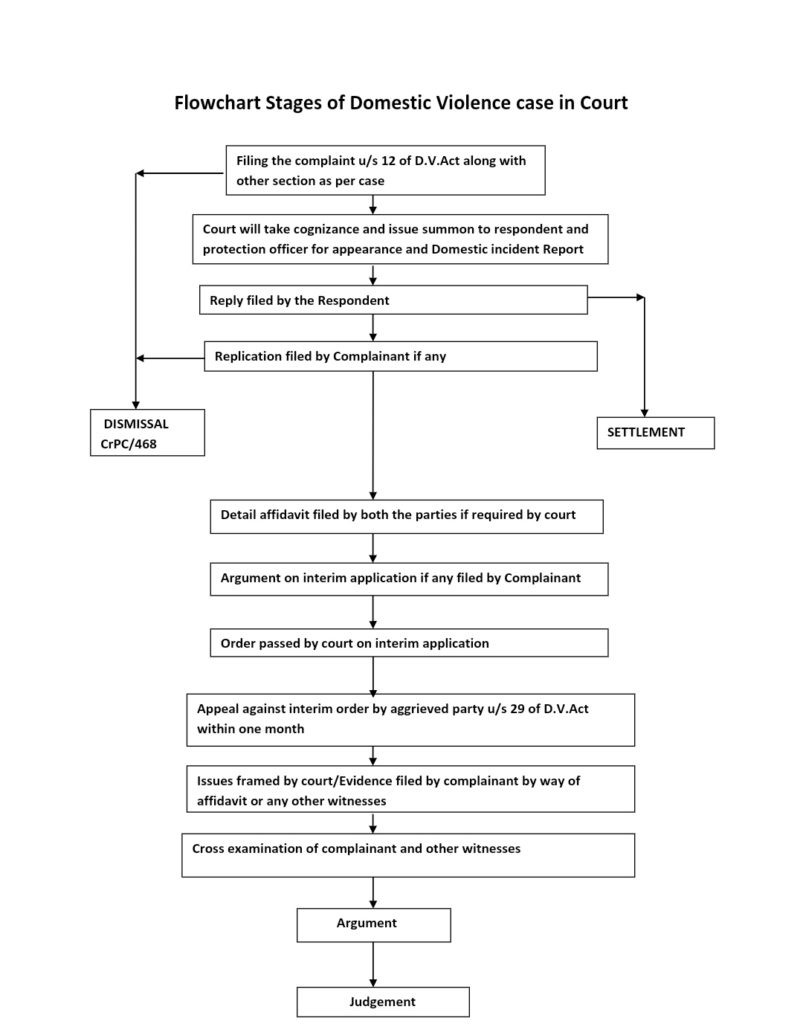
Listed below are a reasonably laid-out sequence of events in a Domestic Violence Case filed under PWDV Act, 2005. The rules related to the Act are here.
Note: Take a thorough look at the below infographic to understand the various remedies available for an aggrieved person under this law.
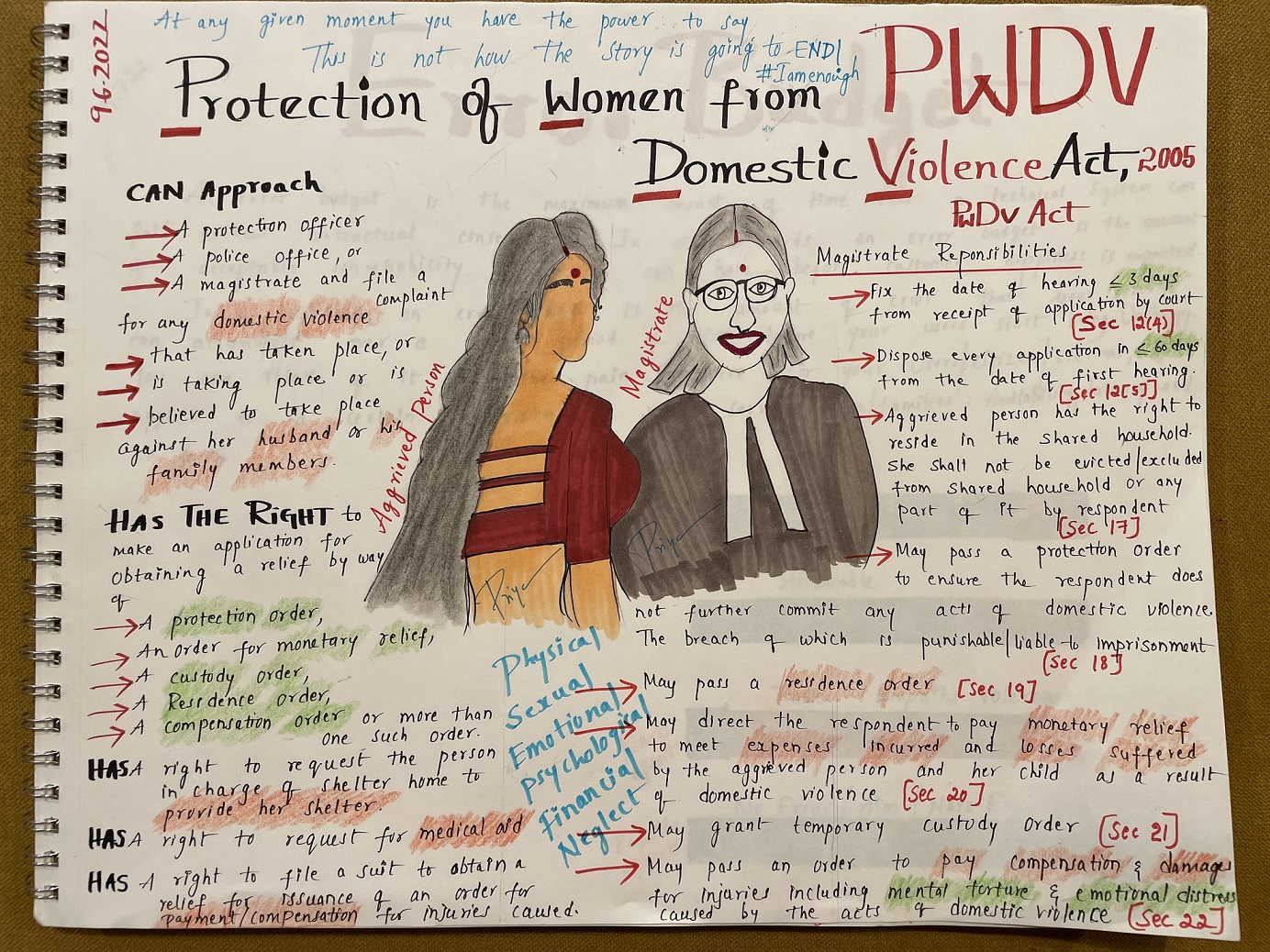
Copyright (c) Holders:
Content: Suprajaa Rajan
Infographic: Padma Priya Jupally #IAmEnough
Other Life Cycles: 498A IPC Case Lifecycle || Maintenance Case u/s 125 CrPC Lifecycle. Index of all life cycles is here. Looking for Domestic Violence case-laws? go here!
Before Entering Into Court
Key Highlights
Focus Areas
After Entering Into Court (APPEARANCE AND FOR COUNTER stages)
Key Highlights
Focus Areas
EXAMINATION Stage
After Written Statement is filed generally, the next stage is the EXAMINATION. Naturally, it would begin examination of the complainant. The Court frames the issues at this Stage of the case. (read O14 R1 of CPC)
Additionally, if the AP filed an application u/s 23 of the PWDV Act seeking interim/ex-parte reliefs, then that application will be picked up by the Court. Scroll down to the relevant section (INTERIM Orders Stage) on this page.
Key Highlights
ARGUMENTS Stage
After completion of examination of Prosecution and Respondent Witnesses and bring on record all the Evidence from both the parties, the Court opens for Arguments Stage.
Key Highlights
JUDGMENT Stage
The Court takes time to draft the judgment with reasons for the decision taken and pronounces the same in the Open Court, in the presence of both the parties. The court passes appropriate order/judgement. The court may decide the matter in three manners.
Next steps
INTERIM Orders Stage
The AP may file an application u/s 23, seeking Interim orders on the available reliefs under this Act. Such interim applications are to be disposed of in summary manner meaning, no evidence is to be taken on record and only the application/written statement/counter and relevant affidavits are the only things that need to be considered. Both parties will be given an opportunity to submit their arguments/hearing, after which the Court will pass an Order.
If such interim orders were obtained by AP by committing the offence of perjury upon the Court, do not hesitate to file an application u/s 340 CrPC in the same Court, right after such judicial order is passed.
Ready Reference:
Key Contributor:
In this judgment, Punjab & Haryana HC held that “Complaint under DV Act not maintainable after divorce”.
Citations: [
Other Source links:
Reproduced in accordance with Section 52(q) of the Copyright Act 1957 (India) from main.sci.gov.in/judgments, judis.nic.in, lobis.nic.in, indiacode.nic.in and other Indian High Court and District Court Websites such as ecourts.gov.in
Bad Behavior has blocked 484 access attempts in the last 7 days.

