web analytics

Menu

Skip to content
Shades of Knife
  • Home
  • True Colors of a Vile Wife
  • Need Inspiration?
  • Blog Updates
  • SOK Gallery
  • Vile News Reporter
  • About Me
  • Contact Me

Shades of Knife

True Colors of a Vile Wife

Month: April 2018

Lifecycle Stages of a Section 498A IPC Case

Posted on April 14, 2018 by ShadesOfKnife

Listed below are a reasonably laid out sequence of events in a Criminal Case filed under Section 498A of Indian Penal Code (IPC). The section is available here.


Other Life Cycles: DV Case Lifecycle || Maintenance Case u/s 125 CrPC Lifecycle. Index is here.


Initial signs of facing a false criminal case u/s 498A IPC

These days awareness of women about gender-biased laws in India has enormously increased partly due to movies and men do not need any special sign to know that they (and others in his family) are going to face false matrimonial litigation. The women are telling in your face that they will hoist a false litigation and *send you to jail* (this being the sole goal). So listen/observe carefully for such utterances and record them. This is evidence. Safe guard it. Being idiotic (read still believing that the woman will come back to his home and lead a happy marital life is a oasis) is your choice. Hope you do not regret that decision later when one or some in your family die due to false litigation (and the stigma/defamation it causes to your family)

Filing of false complaint and registration of FIR

Another must-happen is that the women hoist the false complaints only at their parental home to leverage the local feelings. (caste, regional connections will be invoked). There is a bad judgment also now to support them in this. Go find it here.

Officer in charge of the Station (Station House Officer-SHO) assigns an officer of cadre Inspector to register FIR and investigate the allegations in the complaint. This person is called as Investigation Officer (I/O).


Anticipatory Bail u/s 438 Cr.P.C.

If there are any other serious cognizable offences in the FIR (Check First Schedule in Cr.P.C. book which lists some I.P.C. offences along with details such as if a case is a cognizable and/or bailable) which may attract 7 years or more punishment. Then immediately go for Anticipatory Bail u/s 438 Cr.P.C. at Sessions Court first and on failure there go to High Court. Landmark Arnesh Kumar judgment is here. The thing to note here is that once a AB is granted in a case (FIR), the protection continues until the end of trial. Landmark case law of Sushila Aggarwal is here. Another note is, no need to convert AB into Regular Bail. Do not entertain any nonsense here.


Notice u/s 41A of CrPC

Misuse of arresting Power of Police was held to be illegal and hence Apex Court directed all DGPs of all States that they issue directions to the entire Police in their states, not to automatically arrest accused person after registering FIR but to issue a Notice to all accused to join the inquiry u/s 41A of Cr.P.C. The Arnesh Kumar judgment is here.

The Result:

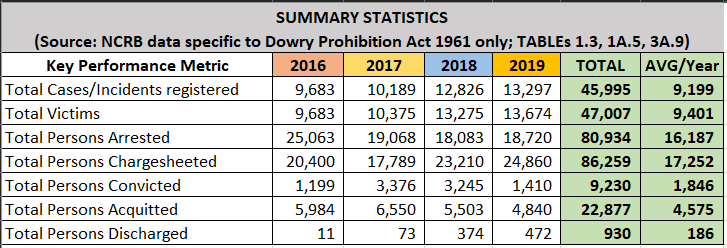
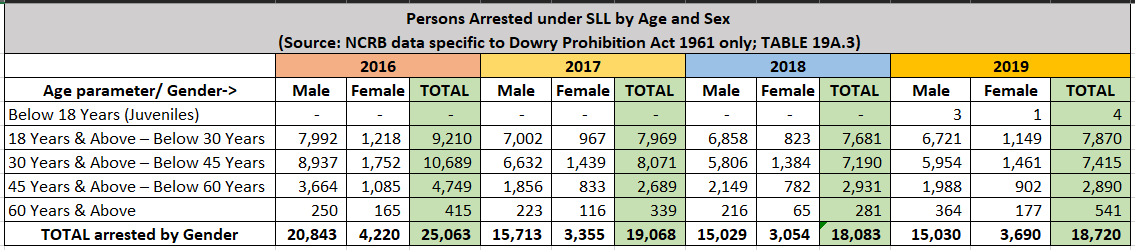
Arrests (only with respect to Dowry Prohibition Act offences as an example here; No 1 cause used to support most of all false matrimonial cases) reduced considerably. Didn’t stop though. Most of the I.O.s of these arrests have committed Contempt of Court by arresting the accused (Immediately approach State High Court with a Contempt Petition). A simple RTI application to National Crime Record Bureau asking “in how many arrests under this Act, a notice u/s 41A Cr.P.C. was issued” would open up the blatant disregard for the decision of Supreme Court.
Gender-wise split of arrests… See, how many mothers and sisters were arrested in false matrimonial litigation in India, only under Dowry Prohibition Act.
 

Obtaining Station Bail

If Police arrested you or your family members, before you obtain Anticipatory Bail, one can give sureties to Police and obtain Station Bail. No need to give any ‘fees’ to Police.

Obtaining Default Bail

Per Section 167 Cr.P.C., if I/O is unable to complete investigation within 24 hours of apprehending you or your family, he is supposed to present you before Jurisdictional Magistrate and seek Police custody. Magistrate may remand you to Police Custody for maximum 15 days.

Obtaining Regular Bail u/s 437 CrPC

If Police do not allow you Station Bail and put you in Police custody, you or your family members, can go before Jurisdiction Court and file petition u/s 437 CrPC for obtaining Regular Bail, by giving sureties to Court. No need to give any ‘fees’ to Court. Court will grant Regular Bail while imposing certain conditions.

Quashing the FIR at High Court u/s 482 CrPC

Learn what is a Quash (not squash; it is a sport) Petition and how to make good use of it at High Court here. Then read how a baseless, maliciously motivated FIR may be quashed here.

Filing of Charge sheet by I/O

I/O does investigation to gather material and witnesses supporting the allegation and based on this outcome, files a Closure report (with reasons) or a Charge sheet (u/s 173 Cr.P.C.) into the jurisdictional Court.

Minimum documents that I/O should submit to Court along with Charge sheet (this set of documents are also called as Challan)

  1. Complaint
  2. FIR (Signature of the complaint to be taken)
  3. Statements of Prosecution Witnesses recorded u/s 161 Cr.P.C. (No signature of witness to be taken on these statements
  4. Typed Charge sheet
  5. Rough Sketch of the alleged crime scene/location
  6. Entries from Police Station Case Dairy
  7. Any documentary evidences obtained
  8. Notice issued to the complainant (so that complainant can protect any removal of accused/section from charge sheet)
  9. Delete memo (if any filed by I/O into Court)
  10. Arrest memo, Bail bonds, ID proofs of accused


Protest Petition

Once charge sheet is filed into the trial Court, the Court issues a notice to the de facto complainant indicating that their initial report have reached the Court in the form of a final report (which can be either a closure report indicating the police could establish the allegation in the report or a charge sheet indicating that the police could establish the allegation in the report by way of evidence and witness).

The de facto complainant can choose to object to the final report filed into the Court either or removal/diluting of sections or removal of accused from the FIR. There is no section of law from this in the Cr.P.C.


Initial Appearance in Court

It will take some time before the filing section of the Court gives a C.C. (calendar case) number to your case and issues summons to you and other accused to appear before Court and participate in Court proceedings.

On being present, these activities must happen (i) Recording Your identity and attendance, (ii) Inquiry about Engagement of own advocate or need of any Legal Aid advocate, (iii) Copies of Prosecution documents given to each accused present in Court and (iv) next date given for framing of charges.

Court provides (I/O provides actually) the following to each accused person, one copy as prescribed u/s 207 Cr.P.C.

  1. Complaint
  2. FIR (Signature of the complaint to be taken)
  3. Statements of Prosecution Witnesses recorded u/s 161 Cr.P.C. (No signature of witness to be taken on these statements
  4. Typed Charge sheet
  5. Rough Sketch of the alleged crime scene/location

You can obtain certified copy of any other documents by filing a copy application in copy section of the Court.


Discharge from case u/s 239 CrPC

Discharge petition helps accused person to come out of false litigation (Best case – All accused may be discharged from all offences in Charge sheet; worst case – Husband may have to face 498A IPC but other sections and accused may be discharged). Read when to invoke a Discharge Petition at the trial court itself here. There are a few good judgments pertaining to Discharge here. Read this judgement here to success in your discharge.

If your Discharge petition is dismissed baselessly (reason given by Magistrate is, every ground you raised is a matter of trail), your remedy is to file Revision at Sessions Court within limitation petition.

Framing of Charges

After conducting a hearing (hearing before charge – HBC stage) to complainant and accused, Magistrate will read out the charges from the charge sheet, in the language understood by accused and ask if he/she pleads guilty. If accused prays guilty, Magistrate will record such confession and move to next stage. If charges are denied then Magistrate will proceed to frame charges on the accused persons and issue a charge framing order.

Even though this is an interlocutory order, it is nevertheless a judicial order, so this can also be challenged at High Court u/s 482 Cr.P.C.

Begin of Criminal Trial

This is a criminal trial so all remedies available under Cr.P.C. can be gainfully invoked to benefit accused persons. The following are some.

Section 201 Cr.P.C. can be invoked if complainant tries to erase statutory (Marriage certificate, divorce decree, land/property documents) financial, medical, mobile, electronic (email, sms, whatsapp, video, audio) evidence which would destroy her case.

Section 202 Cr.P.C. can be invoked if truth is concealed and lies are recorded in complaint to police.

Section 205 Cr.P.C. can be invoked to dispense with personal attendance of accused. Standard forms may be available at/near courts. Fill, attach Rs.2/5 Court Stamp and file at Bench or Filing section. Prosecution will object. During hearing, plead the grounds (distance/out-station, health, advanced age etc)

Section 317 Cr.P.C. can be invoked on a per-appearance basis, if 205 petition above is not allowed.

If you are a Party-in-person, then invoke Rule 37 of the Criminal Rules of Practice and Circular Orders 1990 for High Court of A.P. here. Due to this, one accused can represent (not plead/argue) other accused persons. Using this, ensure your parents and relatives do not suffer due to travels involved.

Section 256 Cr.P.C. can be invoked if the complainant herself is not appearing nor the Assistant PP, you can pray to Court to acquit the accused. If the complainant is represented by advocate, then to mark that stage as null and proceed further. If Magistrate doesn’t oblige, file a Memo praying same, so your prayer goes on record of Court in the case. Same, if complainant dies too.

Section 91 Cr.P.C. can be invoked to summon any document held by any authority, public or private.

Try this only after exhausting Formal communication channels with the document-holding entity and via RTI Act. Else, Court will dismiss your application. Few more remedies are here.

Quash the case u/s 482 CrPC

At any point in time during trail of this case, if there appears any grounds basis which the Court shall not proceed against accused persons, they can approach High Court u/s 482 Cr.P.C. to quash the proceedings.

Examination of Complainant and Prosecution witnesses

Examination stage has two phases: Chief Examination and Cross Examination.

While examination, evidences to support either side may be submitted to Court and get them marked/numbered.

Evidence of Complainant and witnesses

Chief Examination: Complainant gives their deposition to Court. This can be filed via an affidavit. Similarly, witnesses will also finish their Examination-in-chief.

Cross-examination of Complainant and witnesses

Cross Examination: Complainant (and her witnesses) is put questions by Defence Advocate to test the veracity of truth in her allegations. Use Section 159 (Refreshing memory) of Indian Evidence Act cleverly.

Examination of Accused and Defence witnesses u/s 313 CrPC

The landmark judgment (from 2000) which held that physical presence of accused persons is NOT required for examination, if they do not have anything to say is here. Recent Karnataka HC judgment here.

Evidence of Accused

Rarely, does the need arises for accused to produce any evidence.

Cross-examination of Accused and Defence witnesses

If presented, Accused/defence witnesses/evidences have to go through Cross examination phase.

Court’s Power to Examine Accused

The Court has power to examine the Accused u/s 313 Cr.P.C.

Arguments

Advocates take turns and introduce their arguments, based on the Examination stage and Evidences brought on record of the Court. Once Oral arguments are finished, written arguments may also be submitted to Court. This is covered u/s 314 Cr.P.C.

Judgment (Acquittal/Conviction)

After conclusion of arguments, Court reserves the judgment, as Magistrate has to write the judgment. Once ready with Judgment, Magistrate pronounces the Judgment in the Open Court in the presence of parties involved in the case.

Revision/Appeal

sfdsd


Settlement/Compromise

In Andhra Pradesh, 498A IPC is made compoundable through an amendment to Cr.P.C. (a Central Act, 2 of 1974) in 2003 under Code of Criminal Procedure (Andhra Pradesh Amendment) Act, 2003 wherein both sections 494 IPC and 498A IPC were added to the list of Compoundable offences u/s 320 Cr.P.C. The sections 494, 495, 496 and 497 IPC were earlier also made Cognizable and non-bailable in Andhra Pradesh by another State Amendment.

So, this made it possible to compromise/settle 498A IPC cases (may be coupled with other offences such as 307, 406, 420, 506 IPC or Sec 3, 4, 6 of DP Act etc.) before Lok Adalat which is empowered to take up Compoundable cases as per sec 19(5) of Legal Services Authority Act 1987. So the parties can make an application to DLSA, MLSA, TLSA, as the case may be, and get their case compromised.



Posted in Legal Procedure | Tagged Catena of Landmark Judgments Referred/Cited to IPC 494 Compoundable Offence in Andhra Pradesh IPC 498A - Husband or relative of husband of a woman subjecting her to cruelty IPC 498A Compoundable Offence in Andhra Pradesh Work-In-Progress Article | 2 Comments

Strategy and Tools to win False IPC498A Case

Posted on April 12, 2018 by ShadesOfKnife

The high-level work flow to win the false IPC498A Case is as follows:

  1. This being a criminal case, get anticipatory bail for the Prime Accused, A1 at the earliest, even though Hon’ble Supreme court has ruled no automatic arrests should be done in matrimonial cases. Read the Landmark judgment here.
    • Read the bail related information here and judgments here.
  2. Once on bail, based on your objectives, you can proceed with any of the below approaches
    • File a Discharge Petition based on Legal grounds in your case and get discharged from case at Magistrate court itself.
      • Read about Discharge Petition here and various discharge judgments here.
    • File a Quash Petition based on Legal grounds in your case and get discharged from case at High court.
      • Read about Quash Petition here and various quash judgments here.
    • Fight the case on merits till the end of trial and emerge victorious as not Guilty. This can drag on for many years. Be aware of this fact.
      • Go here to read various stages of the case trial and how you can safeguard yourself and your family.
    • Yes, there is another way out. Go for Settlement.
      • Read the various aspects of settlement and few high-profile settlement cases and their judgments here.
Posted in Legal Procedure | Tagged CrPC 227 - Discharge CrPC 239 - When accused shall be discharged CrPC 245 - When accused shall be discharged CrPC 482 - Saving of inherent powers of High Court IPC 498A - Husband or relative of husband of a woman subjecting her to cruelty Summary Post Work-In-Progress Article | Leave a comment

Satish Mehra Vs Delhi Administration & Anr on 31 July, 1996

Posted on April 8, 2018 by ShadesOfKnife

Another SC Judgment discharging the accused u/s 227 of Cr.P.C, as there is no ground to proceed to Trial under IPC 498A.

But when the Judge is fairly certain that there is no prospect of the case ending in conviction the valuable time of the Court should not be wasted for holding a trial only for the purpose of formally completing the procedure to pronounce the conclusion on a future date. We are under heavy pressure of work-load. If the Sessions Judge is almost certain that the trial would only be an exercise in futility or a sheer waste of time it is advisable to truncate or ship the proceedings at the stage of Section 227 of the Code itself.


Similar situation arise under Section 239 of the Code (which deals with trial of warrant cases on police report). In that situation the Magistrate has to afford the prosecution and the accused an opportunity of being heard besides considering the police report and the documents sent therewith. At these two State the Code enjoins on the Court to give audience to the accused for deciding whether it is necessary to proceed to the next State. It is a matter of exercise of judicial mind. There is nothing in the code which shrinks the scope of such audience to oral arguments. If the accused succeeds in producing any reliable material at that stage which might fatally affect even the very sustainability of the case, it is unjust to suggest that no such material shall be looked into by the Court at that stage. Here the “ground” may be any valid ground including insufficiency of evidence to prove charge.

Sh. Satish Mehra vs Delhi Administration & Anr on 31 July, 1996

Citations: [1

Other Source links:


Index of Discharge Judgments u/s 227 Cr.P.C. is here.


Reproduced in accordance with Section 52(q) of the Copyright Act 1957 (India) from main.sci.gov.in/judgments, judis.nic.in, lobis.nic.in, indiacode.nic.in and other Indian High Court and District Court Websites such as ecourts.gov.in

Posted in Supreme Court of India Judgment or Order or Notification | Tagged CrPC 227 - Discharged IPC 498a - Not Made Out Satish Mehra Vs Delhi Administration Work-In-Progress Article | Leave a comment

State of Karnataka Vs L. Muniswamy and Ors on 3 March, 1977

Posted on April 8, 2018 by ShadesOfKnife

Landmark Judgment on application of the Inherent powers of High Court u/s 482 of Cr.P.C to Quash a proceeding as there is inadequate material to sustain the charge of prosecution.

There is no material on the record on which any tribunal could reasonably convict them for any offence connected with the assault on the complainant. This is one of these cases in which a charge of conspiracy is hit upon for the mere reason that evidence of direct involvement of the accused is lacking.

The saving of the High Court’s inherent powers, both in civil and criminal matters, is designed to achieve a Salutary public purpose which is that a Court proceedings ought not to be permitted to degenerate into a weapon of harassment or persecution. In a criminal case, the veiled object behind a lame prosecution, the very nature of the material on which the structure of the prosecution rests and the like would justify the High Court in quashing the proceeding in the interest of justice.


State Of Karnataka vs L. Muniswamy & Ors on 3 March, 1977

Citations: [AIR 1977 SC 1489], [1977 Cri LJ 1125 (SC)], [(1977) 2 SCC 699], [1977 KARLJ 2 483], [1977 SCC 2 699], [1977 SCR 3 113], [1977 CAR 143], [1977 CRLR 188], [1977 MLJ CRI 1 428], [1977 SCC CR 0 404], [1977 CRILR 0 188], [1977 AIR SC 1498], [1978 CLR 0 39], [1977 SCC CRI 0 404]

Other Source links:

https://indiankanoon.org/doc/548497/

https://www.casemine.com/judgement/in/5609abc9e4b014971140d547

Posted in Supreme Court of India Judgment or Order or Notification | Tagged CrPC 482 - Saving of inherent powers of High Court Landmark Case Legal Procedure Explained - Interpretation of Statutes No Material To Sustain Charge Quash State of Karnataka Vs L. Muniswamy and Ors | Leave a comment

Discharge Judgments u/s 227 Cr.P.C.

Posted on April 8, 2018 by ShadesOfKnife

Here is a list of the Judgments where the accused prayed for discharge u/s 227 Cr.P.C

  1. State Of Bihar vs Ramesh Singh on 2 August, 1977
  2. Union of India Vs Prafulla Kumar Samal and Anr on 6 November, 1978 (Landmark Judgment: )
  3. Sh. Satish Mehra Vs Delhi Administration & Anr on 31 July, 1996
  4. Om Wati and Anr Vs State Thro Delhi Admn and Ors on 19 March 2001 (Landmark Judgment: As there is Prima facie case against Accused, discharging them is not correct)
  5. Dilawar Balu Kurane Vs State Of Maharashtra on 8 January, 2002 (No grave suspicion)
  6. State Of Orissa Vs Debendra Nath Padhi on 29 November, 2004 (SC: No evidence from Defence/Accused during Charge Framing/Discharge Stage)
  7. P.Vijayan Vs State of Kerala and Anr on 27 January, 2010 (No grave suspicion)
  8. Sajjan Kumar Vs C.B.I on 20 September, 2010 (If the evidence which the prosecution proposes to adduce proves the guilt of the accused even if fully accepted before it is challenged in cross-examination or rebutted by the defence evidence, if any, cannot show that the accused committed the offence, then there will be no sufficient ground for proceeding with the trial.)
  9. CBI, Hyderabad Vs K. Narayana Rao on 21 September, 2012
  10. Rajiv Thapar & Ors Vs Madan Lal Kapoor on 23 January, 2013 [Landmark judgment from Justice J.S.Khehar for guidelines to discharge an accused under section 227 of CrPC]
  11. L. Krishna Reddy Vs State on 24 October 2013 [Discharge of parents u/s 227 by HC was upheld by SC]
  12. Ramnaresh & Ors Vs State of M.P. on 14 June, 2016 [During Charge framing, Grave Suspicion Vs Suspicion, based on Prafulla Kumar Samal above]
  13. Sarva Mangala Vs Station House Officer on 4 Jan 2018 [All documents submitted u/s 173(2) have to be perused to see if there is any prima facie case]
  14. Asim Shariff Vs National Investigation Agency on 01 July 2019
  15. M.E. Shivalingamurthy Vs CBI Bengaluru on 7 January 2020 [Governing principles regarding permissibility of defence of accused or documents produced by him, summarized]
  16. Bishop Franco Mulakkal Vs State of Kerala on 07 July 2020 [Discharge dismissal was challenged in Revision at Kerala High Court; Revision got dismissed]


Index of Discharge Judgments u/s 239 are here. Index of Quash judgments u/s 482 are here.


MASTER SITEMAP here.


Frequently Asked Questions (FAQs) – Discharge Under Section 227 CrPC

Section 227 CrPC allows a court to discharge an accused person if, after examining the case records and hearing both sides, it finds no sufficient ground to proceed with the trial. In such cases, the judge must record reasons and release the accused from the proceedings.

Discharge under Section 227 occurs before the framing of charges in sessions cases. If the court finds that the prosecution materials do not establish a prima facie case, the accused may be discharged instead of being subjected to a full criminal trial.

Courts generally evaluate:

  • The police report and charge sheet
  • Documents submitted during investigation
  • Arguments of both the prosecution and the accused
  • Whether the facts alleged constitute the ingredients of the offence

If the material on record does not show sufficient grounds for trial, discharge may be granted.

No. Discharge does not amount to a finding of innocence. It simply means that the court found insufficient material to proceed with the trial at that stage. A final determination of guilt or innocence happens only after a full trial leading to acquittal or conviction.

The key differences are:

  • Discharge: Occurs before framing of charges due to lack of sufficient evidence.
  • Acquittal: Occurs after a full trial when the court concludes the accused is not guilty.

An acquittal is a final judgment, whereas discharge only terminates proceedings at a preliminary stage.

No. At the discharge stage, courts only conduct a prima facie assessment of the material on record. They do not undertake a detailed examination of evidence or determine guilt. If there is sufficient suspicion or material supporting the offence, the case proceeds to trial.

The accused person in a criminal case may file a discharge application through counsel. The court then considers the application after hearing both the prosecution and the defence.

If the court finds sufficient grounds to proceed, it will reject the discharge application and move to the next stage of the criminal process—framing of charges under Section 228 CrPC.

Yes. Both the accused and the prosecution can challenge discharge orders before a higher court through revision or appeal, depending on the circumstances and applicable provisions.

The primary objective of Section 227 is to prevent unnecessary criminal trials where the evidence is insufficient. It acts as an important safeguard to protect individuals from frivolous or baseless prosecutions and ensures fairness in criminal proceedings.

Posted in Supreme Court of India Judgment or Order or Notification | Tagged CrPC 227 - Discharge Summary Post Work-In-Progress Article | Leave a comment

State Of Bihar vs Ramesh Singh on 2 August, 1977

Posted on April 8, 2018 by ShadesOfKnife

Here is the Judgment of Supreme Court clearly calling out the principle to be followed u/s 227 of Cr.P.C

“the test is whether there is a sufficient ground for proceeding and not, whether there is a sufficient ground for conviction”

State Of Bihar vs Ramesh Singh on 2 August, 1977

Citations: [2

Other Source links:


Index of Discharge Judgments u/s 227 Cr.P.C. is here.


Reproduced in accordance with Section 52(q) of the Copyright Act 1957 (India) from main.sci.gov.in/judgments, judis.nic.in, lobis.nic.in, indiacode.nic.in and other Indian High Court and District Court Websites such as ecourts.gov.in


Posted in Supreme Court of India Judgment or Order or Notification | Tagged CrPC 227 - Discharge Legal Procedure Explained - Interpretation of Statutes State Of Bihar vs Ramesh Singh Work-In-Progress Article | Leave a comment

Parbatbhai Aahir and Ors Vs State Of Gujarat and Anr on 4 October, 2017

Posted on April 7, 2018 by ShadesOfKnife

Read the broad principles High courts should consider for quashing of FIRs under Section 482 CrPC in this Judgment of Supreme Court.

IMPORTANT NOTE: If the FIR Quash is based on Jurisdiction ground, please note that there are Supreme Court and High Court judgments that mandate to transfer the FIR to the respective Police Station where there is jurisdiction for the case. Quash will not happen in such cases, under Jurisdiction ground alone. Find more grounds.

Broad Principles

(i) Section 482 preserves the inherent powers of the High Court to prevent an abuse of the process of any court or to secure the ends of justice. The provision does not confer new powers. It only recognises and preserves powers which inhere in the High Court;
(ii) The invocation of the jurisdiction of the High Court to quash a First Information Report or a criminal proceeding on the ground that a settlement has been arrived at between the offender and the victim is not the same as the invocation of jurisdiction for the purpose of compounding an offence. While compounding an offence, the power of the court is governed by the provisions of Section 320 of the Code of Criminal Procedure, 1973. The power to quash under Section 482 is attracted even if the offence is non-compoundable.
(iii) In forming an opinion whether a criminal proceeding or complaint should be quashed in exercise of its jurisdiction under Section 482, the High Court must evaluate whether the ends of justice would justify the exercise of the inherent power;
(iv) While the inherent power of the High Court has a wide ambit and plenitude it has to be exercised; (i) to secure the ends of justice or (ii) to prevent an abuse of the process of any court;
(v) The decision as to whether a complaint or First Information Report should be quashed on the ground that the offender and victim have settled the dispute, revolves ultimately on the facts and circumstances of each case and no exhaustive elaboration of principles can be formulated;
(vi) In the exercise of the power under Section 482 and while dealing with a plea that the dispute has been settled, the High Court must have due regard to the nature and gravity of the offence. Heinous and serious offences involving mental depravity or offences such as murder, rape and dacoity cannot appropriately be quashed though the victim or the family of the victim have settled the dispute. Such offences are, truly speaking, not private in nature but have a serious impact upon society. The decision to continue with the trial in such cases is founded on the overriding element of public interest in punishing persons for serious offences;
(vii) As distinguished from serious offences, there may be criminal cases which have an overwhelming or predominant element of a civil dispute. They stand on a distinct footing in so far as the exercise of the inherent power to quash is concerned;
(viii) Criminal cases involving offences which arise from commercial, financial, mercantile, partnership or similar transactions with an essentially civil flavour may in appropriate situations fall for quashing where parties have settled the dispute;
(ix) In such a case, the High Court may quash the criminal proceeding if in view of the compromise between the disputants, the possibility of a conviction is remote and the continuation of a criminal proceeding would cause oppression and prejudice; and
(x) There is yet an exception to the principle set out in propositions (viii) and (ix) above. Economic offences involving the financial and economic well-being of the state have implications which lie beyond the domain of a mere dispute between private disputants. The High Court would be justified in declining to quash where the offender is involved in an activity akin to a financial or economic fraud or misdemeanour. The consequences of the act complained of upon the financial or economic system will weigh in the balance.


Principles for quashing of FIRs under Section 482 CrPC 40266_2016_Judgement_04-Oct-2017

Citations : [2017 SCC 9 641], [2017 SCC ONLINE SC 1189], [2017 AIR SC 4843], [2017 CTC 6 213], [2017 ALLMR CRI 4438], [2017 ACR 3 2714], [2017 BOMCR CRI 4 372], [2017 ILR KER 4 169], [2017 JLJR 4 191], [2017 KHC 5 192], [2017 PLJR 4 207], [2017 RCR CRIMINAL 4 523], [2017 SCALE 12 187], [2017 SCC ONLINE SC 1189], [2017 AIR SC 4843]

Other Sources :

https://indiankanoon.org/doc/7293093/

https://www.casemine.com/judgement/in/59d91ddece686e237b6a8717

https://www.indianemployees.com/judgments/details/parbatbhai-aahir-parbatbhai-bhimsinhbhai-karmur-and-ors-vs-state-of-gujarat-and-anr

Posted in Supreme Court of India Judgment or Order or Notification | Tagged 3-Judge (Full) Bench Decision CrPC 482 - Saving of inherent powers of High Court Landmark Case Legal Procedure Explained - Interpretation of Statutes Parbatbhai Aahir and Ors Vs State Of Gujarat and Anr Quash Reportable Judgement or Order | Leave a comment

Discharge Judgments u/s 239 Cr.P.C.

Posted on April 7, 2018 by ShadesOfKnife

Here is a list of the Judgments where the accused are discharged u/s 239 Cr.P.C

  1. Supdt. S. Remembrancer of legal affairs W.B. Vs. Anil Kumar Bhunja- AIR 1989 SC 52
  2. Stree Atyachar Virodhi Parishad Vs. Dilip N. Chartia 1989 (1) SCC 715
  3. State of Maharashtra and Ors. v. Som Nath Thapa and Ors. AIR 1996 SC 1744
  4. State of M.P. v. Mohanlal Soni AIR 2000 SC 2583
  5. Kanti Bhadra Shah and Anr Vs State of West Bengal on 5 January 2000 (Charge-framing itself is a judicial order which implies Magistrate applied judicial mind)
  6. Savitri Devi Vs Ramesh Chand And Ors. on 19 May, 2003 (Appeal petition by Knife on not framing changes on relatives is dismissed)
  7. State Of Orissa Vs Debendra Nath Padhi on 29 November, 2004 (SC: No evidence from Defence/Accused during Charge Framing/Discharge Stage)
  8. Ajoy Kumar Ghose Vs State Of Jharkhand & Anr on 18 March, 2009 (Discharge and Charge Framing procedure explained)
  9. B.S.Neelakanta and Anr Vs State of A.P. and Anr on 04 December 2013 (AP HC: Dismissal of Discharge is set aside)
  10. Nitya Dharmananda @ K. Lenin Vs Sri Gopal Sheelum Reddy on 7 December, 2017 (SC: Defence can satisfy Court to seek documents of Sterling/Unimpeachable quality from IO/Prosecution that were not sent to Trial Court u/s 173 CrPC)
  11. C Krishna Priya Vs State of AP on 14 September 2018 (TS HC: No specific allegations, Dismissal of Discharge is set aside)
  12. CBI Vs Ram Swaroop Chandel and Ors on 30 Sep 2020 (Delhi HC: If the prosecution witnesses presumed to be true, without any cross examination, still conviction cannot be awarded to the accused, then deserves for discharge)


Index of Discharge Judgments u/s 227 are here. Index of Quash judgments u/s 482 are here.


MASTER SITEMAP here.

Posted in Supreme Court of India Judgment or Order or Notification | Tagged CrPC 239 - When accused shall be discharged Summary Post Work-In-Progress Article | Leave a comment

State Of A.P Vs M. Madhusudhan Rao on 24 October, 2008

Posted on April 7, 2018 by ShadesOfKnife

This Judgment from Hon’ble Supreme Court talks about the importance of prompt lodging of the First Information Report and where not done so, the delay in lodging the complaint should be satisfactorily explained.

From Para 18,

Time and again, the object and importance of prompt lodging of the First Information Report has been highlighted. Delay in lodging the First Information Report, more often than not, results in embellishment and exaggeration, which is a creature of an afterthought. A delayed report not only gets bereft of the advantage of spontaneity, the danger of the introduction of coloured version, exaggerated account of the incident or a concocted story as a result of deliberations and consultations, also creeps in, casting a serious doubt on its veracity. Therefore, it is essential that the delay in lodging the report should be satisfactorily explained.

And… from Para 19,

No explanation worth the name for delay in filing the complaint with the police has come on record. We are of the opinion that this circumstance raises considerable doubt regarding the genuineness of the complaint and the veracity of the evidence of the complainant (PW-1) and her father (PW-3), rendering it unsafe to base the conviction of the respondent upon it. Resultantly, when the substratum of the evidence given by the complainant (PW-1) is found to be unreliable, the prosecution case has to be rejected in its entirety.

State Of A.P vs M. Madhusudhan Rao on 24 October, 2008

Other Source links: https://indiankanoon.org/doc/1273596/ or https://www.casemine.com/judgement/in/575fd30f607dba63d7e6b53e

Citation: [(2008) 15 SCC 582], [(2009) 3 SCC (Cri) 1123], [2008 (14) SCALE 118]


Reproduced in accordance with Section 52(q) of the Copyright Act 1957 (India) from judis.nic.in, lobis.nic.in, indiacode.nic.in and other Indian High Court and District Court Websites such as ecourts.gov.in

Posted in Supreme Court of India Judgment or Order or Notification | Tagged CrPC 482 - Saving of inherent powers of High Court Delay or Unexplained Delay In Filing Complaint State Of A.P Vs M. Madhusudhan Rao | Leave a comment

Y.Abraham Ajith & Ors Vs Inspector Of Police, Chennai & Anr on 17 August, 2004

Posted on April 7, 2018 by ShadesOfKnife

Here is the Judgment that emphasizes on Jurisdiction applicable to a case.

Operative Text of Judgement:

“It is settled law that cause of action consists of bundle of facts, which give cause to enforce the legal inquiry for redress in a court of law. In other words, it is a bundle of facts, which taken with the law applicable to them, gives the allegedly affected party a right to claim relief against the opponent. It must include some act done by the latter since in the absence of such an act no cause of action would possibly accrue or would arise.”

Y. Abraham Ajith sc-chennai-jurisdiction


Posted in Supreme Court of India Judgment or Order or Notification | Tagged CrPC 482 - Saving of inherent powers of High Court CrPC 482 – Criminal Proceeding Quashed No Territorial Jurisdiction Y. Abraham Ajith and Ors Vs Inspector Of Police Chennai and Anr | Leave a comment

Post navigation

  • Older posts
  • Newer posts

Search within entire Content of “Shades of Knife”

My Legal X Timeline

Advocate Sandeep Pamarati 🇮🇳💪👨🏻‍🎓 Follow

AP High Court Advocate with M Tech (CS) || 12 years in 'Software Industry' as Solution Architect || Blogs at https://t.co/29CB9BzK4w || #TDPTwitter

SandeepPamarati
Retweet on Twitter Advocate Sandeep Pamarati 🇮🇳💪👨🏻‍🎓 Retweeted
andhrafact మన ఆంధ్ర @andhrafact ·
3 Jun

వాడే🃏vs వీడు🧛‍♂️=సిగ్గుమాలిన అపరిచుతుడు

రాష్ట్ర మద్య నీళ్లున్న చోట WASHINGTONకడతా,center ఇవ్వదు అయినా కడతా.నా బుర్రలో వచ్చే ఆలోచనతో కడతా.CBN వల్ల కాదు ఎట్లా చెయ్యాలో ACCENTUREతో 10 సిట్టింగు వేసా,ఇదిగో డిటైల్డ్ plan.రాజధాని RE హంగామాతో 2BILLION$ తెస్తా🧛‍♂️

vs

రాజధాని అంటే ఏంటి?🃏

Reply on Twitter 2062217009140576691 Retweet on Twitter 2062217009140576691 37 Like on Twitter 2062217009140576691 77 X 2062217009140576691
Retweet on Twitter Advocate Sandeep Pamarati 🇮🇳💪👨🏻‍🎓 Retweeted
narendramodi Narendra Modi @narendramodi ·
3 Jun

Delighted to meet the Chairman of the Rastriya Swatantra Party of Nepal Mr. Rabi Lamichhane. I welcome and fully share his desire to work closely together for a shared and prosperous future.

Nepal is a priority partner under our Neighbourhood First policy and we look forward to

Reply on Twitter 2062085139031810119 Retweet on Twitter 2062085139031810119 4893 Like on Twitter 2062085139031810119 36952 X 2062085139031810119
Retweet on Twitter Advocate Sandeep Pamarati 🇮🇳💪👨🏻‍🎓 Retweeted
pradip103 Pradeep Bhandari(प्रदीप भंडारी)🇮🇳 @pradip103 ·
17h

CONGRESS ALLOWS SHARIA COMPLIANT GYM IN KERALA!

Congress’ win in Kerala has ensured one thing : IUML gets a free hand and Congress bends itself to the diktats of Muslim League.

Kerala’s so-called ‘Islam-friendly gym’ mandates No music. Gender segregation. Mandatory religious

Reply on Twitter 2062415901740470707 Retweet on Twitter 2062415901740470707 173 Like on Twitter 2062415901740470707 410 X 2062415901740470707
Retweet on Twitter Advocate Sandeep Pamarati 🇮🇳💪👨🏻‍🎓 Retweeted
ani ANI @ani ·
2 Jun

#WATCH | Maharashtra: The passing out parade at the Combat Army Aviation Training School in Nashik, concluded on an emotional note for a couple as Captain Bharat Bhardwaj proposed marriage to his partner.

Reply on Twitter 2061739907320860704 Retweet on Twitter 2061739907320860704 858 Like on Twitter 2061739907320860704 14162 X 2061739907320860704
Load More

Recent Posts

  • Are Offices of Dowry Prohibition Officers in AP designated as Police Stations? June 3, 2026
  • Pune Bar Association Vs Union of India on 22 May 2026 June 2, 2026
  • Chidurala Shyamsubder Vs State of Telangana on 27 Aug 2018 May 28, 2026
  • Birendra Kumar Tiwari Vs Neetu Tiwari on 07 Dec 2022 May 27, 2026
  • Parvinder Singh Khurana Vs Enforcement of Directorate on 19 May 2026 May 26, 2026

Most Read Posts

  • Reply to Section 41A CrPC Notice – Format with Legal Explanation (4,834 views)
  • Anu Aggarwal Vs Sushant Aggarwal on 20 Jan 2026 (3,367 views)
  • Umme Farva Vs State of U.P. and Anr on 14 Jan 2026 (3,199 views)
  • Charge Sheet and Final Report Explained (2,443 views)
  • Jinesh CR Vs Aswathy PR on 19 Nov 2025 (2,126 views)
  • Geddam Jhansi and Anr Vs State of Telangana and Anr on 07 Feb 2025 (2,091 views)
  • Regular Bail Application Format (Section 437/439 CrPC) (2,003 views)
  • Neha Lal Vs Abhishek Kumar on 20 Jan 2026 (1,877 views)
  • Arrest Procedure in 498A cases after Arnesh Kumar (1,785 views)
  • Discharge Application Format in 498A Case – Draft, Procedure & Sample Template (1,574 views)

Tags

Reportable Judgement or Order (433)2-Judge (Division) Bench Decision (411)Legal Procedure Explained - Interpretation of Statutes (381)Landmark Case (381)1-Judge Bench Decision (361)Catena of Landmark Judgments Referred/Cited to (293)Work-In-Progress Article (215)3-Judge (Full) Bench Decision (101)Sandeep Pamarati (92)Article 21 - Protection of life and personal liberty (80)Issued or Recommended Guidelines or Directions or Protocols to be followed (71)Perjury Under 340 CrPC (66)Absurd Or After Thought Or Baseless Or False Or General Or Inherently Improbable Or Improved Or UnSpecific Or Omnibus Or Vague Allegations (61)Reprimands or Setbacks to YCP Govt of Andhra Pradesh (49)Summary Post (47)CrPC 482 - Quash (43)HM Act 13 - Divorce Granted to Husband (42)Legal Terrorism (41)Not Authentic copy hence to be replaced (40)Divorce granted on Cruelty ground (40)

Categories

Supreme Court of India Judgment or Order or Notification (752)Bare Acts or State Amendments or Statutes or GOs or Notifications issued by Central or State Governments (327)High Court of Andhra Pradesh Judgment or Order or Notification (186)High Court of Delhi Judgment or Order or Notification (164)High Court of Bombay Judgment or Order or Notification (112)High Court of Karnataka Judgment or Order or Notification (93)Legal Procedure (73)High Court of Madras Judgment or Order or Notification (70)High Court of Allahabad Judgment or Order or Notification (61)LLB Study Material (58)General Study Material (56)High Court of Punjab & Haryana Judgment or Order or Notification (52)Assorted Court Judgments or Orders or Notifications (50)High Court of Kerala Judgment or Order or Notification (46)Prakasam DV Cases (46)Judicial Activism (for Public Benefit) (45)District or Sessions or Magistrate Court Judgment or Order or Notification (44)High Court of Madhya Pradesh Judgment or Order or Notification (38)High Court of Gujarat Judgment or Order or Notification (28)High Court of Telangana Judgment or Order or Notification (27)

Recent Comments

  • The Divorce Law Firm on Life Cycle Stages of a Divorce case
  • The Divorce Law Firm on Life Cycle Stages of a Divorce case
  • ShadesOfKnife on Sandeep Pamarati Vs Ungrateful Knife (IPC 498A Case)
  • KONURU VINAYKUMAR on Sandeep Pamarati Vs Ungrateful Knife (IPC 498A Case)
  • ShadesOfKnife on Lifecycle Stages of a Section 498A IPC Case

Archives of SoK

  • June 2026 (2)
  • May 2026 (24)
  • April 2026 (33)
  • March 2026 (42)
  • February 2026 (30)
  • January 2026 (21)
  • December 2025 (2)
  • November 2025 (3)
  • October 2025 (17)
  • September 2025 (12)
  • August 2025 (5)
  • July 2025 (10)
  • June 2025 (15)
  • May 2025 (3)
  • April 2025 (10)
  • March 2025 (7)
  • February 2025 (8)
  • January 2025 (1)
  • December 2024 (3)
  • November 2024 (4)
  • October 2024 (16)
  • September 2024 (15)
  • August 2024 (14)
  • July 2024 (11)
  • June 2024 (18)
  • May 2024 (13)
  • April 2024 (9)
  • March 2024 (23)
  • February 2024 (15)
  • January 2024 (11)
  • December 2023 (11)
  • November 2023 (9)
  • October 2023 (13)
  • September 2023 (12)
  • August 2023 (15)
  • July 2023 (17)
  • June 2023 (11)
  • May 2023 (6)
  • April 2023 (5)
  • March 2023 (10)
  • February 2023 (9)
  • January 2023 (12)
  • December 2022 (12)
  • November 2022 (8)
  • October 2022 (13)
  • September 2022 (17)
  • August 2022 (10)
  • July 2022 (21)
  • June 2022 (27)
  • May 2022 (23)
  • April 2022 (32)
  • March 2022 (17)
  • February 2022 (6)
  • January 2022 (2)
  • December 2021 (7)
  • November 2021 (7)
  • October 2021 (6)
  • September 2021 (10)
  • August 2021 (31)
  • July 2021 (45)
  • June 2021 (17)
  • May 2021 (17)
  • April 2021 (18)
  • March 2021 (58)
  • February 2021 (14)
  • January 2021 (50)
  • December 2020 (35)
  • November 2020 (68)
  • October 2020 (67)
  • September 2020 (28)
  • August 2020 (41)
  • July 2020 (20)
  • June 2020 (36)
  • May 2020 (40)
  • April 2020 (38)
  • March 2020 (26)
  • February 2020 (43)
  • January 2020 (35)
  • December 2019 (34)
  • November 2019 (4)
  • October 2019 (18)
  • September 2019 (57)
  • August 2019 (33)
  • July 2019 (12)
  • June 2019 (18)
  • May 2019 (5)
  • April 2019 (19)
  • March 2019 (58)
  • February 2019 (11)
  • January 2019 (90)
  • December 2018 (97)
  • November 2018 (43)
  • October 2018 (31)
  • September 2018 (73)
  • August 2018 (47)
  • July 2018 (143)
  • June 2018 (92)
  • May 2018 (97)
  • April 2018 (59)
  • March 2018 (8)

Blogroll

  • Daaman Promoting Harmony 0
  • Fight against Legal Terrorism Fight against Legal Terrorism along with MyNation Foundation 0
  • Good Morning Good Morning News 0
  • Insaaf India Insaaf Awareness Movement 0
  • MyNation Hope Foundation Wiki 0
  • MyNation.net Equality, Justice and Harmony 0
  • Sarvepalli Legal 0
  • Save Indian Family Save Indian Family Movement 0
  • SIF Chandigarh SIF Chandigarh 0
  • The Male Factor The Male Factor 0
  • Unitedmen Foundation a dedicated community forged with the mission to unite men facing legal challenges in marital disputes. 0
  • Vaastav Foundation The Social Reality 0
  • Vinayak my2centsworth – This blog is for honest law abiding men, married or planning to get married 0
  • Voice4india Indian Laws, Non-profits, Environment 0
  • Writing Law Writing Law by Ankur 0

RSS Cloudflare Status

  • ICN (Seoul) on 2026-06-17 June 17, 2026
    THIS IS A SCHEDULED EVENT Jun 17, 17:00 - 22:00 UTC Jun 4, 13:40 UTC Scheduled - We will be performing scheduled maintenance in ICN (Seoul) datacenter on 2026-06-17 between 17:00 and 22:00 UTC.Traffic might be re-routed from this location, hence there is a possibility of a slight increase in latency during this maintenance window […]
  • Cloudflare Storage Maintenance June 15, 2026
    THIS IS A SCHEDULED EVENT Jun 15, 12:00 - 13:00 UTC May 28, 22:16 UTC Scheduled - Cloudflare has scheduled maintenance for our backend storage systems. Services will continue to operate normally, but customers will be unable to create/delete/modify tunnels, routes, hostname routes, virtual networks, devices and tunnel configurations via the Dashboard or the public […]
  • EWR (Newark) on 2026-06-11 June 11, 2026
    THIS IS A SCHEDULED EVENT Jun 11, 06:00 - 14:00 UTC Jun 4, 13:40 UTC Scheduled - We will be performing scheduled maintenance in EWR (Newark) datacenter on 2026-06-11 between 06:00 and 14:00 UTC.Traffic might be re-routed from this location, hence there is a possibility of a slight increase in latency during this maintenance window […]

RSS List of Spam Server IPs from Project Honeypot

  • 93.92.77.170 | SD June 4, 2026
    Event: Bad Event | Total: 80 | First: 2026-06-04 | Last: 2026-06-04
  • 182.161.69.41 | S June 4, 2026
    Event: Bad Event | Total: 8 | First: 2011-03-18 | Last: 2026-06-04
  • 34.186.78.139 | S June 4, 2026
    Event: Bad Event | Total: 2 | First: 2026-06-04 | Last: 2026-06-04
Owned and Operated by Advocate Sandeep Pamarati
Proudly powered by WordPress
Theme: Flint by Star Verte LLC

Bad Behavior has blocked 621 access attempts in the last 7 days.

pixel